Homo Sapiens and their capacity for imagination

716E6dQ4BXL

When I am writing this review, 1.3 billion population of India is getting ready to celebrate its 71st Independence Day of the Indian nation. And on 9th of August, Indian Parliament debated about 75th anniversary of “Quit India Movement” and agreed on the strategy of “New India- Sankalp se Sidhi-Commitment to fulfilment”. Quit India Movement of 1942 is one of the path-breaking events of India’s modern history. However, as per the author Yuval Noah Harari, ‘Nation’ is an imagined order and a myth created by the people to cooperate at large scale in a particular boundary. And history is not good or bad or ancient or modern as ”history has still not decided where we will end up, and a string of coincidences might yet send us rolling in either direction”, says Harari. This book is exceptional and an outsider view of the evolution of Homo Sapiens on the earth. It seems that he is sitting in front of the revolving earth and trying to see how Homo Sapiens evolved.

pexels-photo-243115

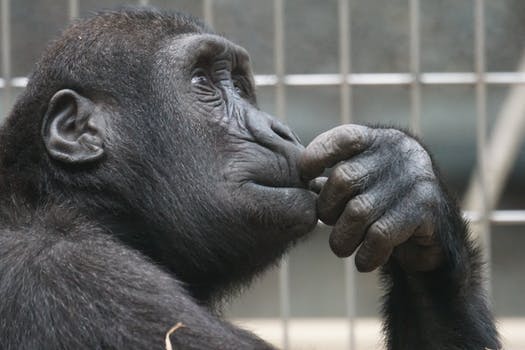
Harari is questioning every single belief in the society. Political thinkers like Locke, Hobbes, Rousseau etc have tried to find out the basis of political authority and” why do we obey the authority? What were the reasons behind the formation of “Social Contract”. State/Nation/Country vs Individual debate is still going on. Who is more important State or Individual? State came first or Individual. As per Harari’s hypothesis, state/ nation is an ‘imagined order’ created by Homo Sapiens to establish a complex mechanism for cooperation.

primate-ape-thinking-mimic

In fact, in this book he traces the evolution of human beings through the various revolutions starting from Cognitive Revolution, Agriculture Revolution, Industrial Revolution and the current Scientific and Technological Revolution.  Cognitive Revolution helped us to create the communication and writing methods and processes. The Tree of Knowledge mutation led to the evolution of the brain. However, no one knows what was the reason behind this revolution. There are various theories behind it but Harari seems to believe in the ‘Gossip theory’ under which the language of Homo Sapiens evolved to share information.

pexels-photo-265278

Agriculture Revolution transformed the Homo Sapiens from ‘foragers’ to ‘farmers’. As per Harari, it was the biggest fraud of history. He persuasively says, “we did not domesticated wheat but wheat domesticated us”. He tries to find various flaws in Agricultural Revolution and the subsequent revolutions which made Homo Sapiens more like a machine which is alienated from himself, using the terminology of Marxism, as well as from its surroundings. And he also tries to find out why did we start Agriculture Revolution. Did agriculture start as some kind of ritual or religious practice to some local deity? He is trying to say this while discussing Gobekli Tepe.

How Homo Sapiens has increased its power and strength through scientific revolution after agreeing on the” doctrine of ignoramus “and consistently trying to find out the mystery of the universe. We agreed that we don’t know and the knowledge is never complete. We have to consistently find out something new and revolutionary.  Not only this, as Harari says, there was an existence of marriage between Science and Empire. Empires were one of the three myths, other two were money and religion acted as the most successful tool for unification. How Empires were established in the world with the help of scientific revolution?  The British Empire was based on the Scientific and the Industrial Revolution in the 17th century. In fact, this is still true. We also have the recent example of the USA, which is the most powerful country in the world, not only because of economic might but also because of its cutting-edge technological innovations.

euro-coins-currency-money-106152

Money is another creation of human mind. It is the most powerful tool which has unified and interlinked the whole world in the form of World Empire. Trust is the basis of the whole economic system. He also talks about the whole phenomenon of Capitalism and how we are so much embedded into consumerism and romanticism. This has become a kind of race where Human beings are running towards the unbelievable goals. I was fascinated by his thread bare description of capitalism where he tries to show it as some kind of Ponzi scheme. However, that’s how it is. To change this system, we need to create another imagined order or at least, we need to realize the faults and fallacies of the capitalism so that we should not become its slave.

pexels-photo-355188

Religion is the next big myth he talks about in his book. He talks about monotheism, polytheism and most specifically “syncretism”. How Harari’s analysis of polytheism provides a basis for “Sarv Dharma Sambhav”. And why polytheist religion is more tolerant and accepts other religious practices. How religion has unified as well as divided the Human beings into “us” vs “them”. In fact, his analysis of religion can be related to the concept of ‘spiritualism ‘and ‘detachment philosophy’ of Gita of India. He also talks about Buddhism to explain the concept of inner self. And we Indian can be proud of it that we had all kinds of philosophies in our religious discourse.

How can I forget his discussion about the concept of Caste System which is based on the Concept of purity and impurity? It is also an imagined order created by our forefathers to make things moving on the basis of division of labor. However, we are struggling with these caste divisions despite knowing that we only created this.

In the end, he questions the scientific revolutions of the present day. Genetic engineering, Cyborg, etc will give tremendous power to the Homo Sapiens and it is also possible that it will make us subservient to our own creations. According to him, Homo Sapiens has become a GOD who does not know what exactly they want? This has created a kind of confusion and dissatisfaction which will finally lead to the end of Humankind.

He also discusses patriarchy, the basis of natural and unnatural sex, conception of marriage etc. In fact, he is playing various roles as a writer. He is a liberal when he says, “Biology enables, Culture forbids”He is a feminist when he talks about “patriarchal gene” and questions the basis of discrimination against women. He is a Marxist when he talks about alienation and exploitation of Human beings who have become a machine working as per the time table and earning a lot of money but does not experience happiness and contentment despite having everything. He belongs to Critical Studies approach when he criticizes various scientific revolutions and ideologies existing in the world. He is philosophical when he talks about happiness as subjective well-being and “happiness begins within”. He is a psychologist when he says, “Happiness only comes from serotonin, dopamine, and oxytocin”. He is an animal rights activist when he talks about the domestication, exploitation & cruelty against animals and extinction of various other species and animals. He is being ethical and moral when he says that unethical application of technology will create a monster and will lead to the end of Homo Sapiens. Most importantly, he is a Post-Modernist when he rejects various ideologies and grand narratives.

This book is very radical and provokes the reader to think about the beliefs of the human kind in a different perspective. However, he also agrees,” there is no way out of an imagined order”. If we want to change the present imagined orders, we have to bring another imagined order around which we, Homo Sapiens will live out the new life. For instance, as he says, the new imagined order can be green in color based on the idea of sustainability. This book will help in increasing our horizon of thinking to take various issues in very objective manner.

Having said that, I also want to highlight here that Harari’s whole idea and narrative in this book “Sapiens”  is little pessimistic and cynical in its approach. After reading this book, the reader will feel like running away from the world. It highlights a kind of escapism. In fact, we can’t run away from the problems which are there in the world. Despite all myths and ideologies, there are people who are trying to bring about change in the world. One more thing I want to highlight, if the “cognitive revolution” has brought us here, we will certainly find out the way through this revolution to understand what do we want to become and what kind of earth we want to live. Harari is one of the Homo Sapiens and the readers of this book are other Homo Sapiens who will make other Homo Sapiens understand the reality of life and the evolution of Homo Sapiens to make earth livable in the coming future.

Please see these links to know more:

A Reductionist History of Humankind

https://www.washingtonpost.com/opinions/our-kind-of-people/2015/03/13/78404422-b84c-11e4-aa05-1ce812b3fdd2_story.html?utm_term=.b72654add6d9

http://www.thehindu.com/sci-tech/science/gene-study-rewrites-neanderthal-history/article19452381.ece

http://gobeklitepe.info/

https://en.wikipedia.org/wiki/Industrial_Revolution

Paris Climate Agreement

Paris+2015+UN+Climate.mgn

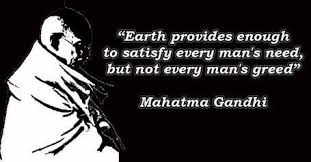
Climate Change as a change in climate which is attributed directly or indirectly to human activity. In this era of Anthropocene, human beings are altering the climate to achieve the futile goal of high consumption and exploitation. That is why, Mahatma Gandhi once said, “Earth has enough resources to meet people’s needs, but will never have enough to satisfy people’s greed”. After the Industrial Revolution in England in sixteen centuries, the countries have started exploiting the natural resources to create wealth. After some centuries, there was a realization among the leaders, writers, scientists etc., that we had altered the processes of environment for our own peril. In this context, earth summit was called to solve the problem of climate change in 1992. Since then, various summits happened. The Paris Climate Agreement is the result of the Conference of Parties(COP-21). It was signed by 195 countries of the world in December 2015. It aims at keeping the rise in global temperatures well below 2 degree Celsius. It sets a roadmap for all the nations in the world to take actions against climate change in the post-2020. It is very different than the earlier agreement of Kyoto Protocol signed in 1997 because it differentiated between developed and developing countries on the basis of their commitments to tackle the issue of climate change.

Important provisions of the Paris Agreement-

  • The principle of CBDR-RC (Common but Differentiated Responsibilities-Respective capabilities) was recognized across all the important pillars of the agreement.
  • It also acknowledged the idea of “right to development” of developing countries.
  • The Paris agreement is an outcome of ‘bottom-up approach’ through which countries are encouraged to submit their “NDC-Nationally Determined Contributions”.
  • It also includes adaptation and mitigation measures.
  • It also mandates that developed countries provide financial resources to developing countries.
  • The agreement includes a transparent framework for both action and support.

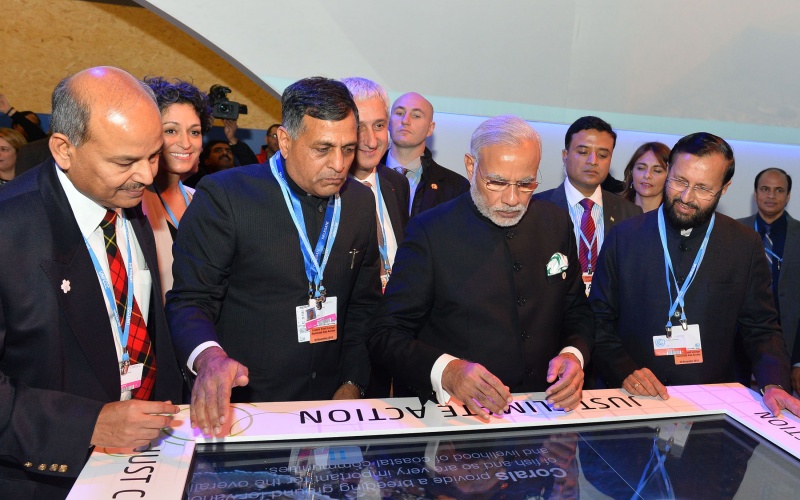
India’s INDC and other initiatives-

Prime_Minister_Narendra_Modi_Narendra_Modi_visits_India_Pavilion_at_COP21_in_Paris_23739656541-800x500_c

  • India will propagate a healthy and sustainable way of living based on traditions and values of conservation and moderation.
  • India will reduce the emission intensity of its GDP by 33-35 % of the 2005 level by 2030.
  • India will achieve 40% of electrical power from non-fossil fuel based energy resources.
  • India will enhance its carbon sink by planting trees.
  • India will try to mobilize finance as well as work for capacity building and technology transfer.
  • India has launched an International Solar Mission which would be a coalition of solar rich countries for the development of solar energy.
  • India has launched various initiatives in the area of renewable energy to reduce the use of fossil fuels.

Hurdles in the implementation of the Paris Agreement- 

There are various hurdles in the implementation of the Paris Agreement. Election of climate change skeptic and denier as US president has posed an imminent threat to the implementation of the agreement. Recently, Donald Trump withdrew from the Paris Climate Agreement. In fact, this can create a huge problem because the USA is the highest per capita emitter of carbon-di-oxide. It will not only encourage other countries to do so but also hamper the financing and technology transfer mechanism to solve the problem of climate change. The USA has always been acting in its self-interest since it became the Super Power. It also reduces the stature of the USA as a benign power. There will be massive domestic pressure to address the problem of Climate Change from the people of their own country.  The developing countries, which are more vulnerable to climate change do not have enough capacity and know how to solve the problem of climate change. They need finance and technology to adapt and mitigate the effects of climate change.

Another hurdle is related to transparency and review mechanism. UNFCC does not have the wherewithal to have a close eye on every single country regarding the implementation of their nationally determined contributions. There is need to make the processes more robust and transparent.

Criticism of the Paris Climate Agreement- Environmental activists, academicians and others have criticised the agreement as too late and too little. As per World Meteorological Organization, 2016 was the warmest year ever. In fact, Naomi Klein says that Paris Agreement is politically ambitious but scientifically catastrophic. It will not be enough to check the increase in global temperatures.

The most scathing criticism of the agreement comes from Amitav Ghosh, writer, who says that this agreement is a kind of impossible goal that merely facilitates a neo-liberal order to enrich itself via business opportunities in renewables. In fact, radical ecology says that capitalist modernity, commodification, and materialism are the main reasons behind the climate change. Until and unless people will not move towards moderation, self-poverty as propounded by Gandhiji and the idea of “sustainable development”, the problem cannot be solved. Because this earth exists not only for Homo Sapiens and their coming generations but also for plants and animals. Mahatma Gandhi also said that humans should act as ‘trustees’ to the natural resources and use them wisely as it is our moral responsibility to provide healthy planet to our future generations.

Please see the link for more information:

http://unfccc.int/paris_agreement/items/9485.php

http://www.business-standard.com/article/news-ians/economic-survey-reflects-india-s-climate-change-commitments-117013101072_1.html

An Inconvenient Truth

Promo_Images_840x529_B

The realization towards climate change and environment started around the 1960s and 1970s when Rachel Carson published her famous book “The Silent Spring” in 1962 and the report “The limits to growth” was published. Since then activism towards the problems of environmental degradation and climate change emerged in a big manner. However, the issue of Climate Change is more complex and controversial because of its claim of historical responsibility as well as the push towards limiting the growth of consumerism which is the dominant narrative of the world.

Action against Climate Change started from the issue of “Ozone Depletion” when countries came forward to sign the Montreal Protocol in 1987. However, the issue of ozone depletion and the comprehensive idea of climate change are very different. The issue of climate change became contentious because there was skepticism towards its acceptance and availability of scientific evidence. There was conflicting evidence provided for climate change even by the scientific community. However, the efforts towards building a consensus around the narrative of climate change started from the report of Brutland Commission Report- “Our Common Future” which came out in 1987 and also provided the concept of “sustainable development”. Subsequently, the Rio Earth Summit held in 1992. It means that efforts towards combating Climate Change started long before but it took a long time to make it a dominant narrative of the time.

The documentary “An Inconvenient Truth” by Mr. Al Gore, which came in May 2006 was not a single event in his life. He started his activism towards Climate Change much before when he lost a Presidential election against George W. Bush in 2002. When this documentary came, people started seeing the disastrous consequences of climate change in various forms like Hurricanes, Droughts, Floods, Heat waves etc. This documentary brought the issue of climate change on a public forum. Before that, the issue of climate change was the topic of discussion in the scientific community or people who are involved in dealing with the issue. He vividly pictured all the havoc which is happening on the earth due to climate change through various pictures, videos, and a picture of a dramatic increasing trend in temperature.

Even he got a lot of flak from various organizations as well as political parties, there has been consistent realization towards the problem of climate change. It can be seen in terms of Stern Review coming in 2006. There might be no correlation between the two but this documentary created a lot of awareness among the people of the developed world. It can also be seen in the exponential growth of renewable energy in the field of Solar, Wind, Nuclear etc. It can also be seen in terms of the signing of Paris Climate Agreement in 2015. One more interesting thing is that the US who consistently did not sign the agreement has increased it’s renewable energy capacity. However, the sad thing is that temperature is still rising, glaciers are still melting, sea level is still rising and engulfing low-lying areas and petty politicians like Mr. Trump still denying the climate change.

However, the problem is not about signing the Paris Climate Agreement but there is a lack of realization of the idea of “limits to growth”. We don’t want to accept that ‘we have one earth’ and we want to go to Mars to settle a colony there. In fact, here I remember the quote of Gandhiji, he says,

“Earth has enough to satisfy everyone’s need but not everyone’s greed”.

Ga

Please see this link to watch this documentary

A picture is worth a thousand words…

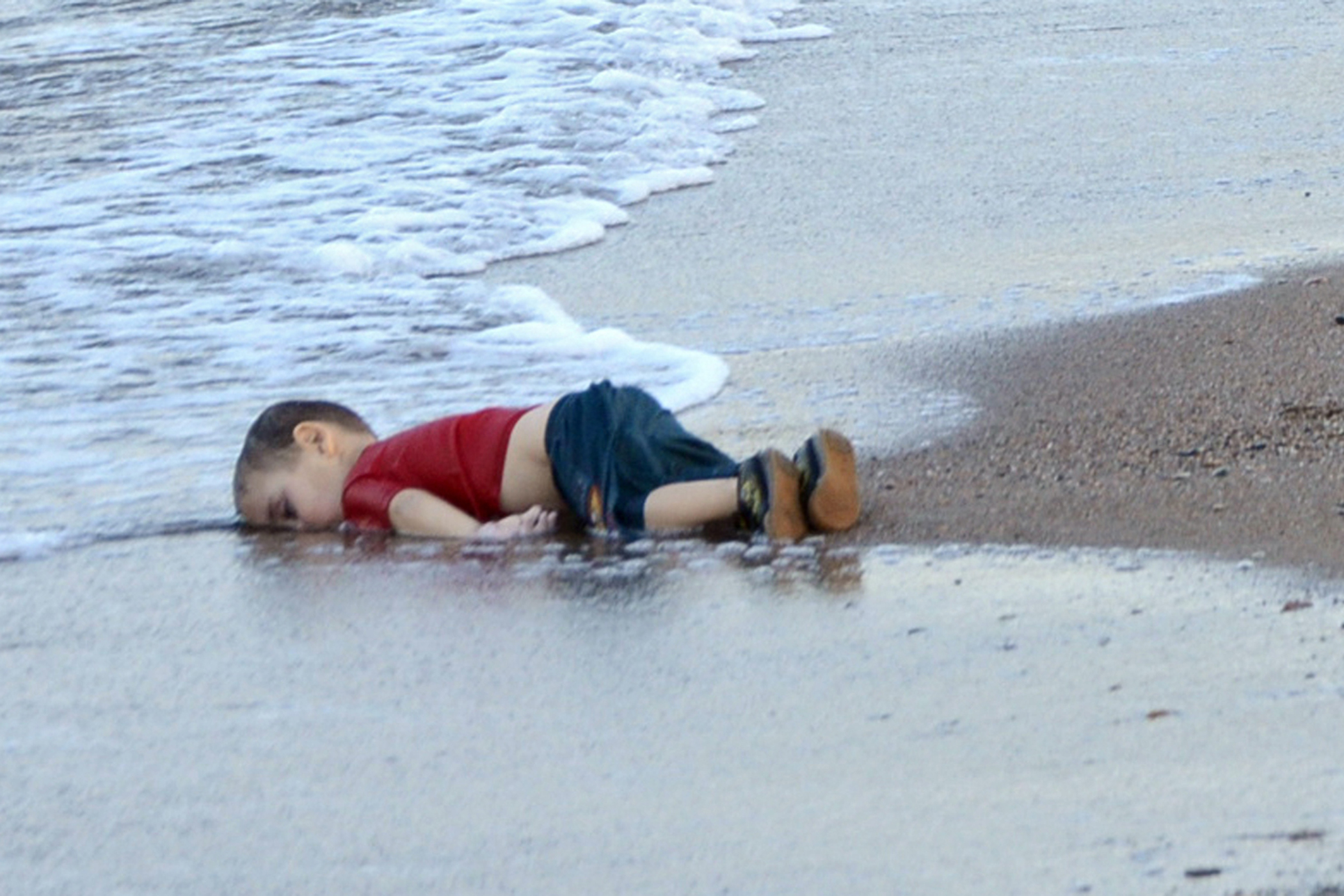
Migrant boat accident in Turkey

I don’t know how many people remember this picture but I did not forget till today. This picture is almost two years old. He is a three years old Syrian migrant/refugee who was trying to flee his country so that he can live a good life any where else. But the destiny had other plans for him. And just to inform others, in fact, I also don’t know, Is he a refugee/migrant? Countries have given different definitions for both the terms. A small child can be segregated in various ways.

I was totally frustrated after seeing this picture. Why a small child has to suffer due to Geo-political wars. What happened to the sacred “Human Rights”? We have ignored  that we are humans first . As Sapiens’s author Harari says, nation/country is a figment of our imagination. We created the nations, countries, religion, corporation, United Nations etc to bring about more cooperation and betterment of the humanity. But we just didn’t realize that day, these imaginations are going to hurt us so badly.

Syrian war is going on since 2011. The crisis started when the Arab Revolution was sweeping the Middle East. Western Countries wanted a ‘regime change’ in Syria by removing the President Bashar Al Ashad but Russia and China supported Syria. In this complex game of “power politics”, people of the region are suffering. We can also debate about various causes of these conflicts-some will say-Colonial legacy is responsible, Others will blame “religion” and some will say “ethnic differences”. We can find innumerable causes responsible for this horror. But the problem is that How to punish someone when perpetrator and victim are the same i.e. Human Beings. 

Why do we need  a shocking picture to realize that something needs to be done to solve the crisis. Loosing your loved ones is very painful experience. Every single person is important. And we talk about innocent children, every child is valuable. We can’t afford to hurt any child.

Bloodied Syrian Boy

Just look at this picture: The boy is alive but his facial expression reflects the emptiness in our ideas, our beliefs and our humanity. We need to realize that things can’t go like this. We as a humanity must come forward to do something. Until when  we are going to run towards chimerical ideas for the sake of humanity.

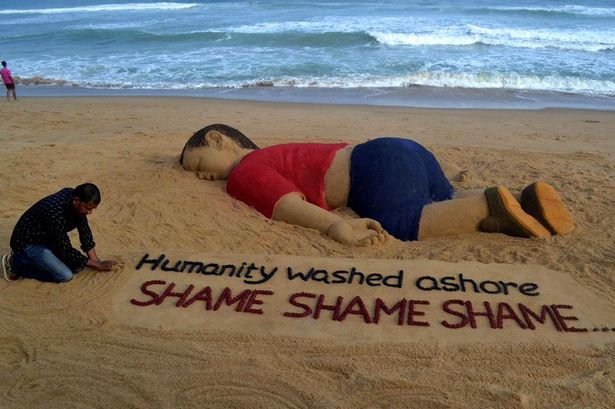
I am just leaving here with another moving picture created by famous sand-sculpture Sudarshan Patnaik.

Humanity-washed-ashore

Please see some links to know more about the issue:

http://www.huffingtonpost.co.uk/2015/09/02/image-of-dead-syrian-child-independent-published_n_8077824.html

https://www.washingtonpost.com/news/worldviews/wp/2016/08/19/a-picture-of-a-syrian-boy-goes-viral-but-the-war-goes-on/?utm_term=.85366891a943

http://www.npr.org/sections/goatsandsoda/2017/01/13/509650251/study-what-was-the-impact-of-the-iconic-photo-of-the-syrian-boy


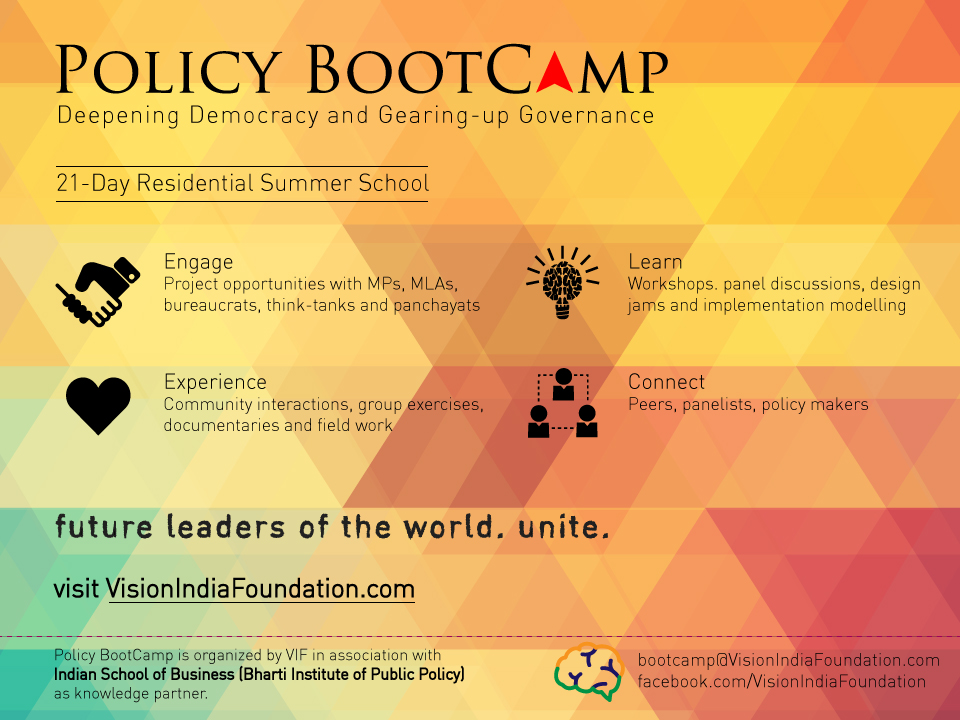
Policy Boot Camp( June 3rd to June 23rd)

Policy-BootCamp

We had an amazing start of the Policy Boot Camp. There are so many good expereinces to share. Meeting a diverse crowd from all parts of the country, renowned speakers sharing their experiences and knowledge to us. These 21 days of knowledge and experience will take  more than a year to assimilate in my system.

Every speaker was unique in its approach and they shared their life time experiences in a short duration lecture. After listening to all stakeholders of policy processes, it made me realise that we need to understand any issue comprehensively and sensitively before giving any comment on that.

Every single day from June 3rd to June 23rd, every single delegate from various parts of the country was in hurry to attend the lectures of speakers. We had really inspiring peers during the Boot Camp. All the delegates were so passionate about the issues discussed there that they will start the discussion on Whats-app group itself. Then after, there was a “Reflection Class”. It was the best part of the Boot Camp. There were four classrooms: Vikramshila, Takshashila, Valabhi and Nalanda. I was part of the Vikramshila class moderated by Shobhit Mathur. Every single day, we had heated exchange of views. It was a great experience witnessing young minds debating about national issues with such a huge interest and enthusiasm.Vikramshila classroom

I really liked the idea of reflection class. Reflection about the discussion in a group gave me a realization how you can see an issue with a multi-dimensional perspective. Every single delegate had unique ideas, views and opinions to express.

It was predicted by various authors and researchers at the time of India’s independence, India as a nation will not survive. But India has survived and now It is thriving economy and a vibrant democracy. The idea of ” Unity in Diversity” and ” Vasudhaiva Kutumbkam” is responsible for India’s growth as a nation. I was aware about this idea but I never witnessed it in my life except in the Boot Camp. In the Boot Camp, we had lot of heated discussion, arguments etc. Even after, we sat together to have breakfast, lunch, dinner as well as we helped each other. We laughed, cried, played together. Differences in ideologies were not visible outside the classroom. That is why, My India has survived and It will thrive till the end of this universe.

Every single day was full of special memories and stories. Two days, we traveled to Teen Murthi Bhavan for other lectures. Bus journey was really interesting. I got opportunity to talk to various delegates and volunteers. I found that everyone has a story to tell.

One day, we also traveled to a nearby village just to explore and understand what is happening there. It was also very enlightening visit. We talked to villagers, children, working women in Food Processing Industries, owner of the Factory. Interaction with them taught us the gap between theory and practical, policy and outcome.

19983312_421428658258343_7721915968437442950_o

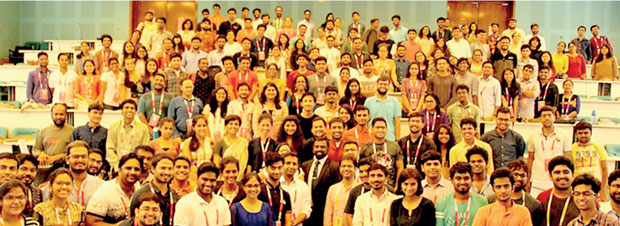
I can never forget one delegate of the bootcamp who was who was visually challenged. His name is Rahul. He is a civil services aspirant. The last day when he spoke about his experiences, every single delegate gave him standing ovation. It was a breathtaking experience for me. In fact, all those 150 delegates were amazing. It is very difficult and impossible to write about all the delegates.

I am also not able to forget the moment when we all stand up for first, Srilanka’s national anthem and after that India’s national anthem. It was an incredible moment of my life. How much love the people of both countries have for each other? This should set an example for peace and cooperation among all the nations. Mutual respect and love for each other’s national symbols should become a cornerstone for all the bilateral and international relations.

Indo-Srilanka image

The most important thing which I learned here, is that a single person without any resources or wealth can make a great difference in the lives of others. Only we need courage and willpower. Start with the small thing and it will eventually become a big movement.

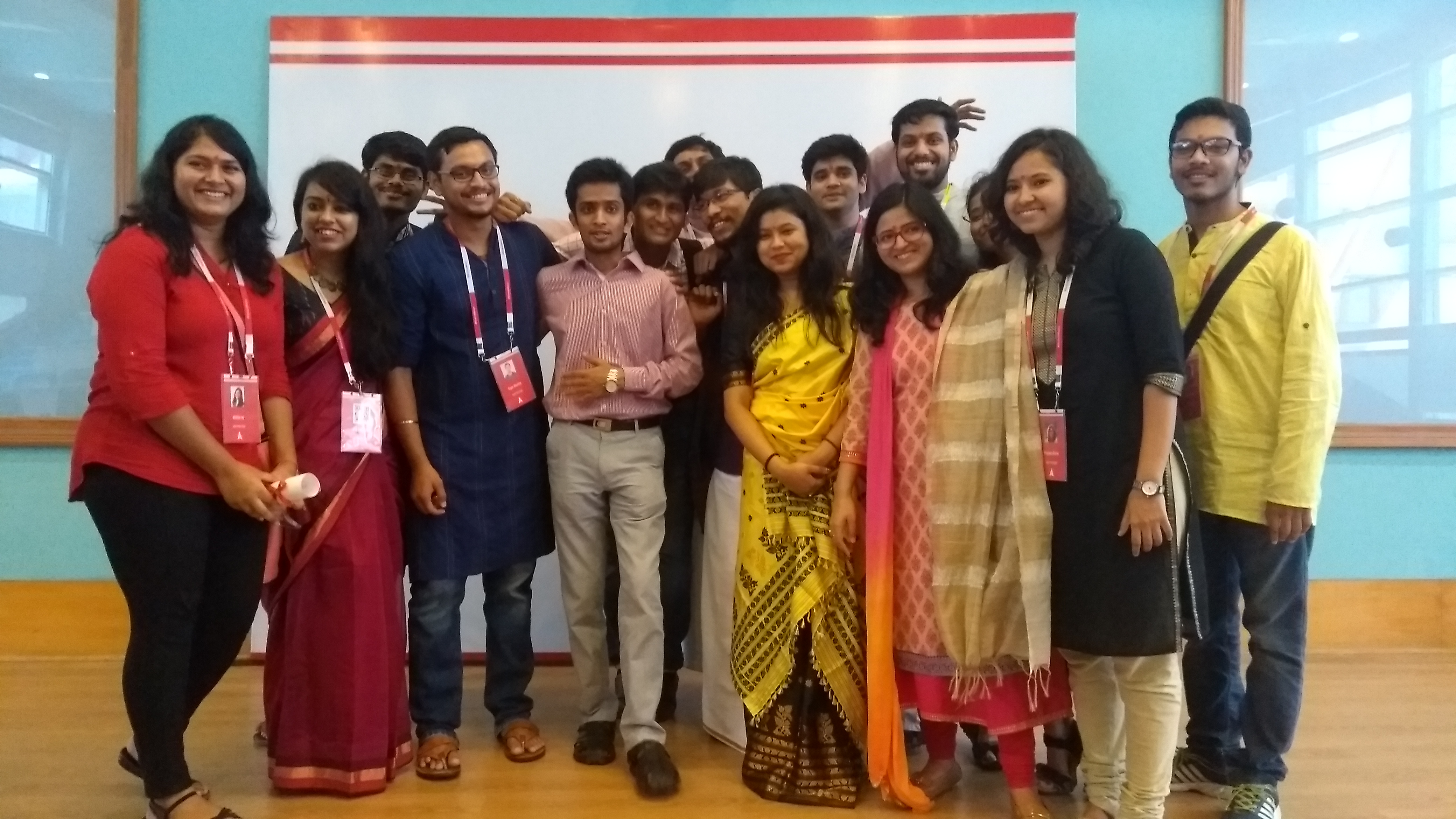
Last but not the least,  many delegates and volunteers have touched the chord of my heart. I will never ever be able to forget these co-delegates

IMG_20170623_130905255

In the last, I can say that Be the change and make the change.

BannerPlease find important links:
http://visionindiafoundation.com/

http://www.dailymirror.lk/article/Pathfinder-delivers-keynote-at-New-Delhi-Policy-Boot-Camp-131651.html

Introduction to Public Policy!

“Public Policy is whatever government choose to do or not do”

Thomas R. Dye (Political Scientist)

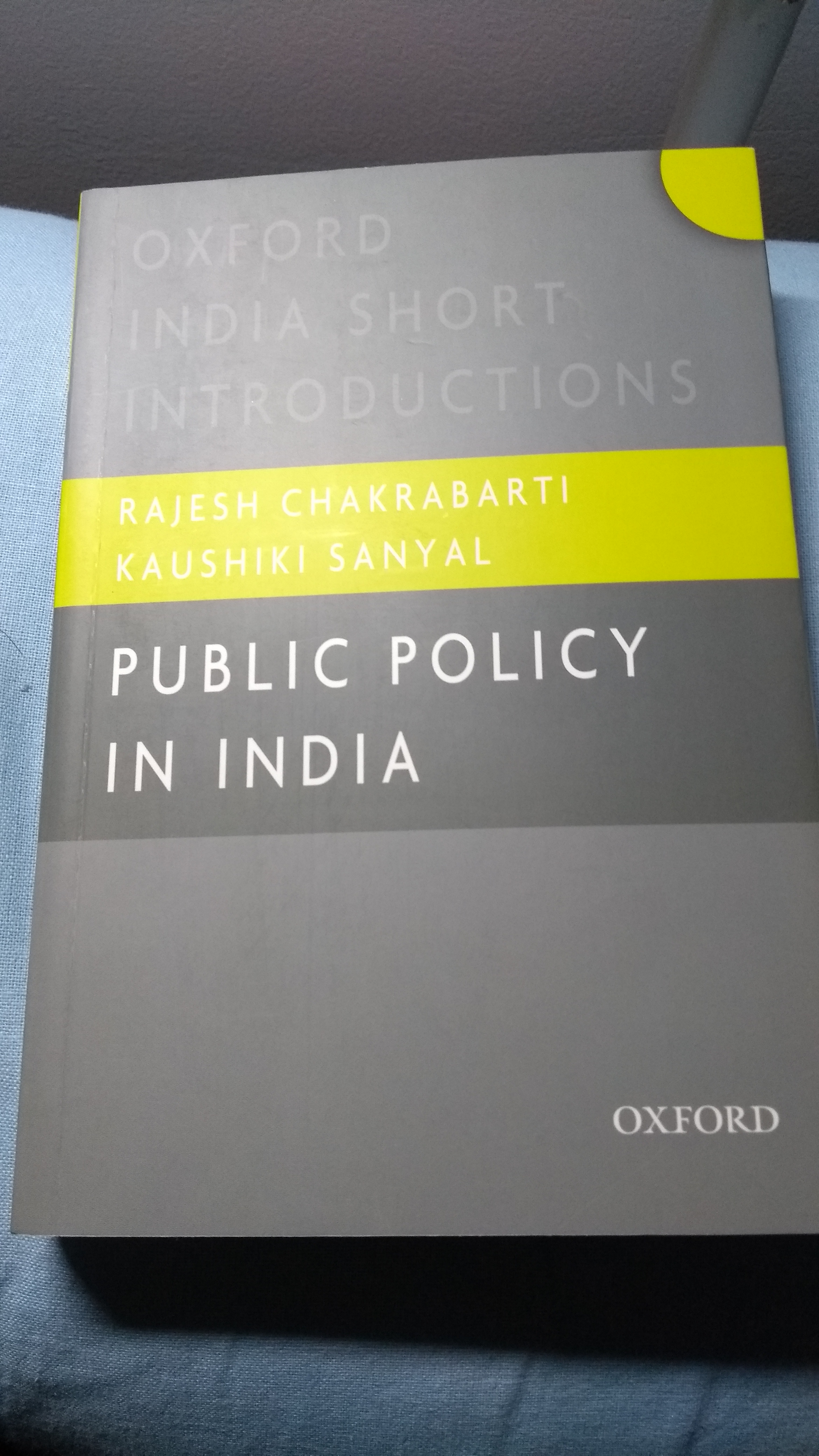
I got this interesting opportunity to listen to the lectures of Dr. Rakesh Chakravarti and Kaushiki Sanyal (Authors of this book) during the Policy Boot Camp 2017 where this book was part of our reading materials. This book is quite short and interesting as it talks about the origin and processes of policy making in a few pages. Every public policy enthusiast read this book before venturing into the complex field of public policy.

In these few pages, this book answered all intrigued questions related to public policy. For instance: What is public policy? What is the origin of public policy? How can we contribute to policy making? What are the institutions which provide degrees in this area? What are the stages of policymaking exercises? When did public policy as a discipline become popular in India? It touches almost most of the aspects of the policy making and encourages us to read more about the issues in the domain of public policy. And this book is quite significant for Indian policy students as it has been written in the context of current issues dominating in the social space of the country. It talks about the nirbhya rape case as well as public transport revolution created by Delhi metro.

The authors have tried to trace the history of public policymaking starting from Harold Lasswell‘s basic definition of public policy as ‘who gets what,when and how as the starting point for this existence. They also discussed in detail the transformation of Bihar in the leadership of Nitish Kumar emphasizing that a great leadership can bring about substantial changes in a short span of time.

They talked about the challenges of policy implementation and evaluation. The ideas of Randomised Control Trial(RCT) and the difference in difference principle as methods for effective implementation of public policies were explored in the book.

They tried to tell the policymakers of the country not to be dogmatic so that they can adopt various perspectives from around the world in the policymaking process. In the last pages of the book, the authors provided various innovative solutions to overcome various challenges to policy making, implementation, and evaluation. They tell you, how to broad-base policy-making, how to increase legislative capability, and how to evaluate policies in a better manner so that we can develop better policies.

I would recommend this book to all current and future policy makers so that they can understand the nitty-gritty of policy making in just a few pages.

Negotiation workshop on Mouse Case Study:

During this lecture, we were given Mouse Case Study (http://www.depa.univ-paris8.fr/IMG/pdf/Disney_Case_Study.pdf)

In this case study, there was a group where we have to play different roles like someone was playing a representative of the private sector, another three people were playing the role of local government and another was a representative of the government. So, it was a great learning experience and realization towards the complexity of public policy making, implementation, and its challenges:

  1.  The first time in my life, I realized how difficult it is to bring about consensus on any one particular issue. It is very difficult to satisfy the aspirations of each person in the group.
  2. I was acting as a representative of the government and I had to mediate between private sector representatives and local government representatives.
  3. When the discussions were going on, suddenly one of the local representatives went outside the room saying that he didn’t agree with the proposals. This showed the kind of emotions someone goes through when it comes to your self-interest.
  4. At last, we somehow reached a deal but I think that I, as a government representative, gave more concessions than it was required.

I don’t know if I acted in a good sense or not? Even so, it was quite insightful and an eye-opening exercise that provided an interesting experience of nuances of policymaking. Convincing and negotiating with others when their self-interest is involved is a very difficult issue. We keep on criticizing our leaders, bureaucrats, policymakers, teachers, etc., but we never put ourselves into their shoes to understand their constraints and challenges.

Demographic Dividend or Demographic Disaster?

dd

As per the Census 2011, India’s working age population (15-64 years) is 63.4% of the total population. It is projected that India will be the youngest nation in the world by 2020. India will have an enormous “youth bulge” in the form of “demographic dividend” which provides a golden opportunity for the Indian economy to harness this for increasing growth and productivity of the economy. The growth rate of the labour force will continue to be higher than that of the population until 2021. It was found that every fast-growing economy has accelerated as it underwent a “demographic transition”. Not only this, there are two kinds of demographic trends happening in India. One is that peninsular states have stabilized their populations and northern states are having very young population.

While this demographic dividend provides great opportunities, it also poses various challenges. If these challenges were not tackled at the appropriate time, demographic dividend will turn into “demographic disaster”.

Challenges in harnessing demographic dividend-

  • Education- The young people need to be provided with a holistic education where they get the quality education as well life skills. However, the situation on the ground is alarming. As per the ASER report, there is a sharp decline in the quality of education. Children are not able to read and do simple mathematics. The rote learning is prevalent. India spends less than 3% of its GDP on Education. As per one government report, only 79% teachers are professionally qualified to teach in schools.
  • Skill Development- Employability is one of the biggest issues in our country. Students do not have adequate skills to work. As per the Labour Bureau Report 2014, the current size of India’s formally skilled workforce is only 2%. In South Korea, 96% and in Japan, 80% workforce is skilled. There is a lack of infrastructure for skill development. Workforce needs skills to get decent employment.
  • Health- It is one of the most important requirements because a healthy person can only deliver results at workplace. But the irony of the situation is that India spends less than 2% of GDP on Health. Our primary health infrastructure is crumbling and a large section of rural India still defecates in the open. Children are malnourished and stunted.
  • Employment opportunities- India has notoriously gone through the process of “jobless growth”. Indian economy is not able to generate adequate employment for the people of the country. It is dominated by informal sectors. People are mostly self-employed. Indian economy is not creating jobs at a mass level for unskilled and semi-skilled people.
  • Discrimination against some sections of the society- Indian society still discriminates various sections of society. It is not only hampering the development process but also creates various hurdles in economic development. The Labour Force Participation Rate of Women(LFPR) of women is very low in both urban and rural areas. Various weaker sections of the society do not get enough opportunities for education and skill development. Child labour is prevalent in the country, which is not only hampering the future generations but also the present adult population.

What needs to be done?

Screen-Shot-2013-12-09-at-8.15.09-AM

India must create a sustainable ecosystem for education and skill development. Recently launched National Policy of Education is a step in the right direction. However, various anomalies related to the quality of education, teacher training etc. need to be resolved at war footing. Skill India Mission launched by the government to create a job ready and skilled workforce needs to streamline in the education curriculum. It should be made compulsory for every student to learn some skills during school time.

We need to realize the fact that only healthy young population of the country can prove to be a good worker. India has a ‘serious hunger problem’ as per the Global Hunger Index. Swachh Bharat Mission, Mission Indradhaush, Janani Suraksha Yojana, Maternity Benefit Bill 2017, National Health Policy 2017 have good intentions and provisions but they need hundred percent implementation to reap the benefits of the demographic dividend.

Indian Economy needs to focus on manufacturing sectors as well as those sectors which are labor intensive like textile, leather, tourism, agriculture and allied activities to create a large number of jobs. In this context, Make in India and various labour reforms should be given priority.

There is also need to change the mindset of the people to change their attitude towards other sections of the society. There is need to increase the labour force participation of women.

Demographic deadlines are looming towards the country and the economy. India must take adequate steps to reap the benefits of demographic dividend otherwise it will turn out into a demographic disaster.

Please find useful links here:

http://www.daijiworld.com/news/newsDisplay.aspx?newsID=454215

http://www.thehindu.com/news/national/demographic-dividend-at-its-peak/article5102093.ece

http://www.prb.org/Multimedia/Video/2013/demographic-dividend-engage.aspx

Universal Basic Income- An idea whose time has come?

UBI

         After seventy years of independence, one out of three Indians still live below the poverty line, 25% of the world’s hungry population lives in India, 77% of Indian households do not have regular wage/salaried person in their house and as per the recent Human Development Report 2016, India ranked 131 out of 188 countries in terms of human development. As Mahatma Gandhi wished to “wiping every tear from every eye”, there is a long way to go for India to fulfil the dreams of Gandhiji to not only alleviate but eliminate poverty to provide dignity, self-respect and freedom to the people of the country. In this context, there are various policy options proposed by policy makers and leaders to ensure better and timely delivery of benefits to the people. Cash transfers are direct payments given to the people based on certain criteria or otherwise. Cash Transfers schemes are present all over the world in different forms. The nature of the schemes can be understood on the basis of conditionality, targeting and the frequency of transfer.

Conditional Cash Transfer- Conditional Cash Transfer schemes provide cash benefits directly to the poor households on the basis of fulfilment of certain specified conditions. It creates incentives for the individuals to adjust/modify their behaviour in order to comply with conditionality. For instance- LPG subsidy is a kind of conditional cash transfer. Under this scheme, people need to use LPG gas for cooking then only they can get the subsidy. It serves dual purpose of providing hassle free cash transfers to the poor households for cooking fuel and also protect environment by promoting clean fuel.

However, there are some issues with the conditionality. It is very difficult to take punitive measures against those who do not fulfil all the conditions. For instance, government is focusing on toilet buildings under Swachh Bharat Abhiyan and provide subsidies for that. However, if people do not use toilets, it is very difficult to punish them or deny them the subsidy. Another issue with the Conditional Cash transfer schemes is that it does not address the product/infrastructure supply issues. For instance- If people have money but there is no medical facilities nearby, how they are going to utilise that money.

Unconditional Cash Transfer- Unconditional Cash Transfers provide cash transfers to intended beneficiaries without putting any conditions. It creates freedom of choice to the poor households/individuals to spend their money in whatever manner they want. It is transparent and emancipatory for the people who receive the cash transfers. It also provides some security to the people because of regularity. As per various studies in various countries, it was found that cash transfers automatically help in improving better nutrition, school attendance and women economic status.

However, as per the critics, unconditional cash transfers can make people lazy. It is also very difficult to withdraw cash transfers once provided because of political reasons. Another important issue is that whom should get this money-all the citizens of the country or who are below poverty line. But as we know, there are so many issues in the identification process of intended beneficiaries. “JAM-(Jandhan,Aadhar and Mobile) number trinity can be the solution. But, there is lack of financial inclusion in our country. People have cell phone, Aadhar number but they lack banking facilities in their vicinity. Mobile Banking in the era of Digital India can help bridging this gap but there are also constraints there because of lack of penetration internet facilities.

Universal Basic Income- Universal Basic Income(UBI) is a revolutionary and radical idea which is based on the premise that a just society needs to guarantee to each individual a minimum income which they can count on, and which provides access to basic goods and a life of dignity. It is universal and unconditional. Under this scheme, the public authority will provide a basic income to every citizen of the country. This idea got support from both the left and right leaning political leaders and policy makers. To reduce abject poverty and unemployment, this idea can provide a substantive solution. It can also act as an insurance in the case of job losses due to automation as predicted by international organisation.

F&A

Arguments in favor of UBI-

  • It will remove abject poverty and bring about ‘social justice’ in our country.
  • It will provide freedom of choice and dignity to the people to decide about their own fate.
  • It will also reduce the burden of bureaucracy in identification process and simplify the welfare mechanism thereby increasing administrative efficiency.

Arguments against UBI-

  • Individuals will misuse the money for bad habits and constant cash transfers will reduce labour productivity.
  • It is really difficult to create a proper implementation mechanism for such a vast income transfer.
  • And the most important difficulty is about financing this idea. Who will provide the cost?

In fact, there was two pilot projects launched in Madhya Pradesh for Universal Basic Income. It was found that there was no reduction in work and people started working more shifting from casual work to self-employment. As this Economic Survey discussed about this idea in detail in a single chapter providing various modalities of implementation. In fact, government provides lot of subsidies which can be rationalised to provide for universal basic income. Because as Thiruvallur said “Nothing is more dreadfully painful than poverty”, and gripping poverty robs a man of the lofty nobility of his descent”. It is high time that country debates about this idea and implement it to reduce the dreaded disease of poverty from our country.

Disclaimer- It is my personal view and analysis. Everyone has a right to differ.

If you want to know more about this idea, please see the links below:

http://indiabudget.nic.in/es2016-17/echap09.pdf

http://basicincome.org/basic-income/

http://fortune.com/2017/05/24/automation-job-loss-universal-income/

http://www.cnbc.com/2017/05/25/mark-zuckerberg-calls-for-universal-basic-income-at-harvard-speech.html

Kashmir is Burning: Who is to blame?

Kashmir problem is there since the birth of our country. It is just lingering on since then. In fact, there are three stakeholders in the Kashmir problem-One is INDIA, second is PAKISTAN and third is KASHMIRI PEOPLE. Recently, after the death of a terrorist Burhan Wani as per INDIA, freedom fighter as per PAKISTAN and sympathizer for KASHMIRIS died in July 2016. After that massive protests started in the valley. But as far as I think, it was a trigger point, the resentment was brewing for a long time.

510092-burhan-wani-news

In fact, I want to ask some questions: WHO IS TO BLAME?

  • Election of BJP at Centre or election of BJP-PDP alliance at State.
  • Army/Paramilitary/Militants.
  • Pellet Guns or Stones.
  • AFSPA or Proxy war led by Pakistan.
  • The lynching of people on the grounds of protecting cows or Beef eating. Who is the more important life of a person or cow?
  • Saudi Arabian/Pakistani Television or Social Media.
  • Surgical Strikes or Beheading and mutilation of soldiers.
  • Cross Border Terrorism or Inside unrest and resentment.
  • The election in UP or Bye-elections in Jammu and Kashmir.
  • Separatists or Maulavis.
  • Winter or Summer.
  • Cricket or Hockey.
  • SAARC Summit or 26/11 Mumbai Terrorist Attack.
  • Just go back in history, Partition or Independence.
  • Gandhi or Jinnah.
  • Communalism or Secularism.
  • Article 370 or The J & K Constitution.
  • Hindu or Muslim.
  • India or Pakistan or International community.
  • The list is too long. we have innumerable reasons for not solving the Kashmir issue. We are not able to find one reason to make Kashmir, which used to be known as “heaven on earth” peaceful.

It is pathetic and very sad to see the situation in Kashmir. Students are protesting. Girls have come on the road to pelt stones. Every single day our soldiers are dying. Many civilians are dying. Every single day someone is losing their loved ones. It is very painful to lose someone in your family. It is not the time to blame someone or other. Every stakeholder should come forward to create peace and stability in the region. It is not the time to do politics.

What needs to be done?

  • India is a responsible democracy. It cares about its people. India must come forward to create a situation of dialogue among all stakeholders.
  • Use the strategy of “winning hearts and minds”.
  • Talk with Pakistan. Because we have no other options. We can change our friends but not our neighbors.
  • People of Kashmir are important for us. How can we keep quiet when our own people are dying?

We must come forward and do something to bring peace in the region. Please have a look at below link of a newspaper article. I found it very sensitive and really true at the ground level. https://kashmirobserver.net/2017/features/kashmir-prison-three-walls-17567

Watching Person Of Interest

I started watching this TV show recently. I didn’t know about it. I found it very interesting as well as thought provoking. It is a kind of crime thriller initially. However, the best part of the show is “THE MACHINE”. It was built by Mr. Finch as he says in the starting of every new episode. This machine is watching everyone at every moment of the time. Mr. Finch and Mr. Reese are the two most important characters of this show. Mr. Finch is software engineer and Mr. Reese is an ex-CIA agent. Both are trying to save people as the”irrelevant list” given by the “machine”. There is so much secrecy and suspense in this show that you will never know who is going to become the next perpetrator/victim. Sometimes, victim and perpetrator are both same.

In fact, this show was designed in the wake of 9/11 attack on twin towers in New York(USA). The Wikileaks saga provides a chilling reminder of government’s massive surveillance on the people of the country.

I can relate the whole surveillance debate to our own country also. We are going through the debate of “AADHAR CARD” as voluntary or mandatory. Is it against our “right to privacy”? Do we really have right to privacy? As government of India recently said that right of a person to his or her body is not absolute. State has the power to take the life of a person. After watching this show, you will get goosebumps just realizing that someone is watching you at every moment. By the way, we are getting controlled by the government what to eat, what to wear and what to say.

However, I also found some bright sides of watching this show:

  • We get ideas to think in a deep and discreet manner.
  • How to react when you are in a difficult situation?
  • How to read people in an effective manner?
  • Why some soldiers do behave in a weird manner?
  • How government policies should not breach the limit of ethics?
  • Right to privacy of citizens vs Right of the government for surveillance. What is more important privacy or security?
  • Limits of the power.
  • I remember one line by Mr.Finch, “when we become predictable, we become vulnerable”. So, try not to become predictable.

How can I forget Detective Fusco and Detective Carter. Detective Carter is an upright police officer. She also helps the Mr. Finch team. Detective Fusco was initially bad cop but now he is a good cop working with the team of Mr.Finch and Mr. Reese. Detective Fusco is really funny. In one scene, someone addresses him as “fiasco”.

This show is worth watching for those who want to use your brain and logic to think about the upcoming events.

Why Nations Fail?

This book was an interesting read for everyone who is curious to know why some nations are rich and why some are poor? This book is a must-read for all those who work for the welfare of the people of the country. It gives a compelling perspective about the origins of power, prosperity, and poverty. In fact, everyone who is interested in public policy, they must read this book to get ideas how to change or modify policies/institutions at a critical juncture to create a path towards prosperity for a nation. We can look for a better example in our own South Asian Sub-continent in terms of the evolution of India and our neighboring countries. Why Indian democracy despite its various flaws is still flourishing? Why other countries in the Sub-continent are still not able to achieve a substantial form of liberal democracy? That is also interlinked with our economic growth and progress as well as reduction of poverty.

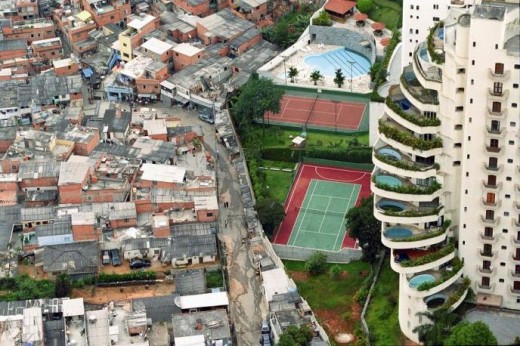
It is a hot topic of discussion and debate to find out the reasons behind poverty. Not only this, in the process, policymakers and leaders are eagerly waiting to know the real formula to bring about prosperity for their people. We live in an unequal world. There is a massive amount of inequality prevalent among nations of the world. Why it is so? Why one person in “developed north” lives healthier and prosperous life and another one in “developing south” lives a miserable life with no health and security? This inequality is not only prevalent between countries but also there within a country also. The stark inequality is not only impacting the lives of poor but also creating grievances and resentment among the people of Western countries of the USA and the European Union. The election of Trump as US president, Britain’s exit from the European Union, Islamophobia, Migration crisis, and anti-migration rhetoric are some of the symptoms of the real problem. 

The authors of the book have also discussed and refuted various theories regarding origins of poverty and prosperity before giving their own theory of “INSTITUTIONS”:

  1. The Geography Hypothesis claims that geographical differences create poverty and prosperity. Montesquieu, the French philosopher propounded this theory. He argued that people in tropical climates tend to be lazy and lack inquisitiveness. The modern version of this theory says that tropical diseases have adverse consequences on health and labor productivity.However, we have a lot of examples from past as well as present to refute this theory. We had a lot of great civilizations(INDUS valley, INCA civilization) in tropical areas and developed countries like Singapore and Malaysia in tropical areas. Nogales , Arizona(US) and Nogales, Sonoro (Mexico) are very close to each other but they are different not because of their geography but because of the border existing between the two countries which separate them to live in different institutions.thin_line_between_rich_and_poor-520x346.jpeg
  2. The Cultural Hypothesis relates prosperity to culture. Max Weber argued that the Protestant Reformation and Protestant Ethic played a key role in the growth of Western Civilization. It can also be refuted by seeing the countries of Japan, Singapore, South Korea and China. They have different cultures as compared to western countries. North Korea and South Korea had same cultures till 1950. However, today both the nations are far apart not because of their culture but they have different kinds of institutions after their division.korea-5ac0a6353ba0201b5cb2fcf37552aee89ee4a258-s900-c85.jpg
  3. The Ignorance Hypothesis asserts that world inequality exists because we or our rulers do not know how to make poor countries rich. However, it is also not true because it is not that some leaders do not know things but it is something else. As per the author, poor countries are poor because those who have power make choices that create poverty. They get it wrong not by mistake or ignorance but on purpose.
  4. Here comes the theory, given in this book- Theory of Institutions. As per the authors, institutions matter a lot. They shape not only the destiny of the particular country but also influences the world. Institutions can be of two types: political and economic institutions.  In fact, both are interlinked. The poverty and prosperity is the interplay of political and economic institutions. What kind of political and economic institutions are created/formed in the country decide about the future of the nations? There are two kinds of Economic Institutions- Inclusive as well as Extractive Inclusive Economic Institutions foster economic activity, productivity, and prosperity. They also pave the way for two other engines of prosperity-Technology and Education. Similarly, Inclusive Political  Institutions are pluralistic  and centralized enough to create a peaceful climate for people to pursue their ideas.

On the other hand, Extractive Political Institutions concentrate power in the hands of a narrow elite and place few constraints on the exercise of this power. Extractive Economic Institutions naturally depend and sustain the Extractive Political Institutions. They both are interlinked. The real thing is that we and our leaders get the opportunity to decide about these institutions at the critical juncture of history. For instance, Black Death(Bubonic Plague) has created the ground for new and progressive economic and political institutions to emerge in England. On similar grounds, we can see our Independence and formation of our constitution in 1947-1950 was a critical juncture for our country. It can also be related to the present situation in India. The NDA government led by Mr. Modi, our Prime Minister got a massive majority in 2014 election. It was a critical juncture and opportunity provided to leaders of the country to usher into a radical transformation of our politics and economics to create prosperity for Indian people.

It means that history also plays an important role. In fact, Institutions are formed at the critical juncture to decide about the future of the country. But the real question is that why not always choose prosperity? Because some leaders want to become rich themselves rather than making their country rich. The colonial legacy also played a role here. Colonies were exploited by the colonial masters for their own benefits. Not only this, they established various institutions to perpetuate disparity and poverty in the colonized countries. We can see the examples of this legacy in Sub-Saharan African and the Middle East countries.

So what needs to be done?

Extractive Political and Economic institutions must be replaced by Inclusive Political and Economic Institutions. At every critical juncture, the people, as well as leaders of the country, must embark on a journey to create inclusive institutions to create prosperity in the country. For instance, our country is at a critical juncture when our “demographic dividend” is so high and our country is a fastest growing economy in the world, we must seize the moment to create bountiful opportunities for the youth of the country.

The BIG BANG TRIP-Pangot

http://www.thebigbangtrip.com/
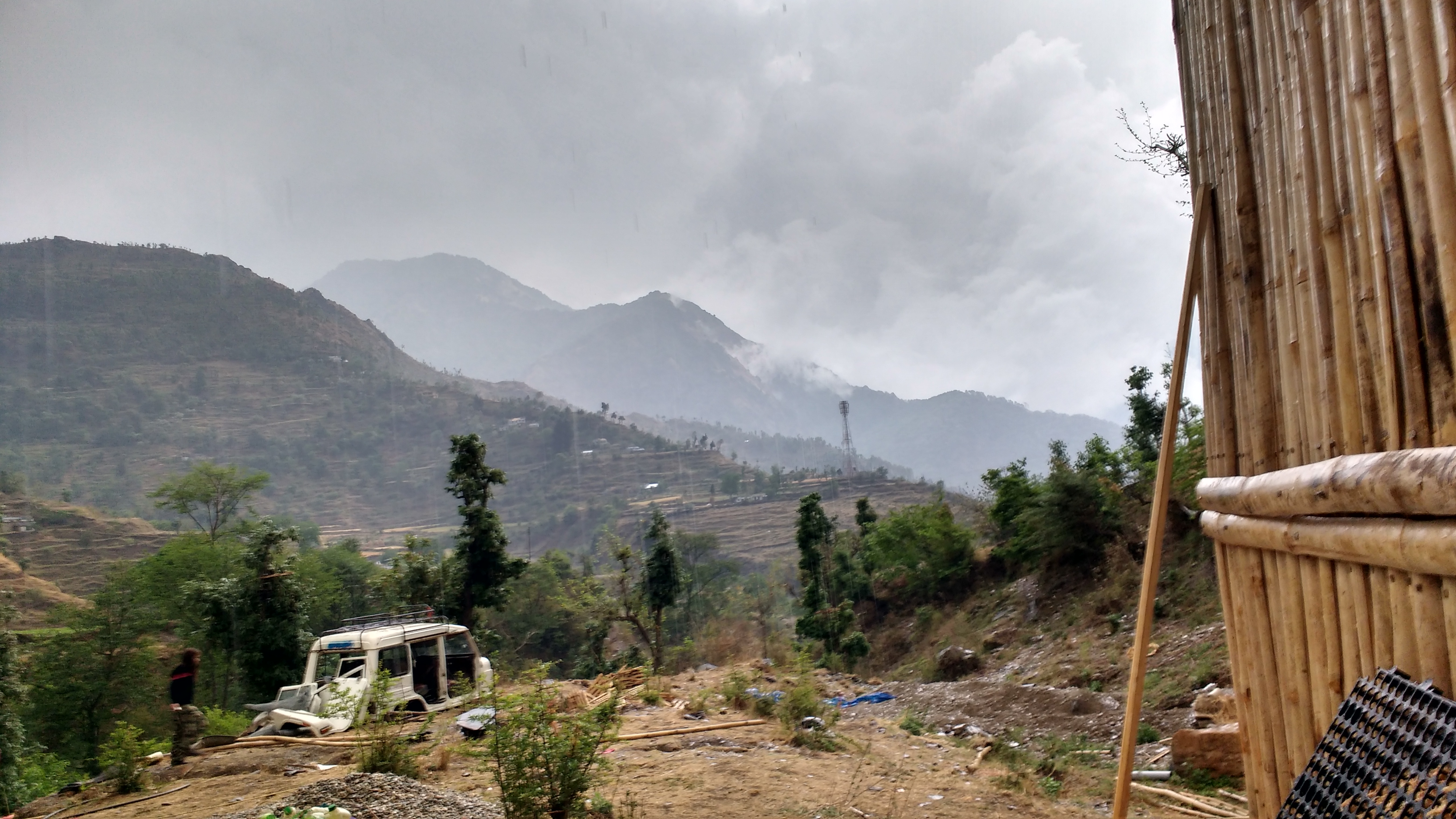
I don’t know from where to start. Someone from Vision India shared me about the big bang trip. I was also thinking to go on a trip where I don’t know anyone. So, I applied for the trip. It started from April 20th and ended on April 23rd. We went to Mahrora village near Pangoot, Uttarakhand. I had so many things to tell about this trip. I am not able to decide how and where to start.

This trip is must for those who really want to explore the world and also understand human life. I would recommend this trip to people who really want to understand others and learn life lessons.

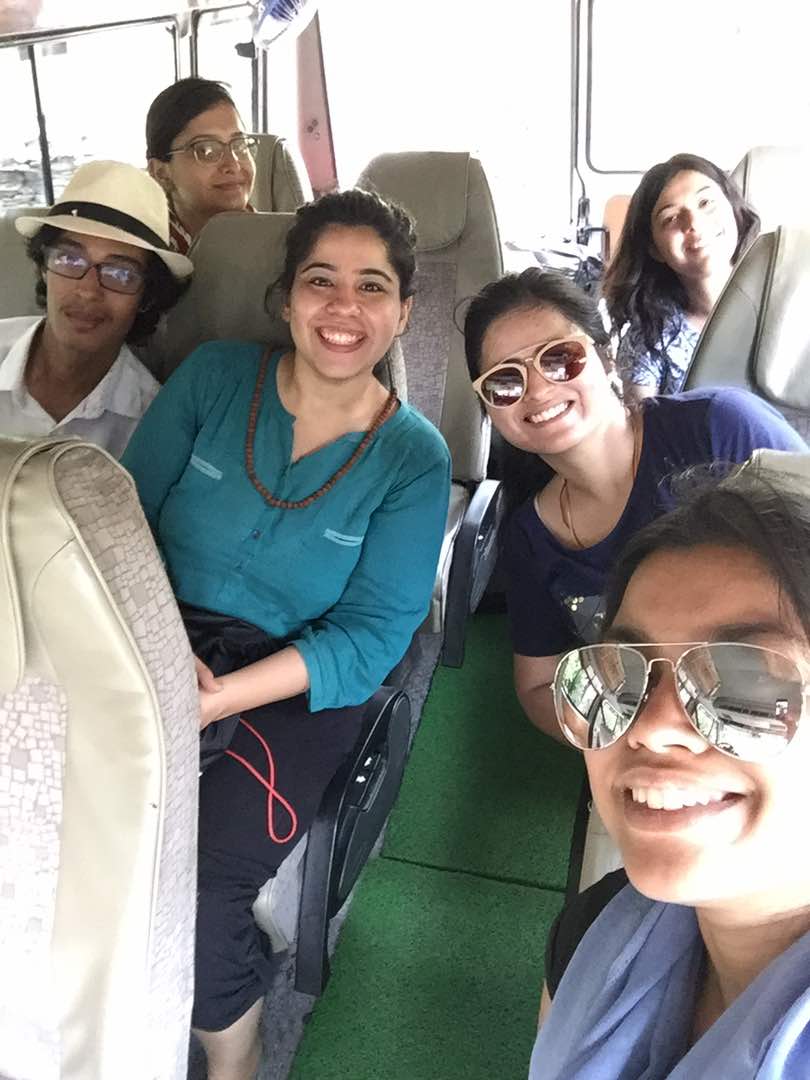
  1. MET WITH AWESOME PEOPLE ON THE TRIP- This was the best part of the trip. I always had the curiosity to meet with new people to know about their lives. This trip acted as connecting link between me and others. There were seven people on the trip-Pallavi, Raghu, Meghna, Priyanka, Bhavna, Nisha and me. All the girls were from different age group. We stayed together and had a lot of fun for three days. The trip was organized by Chandrabhan and Chetan. They were also funny guys. They are the founders of The Big Bang Trip. It is a really great idea to go on these kinds of trips. Some people think but only some people implement the idea. We also met with one instigator Ashish there. He is traveling solo for last two years. I saw a lot of dedication and courage in his effort. He left his corporate job to become a full-time traveler. We also met with Shagun Singh, the founder of Gilli mitti India. She is also very bold and courageous person. She also left her lucrative corporate job to focus on farming. She has decided to settle down there only. That area is still inaccessible as well as very remote. She left everything in the city and went to the village to pursue a sustainable path. The stories of these people are really inspiring and provide directions to others to take the bold path in their lives.How I can forget the cute 🐕- Kanwar Singh. He accompanied us for two days. People on the trip fell in love with the dog.

     2. LEARNED SO MANY SKILLS- I got      the opportunity to learn so many skills    there:

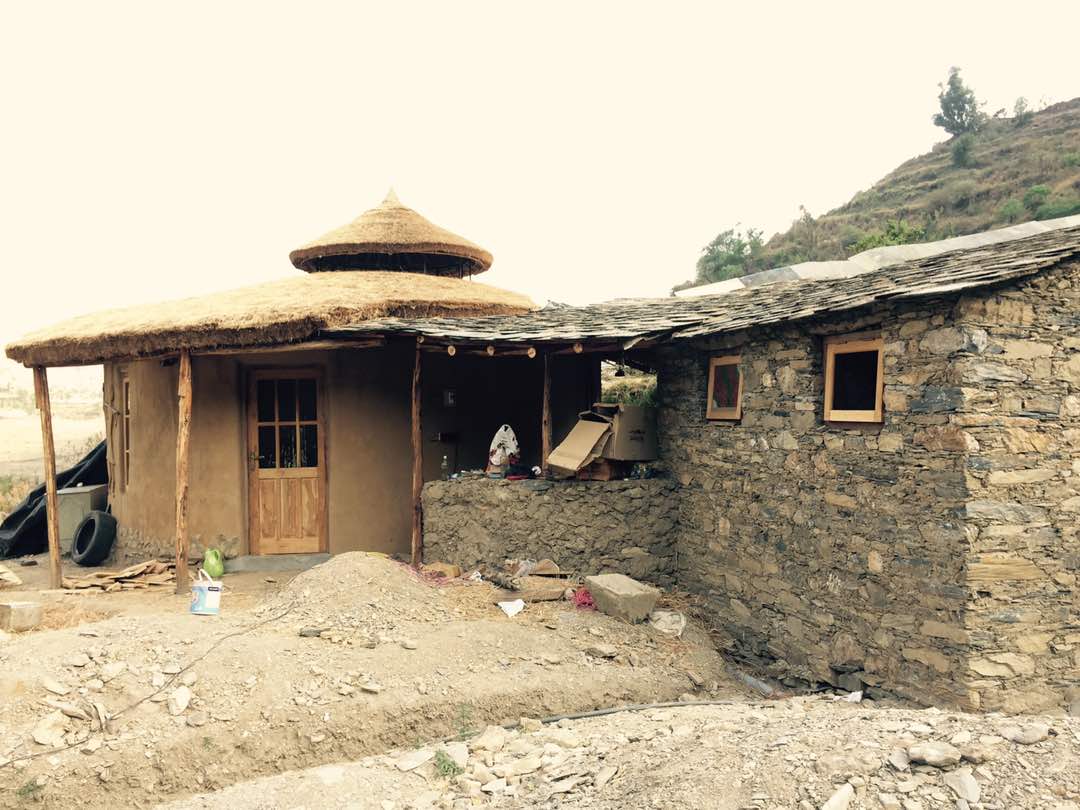
  • We learned about Car Cob Cottage House.
  • We also prepared cob from clay, hay, sand, and water.
  • We learned about earth-bag houses.

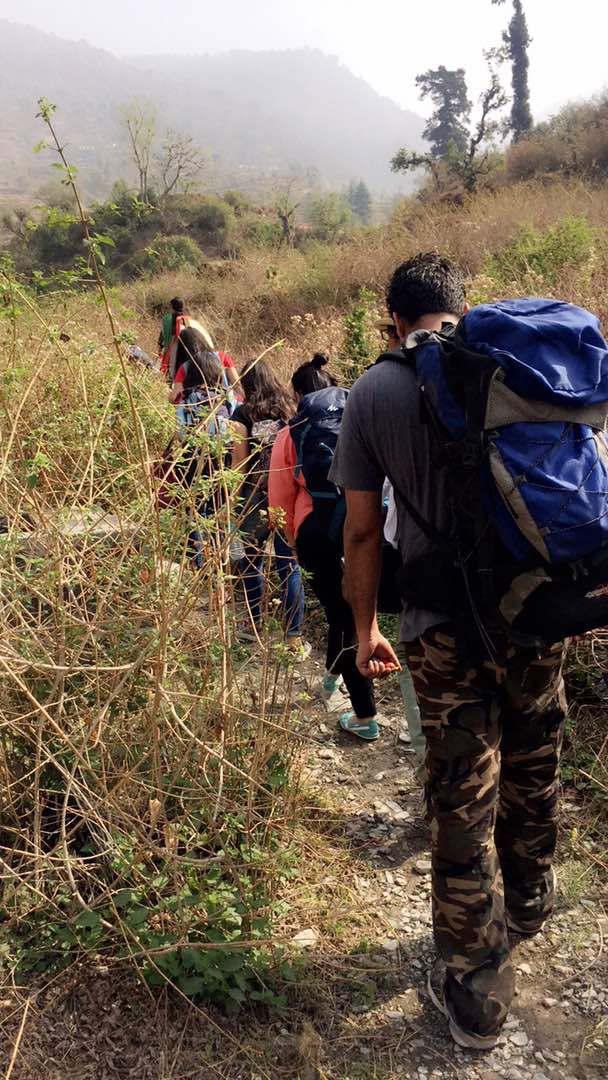
3. TREKKING TO WATERFALL WAS AMAZING EXPERIENCE- Trekking on a difficult path resembles the happenings of life. Our life is a difficult trek where we need to just move on whenever problems/hurdles come in our life. This trek was a very small but it was adventurous. After trekking for some times, we just saw the serene and pure water, which was flowing from the mountains. We were able to hear the ringing sound of falling water. It was such a nice feeling to be there that I didn’t feel like returning back from there.


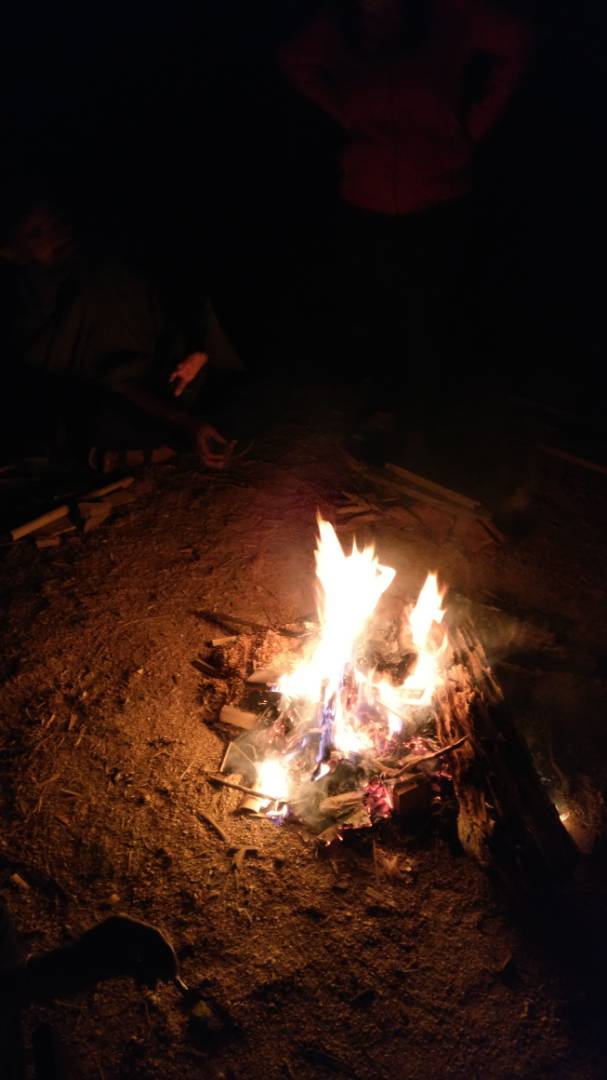
4. BONFIRE EXPERIENCE AND MUSIC- In the starry and cold night, we experienced the warmness of bonfire. There were music, fun, and Masti.

5.INTERESTING ACTIVITIES- Chandra Bhan has also created some interesting activities for us. It was really fun doing those activities. It helped in getting to know each other. Not only this, it helped in making the environment lighter.

6. BOAT RIDE IN NANITAAL WAS FUN-  We took a boat ride in Nani jheel on the last day of the trip. I was really surprised to see the cleanliness of the lake. The water was cold and pure. I also noticed amazing thing there. There were three religious shrines( Devi maa temple, Gurdwara, and Mosque) from three different religion present near the lake. There was also Tibetan market which is related to the   Buddhism.

7. ANTAKSHARI IN THE BUS WAS REALLY ENTERTAINING- We played antakshari in the bus. It was really refreshing and enjoying.

I have so much to write about this trip but not every feeling can be expressed in words. The road trip with unknowns not only teaches us about life experiences but also inspires us to explore the wonder of the world. So, get ready with your backpack and start traveling.

Published
Categorized as Sonder

Nandan Nilekani’s ideas about India’s development in 2009

Nandan Nilekani, former chairman of UIDAI (Unique Identification Authority of India) in a TED talk in 2009 in California spoke on four kinds of ideas with respect to India’s development:

  • Ideas that have arrived
  • Ideas in progress
  • Ideas in conflict
  • Ideas in anticipation

Ideas that have arrived: These are the ideas that made INDIA what it is today.

  1. People– From being a burden to becoming engines of growth. Now they are seen as a ” demographic dividend”. They are the “human capital”. India is one of the youngest countries in this aging world. But demographic dividend can also turn into a ‘demographic disaster’ if enough steps are not taken to utilize the potential.
  2. Entrepreneurs– From villains to role models.
  3. English language- From the language of the colonizers to the language of jobs. It has turned into a strategic asset and people are aspiring to learn this language. The English language has emerged as the language of aspiration.
  4. Technology- From Man vs Machine to Man and Machine. 90% of India’s mobile phones are prepaid phones. Now, mobile phones have become the instrument of empowerment.
  5. Globalization- From Bombay Plan to Bombay House. Indians are far more comfortable with the phenomenon of globalization.
  6. Deepening of democracy- From one-party rule to thirteen-party rule.

Ideas in Progress: These are the ideas that are accepted but not implemented yet.

  1. Education- Universal access to primary schools.
  2. Infrastructure- From the political slogan of “Rodi, Kapda, Makan” to the slogan of “Bijali, Sadak, Pani”. There is a change in the mindset.
  3. Cities- As engines of growth. For a long time, cities were neglected in India.
  4. Single Market- Smooth, seamless flow of goods across states.

Ideas in Conflict: These are the ideas where people have conflict and they are fighting with each other in an ideological battle.

  1. Conflicting political ideologies- Policy-making gridlock. A lot of India’s problems are related to various political ideologies which are creating hurdles in the development process.
  2. Labor Reforms- Job protection hampers job creation. 90% of India’s workers are working in the unorganized sector. They do not have any kind of protection.
  3. Higher Education- State control or private funding. Indian Higher Education is highly regulated in India. It is very difficult for any foreign university to come to India. Higher education is not keeping with India’s demand.

Ideas in Anticipation: India is a developing country that can anticipate various ideas to solve emerging challenges in the present world. India can look to Western countries for some ideas and create innovative solutions for emerging challenges.

  1. E-governance-Democracy, technology, efficiency, and transparency.
  2. Health- Avoiding diseases of prosperity. There is no point in replacing the diseases of poor countries with diseases of rich countries.
  3. Pensions and Entitlements- Taking care of the future.
  4. Environment- Can India’s growth be clean? We need carbon-neutral and sustainable economic growth.
  5. Energy- Driving growth around a new energy model. We must focus on renewable energy.

Have things changed since then?

Yes, things have changed for the better. In ‘Ideas that have arrived‘, he discussed six things. The Indian government is constantly working hard to harness the potential of a ‘demographic dividend’ through various flagship programs like Make in India, Skill India, Digital India, Start-Up India, etc. The move of demonetization has provided a much-needed fillip to the digital payment system in the country. As per the recent NITI Aayog report, digital payments in the country have grown by close to 23 times since the withdrawal of high currency notes in November last year. Not only this, India has become the third biggest tech start-up hub in the world after USA and UK. We are happily becoming part of globalization and our democracy is more and more deepening which can be seen through the rising voting percentage. Now, people feel proud in flashing their blue-inked fingers after giving a vote. The people of India have realized that they have a stake in the governance process.

In ‘Ideas in Progress’, he discussed four things. Certainly, in recent years, India has made a lot of progress in all four things. Now we have RTE( Right To Education) Act 2010 which provides compulsory education in primary schools. It was a kind of great achievement for a country like India. The infrastructure sector is booming like anything. In fact, as per the World Bank report, the construction sector of the Indian economy has pulled out so many people from poverty in India. Recently, India has enacted a Real Estate Regulatory Act to regulate the booming housing business in the cities of India. Not only this, the Indian government has launched various housing schemes like PMAY( Pradhan Mantri Awas Yojana) to fulfill the goal of ” Housing for All” by 2022. Indian cities have emerged as dynamos as per the latest Economic Survey of India. That is why the government is focusing on Smart City Mission to build 100 smart cities in the country. The recent passage of the constitutional amendment bills related to GST( Goods and Services Tax) has created hope and aspiration for One India, One Market.

Ideas in conflict are also fiercely debated in our country and the government as well as other stakeholders are trying to find out solutions. In fact, the advent of technology is acting as a boon for all the conflicting ideas present in our society.  There will always be conflicting ideologies present in our society because of diversity in our society. All these political ideologies must, however, agree on some basic concepts about development, growth, and other policy initiatives in International Relations. Labour Reforms are also happening in our country through various initiatives as well as due to some legislative changes in terms of the Apprentice Act, Factory Amendment Act, etc. There is also a renewed focus on reforming the Higher Education Sector through NIRF( National Institute Ranking framework), building World Class institutions, and providing MOOC( Massive Open Online Courses) in terms of “Swayam”, GIAN platform, etc. 

India is almost running to achieve and fulfill the ideas discussed in anticipation. India is well ahead in the renewable energy sector and emerging as a world leader in Solar Energy. India also launched an International Solar Mission in 2015 at Paris Summit. India has also adopted SDG(Sustainable Development Goals) and moving fast to create a Digital India as well as a Sustainable India. E-governance as well as M-governance has created a revolution in the governance process to create transparency and accountability. The recently released National Health Policy 2017 envisaged creating a mechanism to provide the “Right to Health” to every citizen of the country. Not only this, our parliament has passed various legislation related to health sectors like the Maternity Benefit Act, HIV Prevention and Control Act, and Mental Health Act, which decriminalized the act of suicide. Pensions and entitlements are also moving in the right direction but it will take a long time to achieve this potential.

In fact, we have come a long way since 2009 when Nandan Nilekani has given this talk. However, we need to do a lot more to create sustainable growth and development in India.

Ideas to be discussed and debated in 2017:

  • Universal Basic Income- To provide a certain basic income to every individual in the country.
  • Cashless or Less-cash Economy- Can India replace its cash economy with a digital economy?.
  • The culture of Startup: Is there any possibility for the next Google/Amazon in India?.
  • Smart City or Smart Villages.
  • Parliamentary System vs Presidential System.
  • Freedom of Speech and Expression vs Reasonable Restrictions.
  • Nationalism vs Patriotism.
  • Cow Protection vs Human Rights.
  • Religious Freedom vs Individual Freedom.
  • Rights and opportunities for women.

These are the ideas that are going to dominate the year of 2017. We will have to introspect and analyze what needs to be done.

Changing Policies Through Nudging

This book was difficult for me because I never read this kind of book before. The title of the book conveys the main idea of the book. Nudge can create a sustained push for not only changing the human behavior towards everything but also help in various policy matters.

Richard Thaler, the writer has provided various examples to prove his theory. In fact, after reading these ideas, we can also realize those things after a keen observation in our personal life.

The most recent and important example can be remembered in the context of India is the issue of prohibition. Supreme Court of India has banned the shops from serving liquor if they are located within a 500m distance of national highway. Various state governments have also banned liquor in their state. Bihar is the recent example. Here, the question is: Will banning any substance solve the real issue? Will it really solve the issue of drunken driving?  It was always found that banning/ restrictions have failed miserably to solve any problem. Here we need an innovative form of pushes in the form of nudges as described in the book. Why not the government should start an innovative campaign of information dissemination regarding prohibition. For instance, popularize the information that spending on alcohol can be used for other productive purposes like buying a house or a vehicle. There is need to create a feedback mechanism to make the people realize about their choices.   For example, banning junk food will not solve the problem of obesity but providing the fresh fruits, vegetables at a reasonable rate to the public will create a powerful nudge. Make eating fresh fruits as a fashion statement. It is really happening nowadays for organic foods.

This book has provided various concepts:  Libertarian Paternalism, Choice Architect, Default options etc. These concepts decide the choices we make in our life. Our parents, governments act as a choice architecture which provides us various options to choose in our life. Why not provide good choices to the people so that there is no need to ban anything.

In fact, I found something very interesting in this book regarding how we think and why we choose bad options despite knowing that they are not good for our well being:

  • Because we use our automatic system to think which is effortless and uncontrolled.
  • We generally do not use our reflective system which is rational and controlled.
  • The most prominent example is of Voters who seem to rely primarily on the automatic system. They just go by the pictures or possibilities that who is going to win.
  • We follow guesses, rules of thumb, behave in overconfidence, work in the spirit of unrealistic optimism and more worried about losses than gains. Not only this, the status quo bias also hurts our choices.
  • We are not able to resist temptation and sometimes act mindlessly. For example, eating is one of the most mindless activities we do in our life despite knowing that it affects our health, well being and overall life. But we don’t care whatever garbage comes in front of our eyes, we just grab on that because of lack of self-control.
  • Sometimes, we also behave in that manner due to social influences.

So, the issue is how to solve these issues: There is need to NUDGE people towards good choices. And the writer has provided six principles:

  1. Incentives
  2. Understand Mappings
  3. Defaults
  4. Give Feedback
  5. Expect Error
  6. Structure Complex Choices

The policymakers, as well as people at the helm, should provide incentives to the people to follow rules. The recent example, I can remember about providing various prizes under DIGI DHAN MELA programme of Government of India to make India digital.

The default options are very powerful and ubiquitous. People generally do not change the default options. So why not make good choices as default so that number of people can follow it. The writer discusses this option so many times. For instance, if we want to save money, why not deduct the amount from the salary automatically. In fact, the saving and insurance ideas of today are mostly based on this concept. In fact, he has highlighted the concept of SAVE MORE TOMORROW.

Providing feedback is also a good option. If we provide feedback to the people in comparison to others, they tend to improve their situation. This also works in cases of comparison.

The writer has written this book analyzing the policies prevailing in the USA. However, the basic idea of nudge can be used in India’s various public policies. In fact, the campaign of Texas-DON’T MESS WITH TEXAS was very successful in reducing littering in the city. It can be adopted in India in various manners. For instance- DON’T MESS WITH DELHI.

The writer also discusses various objections to the idea of LIBERTARIAN PATERNALISM.

In fact, the book is a good read for future as well as present policymakers who really want to provide good choices to the people to make their life better.

Just now, I found a very interesting implementation of this idea by the UK government. The UK government has a “NUDGE UNIT” in the name of BEHAVIORAL INSIGHTS TEAM.  This organization was set up to popularize “nudge theory”, which is a combination of behavioral economics and psychology. It is helping the government to improve policy options and bring about change in the behavior of the people.