In God we trust, all others must bring data”- Edwards Dening
Before reviewing this eye opening book, I want to share a personal experience that shaped how I understand data and its limitations.
While working with the Government of Chhattisgarh, I was tasked with analysing data collected under the One Stop Centre scheme launched by the Government of India in 2015 to provide integrated support to women. The task was far from simple. At the time, there were around 30 districts, so I had to reach out individually to each district coordinator to collect raw data. After multiple follow- ups, the data finally arrived, fragmented, inconsistent, and often poorly recorded.
After days of cleaning, segregating, and analysing the data, I prepared a detailed report with insights, graphs, and recommendations.The Secretary of the Ministry of Women and Child Development appreciated the effort but insisted that I visit a few One Stop Centres myself to truly understand the reality on the ground.
That visit changed everything.
At one centre, I saw a torn register used to record cases. The person documenting them had limited understanding of the nature or severity of the issues. As a result, most cases were categorised as domestic violence, not because that reflected reality, but because it was the easiest label to use. For example, even a disagreement between a mother and a daughter was recorded under the same category. That is when I realised why my data analysis had been misleading. The numbers were accurate on paper but deeply flawed in context.
This is precisely what Rukmani S highlights in Whole Numbers and Half Truths. The book articulates what I witnessed firsthand: that data, when stripped of context, empathy, and social understanding, can flatten human lives into misleading conclusions.
Through rigorous research and storytelling, she explores how India really lives, votes, believes, earns, spends, and survives. She examines how the law works in practice, how society functions beneath the surface, and how data when stripped of context can distort reality rather than illuminate it.
The book powerfully challenges dominant narratives often circulated on WhatsApp forwards and casual public discourse. Its most important takeaway is this: data cannot be read in isolation. It must be understood within social, cultural, and political contexts, while also accounting for cognitive biases, both of those collecting the data and those interpreting it.
Rukmini S shows how stories derived from data often reflect the storyteller’s own privileges, frequently reinforcing upper-caste, cisgender, heteronormative perspectives while erasing lived realities at the margins.
Some key insights from the book include:
Many reported cases involve consenting adults, often linked to inter-caste or inter-religious relationships.
Indians remain socially conservative, even when they claim otherwise.
Caste continues to deeply shape social relations and opportunities.
Marriage within caste remains dominant.
Women’s participation in the workforce remains low, even among the educated.
Voting behaviour is complex, polarised yet deeply pragmatic.
Youth-led change exists but largely at the margins; traditions still dominate everyday life.
Education and employment outcomes are shaped by structural privilege and oppression.
Class, caste, and religion intersect in deeply entrenched ways.
Rural households spend more on cereals, while urban households spend more on eating out.
Indian workers clock some of the longest working hours globally.
Urban women most commonly work as domestic workers, while men dominate construction work.
Son preference continues despite declining fertility rates.
India is less urban than commonly assumed, and migration is slower and more localised than popular narratives suggest.
Access to healthcare is deeply unequal, with poorer households often taking loans for medical treatment.
Together, these insights challenge the simplified narratives that dominate public discourse. More importantly, the book urges us to question not just what data tells us, but howit is collected, interpreted, and used. Ultimately, Whole Number and Half Truths is a call for humility, rigour, and honesty in how we engage with numbers. It reminds us that data can illuminate reality but only when paired with context, empathy, and critical thinking.
There is ‘no conceivable possibility’ of overthrowing capitalism & managing the kind of social change that they are talking about within the time scale that’s necessary to solve the problem of climate change”- Noam Chomsky
While I was writing this blog while sitting in my room, a short drizzle on my window delighted me and my family. Bengaluru, where I live currently, received this little rain after 150 days of a dry spell and a severe water crisis. The situation was no less than an apocalypse. There is no doubt that we are moving towards a crisis of epic proportion. The sooner we realize and act, the better it is. Even a conversation about climate change has become too complex these days because everyone wants to find someone to blame; oh, it’s capitalism. It’s consumerism and the massive exploitation of natural resources. Not only this. Developing countries allege developed countries for their historical emissions, asking for climate justice and ‘right to development’. In the midst of all this, we are losing time to take action.
Reforming capitalism is the way forward
On that note, the book I am going to talk about today is quite interesting. The book ‘Climate Capitalism: Winning the Global Race to Zero Emissions’ by Akshat Rathi makes a lot of sense. Since we all know, it’s impossible to get out of the capitalism race as of now, so why don’t we act within the frame of capitalism? Or use capitalism to tackle the crisis of climate change. “Climate capitalism is about how we tackle climate change within the world’s dominant economic system and ensure that the wheels of progress don’t come to a halt or, worse, go in reverse,” adds Akshat in the book. The author substantiates the definition by showcasing various examples, case studies, and the global movement towards achieving net zero emissions.
The book is neatly divided into twelve chapters describing the idea and how people, technology, and politics can play an important role in addressing the problem of climate change. Through this framework and successful examples, the author showcases how climate solutions can be built while progressing the global priorities of economy, security, and welfare.
Though the ‘theory of climate change’ and realization about the increasing greenhouse effects happened in the 1960s, bringing everyone on board and taking concrete actions have still not been on the main agenda for many countries and important international institutions. Finally, in the year 2015, countries came together and signed the first-ever global treaty, i.e., the Paris Climate Agreement, to check the catastrophic impact of climate change.
Also, there is a stark realization among people as well as capitalists about the cost of inaction and the upcoming opportunity of a clean energy transition. As per the author, more and more people are working on solutions, more government policies are focused on putting policies in place to achieve emission targets, and more money is being mobilized to scale up these solutions.
People and Countries: A Crucial Role in Tackling Climate Change
China and India, the two countries, have leapfrogged the fossil fuel era and transitioned to a greener future by adopting technological innovation, creating policy frameworks, and capitalizing on international collaboration. Communist China has used capitalism to become a maker and buyer of electric cars and batteries. Their initial innovation and breakthroughs have given them a commanding lead on almost every green technology. India, being a developing country, has to strike a balance between economic growth and sustainability. Despite that, the kind of progress India has made in solar energy is not only remarkable but also an example for other developing countries.
People are always important, not only as consumers and adopters of new technologies but also as catalysts for new ideas, technologies, and funding. The author dedicates one whole chapter to talk about the role of Bill Gates and how his Breakthrough Energy Ventures (BEV), the world’s largest philanthropic organisation, has emerged as a ray of hope for climate tech companies, researchers, and innovators working in the field of clean energy. He also played a crucial role in lobbying for the biggest US climate bill, which is also called the Inflation Reduction Act. Wan Gang, the former Minister of Science and Technology, is another person who played a crucial role in transforming China into an EV manufacturing hub, even ahead of its western competitors. His effort led to the establishment of the world’s largest battery manufacturer, CATL, which has global A-list car makers as clients.
Technology and Finance: Creating and Scaling New Ideas
Human ingenuity has no bounds. Human beings have come out of many crises and devised many innovative solutions in the past. Certainly, we can come up with new ideas, technologies, and solutions to tackle the climate crisis. They have come up with various new innovative technologies, from renewable power to green cement, electric cars to carbon capture, and many other emission reduction tools.
Mobilization of private capital has created opportunities for scaling up new ideas to tackle the problem of climate change. However, mobilization of climate finance has become a complex and controversial issue in current times due to developed countries’ reluctance to provide concessional finance to developing countries. Though there has been a lot of debate about the mobilization of climate finance, it has been estimated that only 2% of global GDP would be enough to make the carbon dioxide problem go away. Indeed, projections suggest that approximately USD 9 trillion will be required by 2030 to attain the 1.5-degree Celsius target.
Policy and Institutions:Establishing an Ecosystem
The International Energy Agency (IEA), the International Renewable Energy Agency (IRENA), and the various government institutions transformed themselves to become relevant for the third energy transition the world is currently undergoing. The IEA has emerged as the chief negotiator among countries to come on board to take action to facilitate the clean energy transition and help each country achieve net-zero goals. The author showcases how private capital and government regulations can act in tandem through China’s success in electric cars, India’s solar revolution, the USA’s success in reversing climate damage in the oil industry, and Denmark’s experiments with wind energy.
Conclusion
Through this book, the author creates an optimistic narrative, arguing that it’s cheaper to save the world than destroy it. The good thing is that there is already a realization among people, from bureaucrats to billionaires, from capitalists to consumers, about the cost of inaction against climate change.
However, the author falls short of discussing the criticism of capitalism in aggravating the process of climate change and global warming, the narrative of greenwashing, and the idea of climate justice with a focus on developing countries and island countries, which are the most vulnerable to the impact of climate change. Adaptation strategies and behavioral changes have emerged as one of the most effective ways to deal with climate change. However, the focus is generally on the effect and not on the root cause. Climate capitalism can be one way of dealing with the problem of climate change. Humanity needs to find other ways, including adaptation strategies, behavioral and lifestyle changes, and adopting community practices, to tackle the problem of climate change.
What do you think about climate change, and what actions are you are taking to address the problem of climate change? Are you making any behavioral change to address the problem of global warming. If yes, please do share it in the comment box.
If you liked reading this post and gained something from it, please buy me a coffee by clicking the link below:
Checklists seem able to defend anyone, even the experienced against failure in many more tasks than we realized. They provide a kind of cognitive net. They catch mental flaws inherent in all of us-flaws of memory, attention and thoroughness.”
Excerpt from the Book
It’s been more than two years since I started making a to-do list every day. And I am still doing it. It not only helped me plan my day but also made me efficient. The question here is whether a simple to-do list would be really helpful in getting things right. The book I am going to discuss says so. In fact, I was a little skeptical, thinking that it’s more than obvious that a to-do list works; why would someone write a book on it? But this book really makes sense by taking the reader through the evolution of checklists.
To err is to be human. We have all heard this multiple times. In fact, it has been estimated that one of the greatest contributors to accidents is human error in any industry. Perrow found that, on average, 60–80 percent of accidents involve human error. Errors in some fields can be overlooked but not every profession can take the risk of even making a tiny error or overlooking the smallest step. Because a small error in the medical field will cost someone their life. In today’s newspaper, I saw this story where a woman was given blood from the wrong group, leading to the deterioration of her health. How grave is this error? There can never be any justification for it. A small error led to the failure of India’s Chandrayan-2 mission, as we all remember.
Do we know how we can make things right? Do we have the capability and capacity to make things right all the time? How do we deal with extreme complexity of the modern world? Why do we make small errors, and how can we avoid them? Is it possible to be 100% accurate?
Atul Gwanade, a professor of surgery at Harvard Medical School, suggests in his book titled ‘The Checklist Manifesto’ the simplest solution anyone can think of. A checklist can help us manage the extreme complexity of the modern world. A detailed checklist acts as protection against the failure of the human mind, memory, and attention. It increases the success rate. According to him, failure results not so much from ignorance (not knowing enough about what works) as from ineptitude (not properly applying what we know works). That’s where a simple checklist comes into picture.
So, the important question we need to ask here is : why should a common person be aware of this method of checklist? It’s because this is not only useful in the medical field but also in other activities that are sometimes mundane and repetitive but also crucial not to be overlooked. The author provides examples of checklist successes in other diverse fields, such as aviation, investment banking, skyscraper construction, and businesses of all kinds.
The author differentiates between good and bad checklists too.
The author mentions three characteristics that are part of the code of conduct of any profession, the expectation of selflessness, skill and trust-worthiness along with discipline. Discipline is the hardest to develop because human beings are by nature flawed and inconstant creatures. And checklists can help inculcating discipline in the people, adds Gawande.
In the end, he also urges the users to keep refining these checklists to make them work as per changing circumstances and time.
In an age of unremitting technological complexity, where the most basic steps are too easy to overlook and where overlooking even one step can have irremediable consequences, something as primitive as writing down a to-do list to “get the stupid stuff right” can make a profound difference.
Do you create a checklist for anything in your personal or professional life? If yes, do let me know in the comment box. Also, if you liked reading this post and gained something from it, please buy me a coffee by clicking the link below:
The core objective of public policy should be the welfare of the citizens” – Excerpt from Anticipating the Unintended Newsletter
Before I review this important book on public policy, let me tell you an interesting story of my childhood and how the Indian state was all around me, similar to the childhood of Jaitley, one of the authors of this book. My childhood was spent in this government quarter located in a block of Deoria district in Uttar Pradesh. My Amma (grandmother) was a government officer there for more than 20 years. The block is demarcated as an administrative unit under the government of India for the purpose of governance. I still have this fading memory of the event occurring twice in a year during my stay with my grandmother: once on Republic day and another on Independence day.
So whenever Independence Day or Republic Day came, every employee prepared for it for many days before. They cleaned the whole place. Grasses were trimmed. Gutka stains were removed. Whitewashing was also done sometimes. All government officials wore their best clothes and reached the office on time (only these two days ) to participate in the function. I had no choice but to accompany Amma to these functions. She never said anything, but there was this unspoken rule for all kids to attend and participate in these functions and be present when officers were talking about the freedom struggle, contributions of leaders like Gandhi, Nehru, Ambedkar, Patel, Sarojini Naidu, etc. Interestingly, my mind was focused on the laddu and samosa, which were distributed at the end of the functions. That was the only incentive I used to attend these functions. Now that I look back, it feels like those speeches really made an impact on my life, so much so that I had one and only dream of being part of the Indian Civil Services. However, later in my life, I could understand the limitations of the State machinery and how it is also a creature of its circumstances and the people who are at the helm.
Public Policy seems like a subject for intellectuals and out of reach for people of other disciplines. Also, it can be a little boring for some, but the thing is that public policies are everywhere. What do you eat? Where did you study? Where are you working? Whom you are getting married to? Every decision and action are somehow interlinked with public policies, as the book adds: ‘context is king in public policy’.
The book,“Missing in Action: Why You Should Care About Public Policy” by Pranay Kotasthane and Raghu Sanjay Jaitley tries to make Public Policy interesting by using relevant examples. Its clever interlinking of the policies of the Indian state with Bollywood’s songs and movies of various times makes it relatable for common people to understand the complicated concepts about the Indian state, market, and society. The idea of the book is to answer the question of why, what, and how the Indian state works. This book, along with another profound book, In Service of the Republic by Vijay Kelkar and Ajay Shah, should be included in the curriculum of every college running public policy courses in India. The best thing about the book written by Kotasthane and Jaitley is its reliability, simple language, and examples given from the Indian context to explain the concepts. The authors’ use of first-principle thinking and providing the context and historical reasons behind every concept have made it an easy read for a subject that is inter-disciplinary in nature.
The book is divided into three parts: Sarkaar (State), Bazaar (Market), and Samaj (Society). These three important forces play a crucial role in policy making, implementation, and execution. Each part has different chapters that deep dive on the roles of state, market, and society and their interplay among them. Kotasthane and Jaitley bust some myths about politics and public policy before diving into three parts of the book.
Indian State: Mai Baap Sarkar
Sadak, tum ab aayi ho gaon, Jab sara gaon shahar ja chuka hai”- Mahesh Punetha
This part focuses on educating the reader on why the Indian State is the way it is and what it does. The authors discuss the origins of the idea of the state in general and the ‘Indian State’ in particular. They both feel that thrusting the responsibility of social revolution on the state by the Constitution of India was a revolutionary step. However, it overburdened the state with responsibility for reforming society, which later turned the State into ‘mai baap sarkar’.
The Indian state became a nanny state because of the huge expectations and responsibilities thrust upon it by the constitution and the citizens. As the authors rightly put it, “it miserably failed at the task it was supposed to be doing : upholding law and order, policing, and providing basic public services due to its thrust on social reform”.
According to Kotasthane and Jaitley, the Indian State is a Republic of No, instinctive, still socialist, and focuses more on symbolism than substance. Rightly so, we are good at banning things, getting outraged because of flying kisses, movie scenes, or songs, and still thinking that the private sector is exploitative when there is hard evidence showing that 1991 economic reforms and privatisation pulled many people out of poverty. The government of the day will tell you to change your DP to support the ‘Har Ghar Tiranga Movement’ , when many other important things could have been done on this occasion. Some examples can be: don’t practice casteism, racism, sexism, etc., and some more practical ones like keeping your areas clean, helping others, or not using plastic, etc.
Bazaar (The Market)
This part talks about India’s economy and its interaction with markets and businesses. The Indian state and society both looked at the market with some suspicion because of historical reasons of colonial rule as well as the socialist ideas of our freedom fighters and early leaders. The market as well as the private sector have always been demonized until it reached a state of ‘hand to mouth’. At the brink of economic collapse, India went for economic reforms in 1991. Kotasthane and Jaitley argue for more economic growth to increase the economic pie since evidence suggests that every 1% GDP growth in India can take millions out of poverty. Economic growth is required to provide a dignified life for the people of this country.
It has many other useful concepts, such as the property rights system, opportunity cost neglect, cost-benefit analysis, marginal cost of public funds (MCPF), bans, and price controls by the state. The authors have thoroughly explained these concepts through examples from India. One such example is the problem of Delhi smog. You will be surprised to know that the government’s price signaling in terms of the minimum support price (MSP) for grains is one of the reasons why the capital city turns into a smog chamber every winter. If you are a student of policy or economics and find it difficult to understand economic jargon, you must read this section to get a better understanding of these concepts.
Samaj: Mere Angane Me Tumhara Kya Kaam Hai
This part delves into the challenges between the Indian state and society. Indian society was and has always been conservative and illiberal, considering all kinds of biases and discrimination practiced until today. Just read matrimonial ads published in any newspaper, and you will see how our society is still obsessed with caste, class, race, color, religion, and other factors that make them feel exclusive and superior. However, the Indian Constitution is a liberal document that talks about rights, freedom, and social justice. The friction was bound to happen and is still happening. The Indian state is ruled by the people who come from society, and they try their best to bend these rules, laws, and orders to practice societal norms and practices. They have always lived a double life: liberal while doing their job but conservative at home. This dichotomy changed after liberalisation because people were no longer dependent on the state for everything.
In this part, Kotasthane and Jaitley also discuss the so-called ‘population problem’. They are not hungry stomachs but enterprising brains. Poor governance rather than overpopulation is India’s biggest problem, according to the book. In the end, authors discuss narratives, development models, and finally the idea of India and how the discourse has shifted from finding the right solution for the overall development of the country to proving the other side wrong. However, the solution also lies in the people of India, its Constitution, and state, because India’s quest for destiny is still going strong. You, the reader, and the conscious citizens of this country are still determined to make this country a better place to live.
Happy Independence Day to all of you!
If you liked reading this post and gained something from it, please buy me a coffee by clicking the link below:
A prince….must imitate the fox and the lion. For the lion cannot protect himself from traps and the fox can not defend himself from wolves. One must therefore be a fox to recognise traps, and a lion to frighten wolves.” –Niccolo Machiavelli, The Prince, circa 1513 AD
“If Jawaharlal Nehru discovered India, it can reasonably be said that P. V. Narasimha Rao reinvented it”.
Kapil Komireddi
It’s early morning in this sleepy village of UP. My hometown. Animals and human beings both are awake. Handpumps are surrounded by children and adults. Women of the house are hustling in the rasoi. Meals are being prepared. The smell of boiling rice has taken the whole house in her custody. Buffaloes and cows are waiting for their breakfast meal. The house is being cleaned and smeared with cow dung. One corner of the house is filled with this stoic silence. It is called ‘Dalan‘ where this old person is sitting on a cot wearing this bedag white kurta and dhoti. Black Ainak sitting on his nose like his old friend. Nothing can disturb him at this time. “Even pralaya can’t move you at this time”, a voice looms from the aangan. One kid fills the lota with water and runs towards the Dalan. She sees an old person holding Akhbar in his hand. A school headmaster whose day starts with reading newspapers.
And this old person was my Dadaji who influenced me to have a long-lasting relationship with newspapers. Newspaper reading and political discussion have always been part of Indian culture. Memorising the names of our political leaders and Bollywood actors mentioned in various newspapers was my favorite pastime. It is for this reason that I remember the name of P. V. Narasimha Rao. He was the first South Indian Prime Minister of India. We had a competition among our childhood friends to memorize the complete spelling of his name. I used to say his name out loud to my classmates and colony friends proudly. In those days, I had no idea he would change the course of Indian history.
Half Lion: How P.V. Narasimha Rao Transformed India
Vinay Sitapath’s well-researched book, “Half Lion: How P.V. Narasimha Rao Transformed India,” tells the story of P.V. Narasimha Rao from a small village to New Delhi-the ultimate power center of India. The author narrates a balanced account of P. V. Narasimha Rao who was a tragic figure and one of the most misunderstood leaders of India despite his various achievements. The author humanises the story of Rao to showcase that he was after all a human being who was a creature of his circumstances.
The author Vinay Sitapati is a political scientist who has worked as a journalist with the Indian Express. He is a lawyer by education. Interestingly, the subject of this book was also a lawyer by education. The book traces the journey of P. V. Narasimha Rao from his humble background starting from Vangara village located in Karimnagar district of then the State of Andhra Pradesh to become one of the most decisive Prime Ministers of India. The book dealt with the background happenings of the politics of that time. It gives a glimpse into the lives of politicians. What kind of stress and tension do they have to endure? How difficult is it to take everyone along? How difficult is it to bring everyone on the same page with respect to any policy issues? How did the political constraints shape the political reforms? How do interest groups create hurdles in implementing big bang reforms in the country? How does political management play such an active role in implementing policies?
Reading this book was not only a pleasant experience but also an eye-opener. People generally don’t know about him because he was not a popular leader either among his party cadres or among the public. This is one Prime Minister of India, many people don’t even remember who had the political will and conviction to usher into the 1991 Economic Reforms that brought millions of Indians out of poverty.
The book answers many fundamental questions relevant to Indian politics with respect to the role of P. V. Narasimha Rao. What was Rao’s role in the liberalisation reforms? Have they transformed India for the better, or have they made the poor worse off? Why was he selected as prime minister? Did he secretly want the Babri mosque demolished? Why did Sonia Gandhi and Narasimha Rao fall out? How did he survive a hostile Parliament and party to last a full term in office? Are the corruption charges against him true? And is Narasimha Rao India’s most transformational leader since Jawaharlal Nehru? According to the author of this book, the central idea of this book is to understand how prime minister Narasimha Rao achieved so much despite having so little power.
This book made me not only respect and admire P. V. Narsimha Rao but also like him as a person. Even after being a politician, he was not at all pretentious.
Architect of Modern India
P. V. Narasimha Rao was a grassroots leader who rose to become the Prime Minister of India. He was instrumental in implementing the idea of economic liberalisation, reforming the Indian economy, opening India’s foreign policy, achieving nuclear deterrence, and most importantly running a minority government when he didn’t have the support of his party, lacked charisma and popular support as well.
When Rao became the Prime Minister, India as a country was standing at a crossroads. The Soviet Union collapsed. The country is reeling under a severe Balance of Payment crisis. Separatist violence against the States of Punjab, Kashmir, and Assam was threatening the integrity of India. He took it as a challenge and transformed India. Despite running a minority government, he not only completed a full five-year term but also successfully took India on a path of success. He was a true problem solver. Even during his stint as a Chief Minister of Andhra Pradesh, he proactively implemented a land reform policy.
His push for economic reforms leading to the opening of the Indian economy has borne fruit for the country. His legacy is seen in terms of increasing per capita income, mobile phones in every hand, and also India’s success in terms of pulling millions out of poverty by implementing welfare schemes. Today, if we are able to use mobile phones, we should thank Rao. He addressed the separatist movement in Punjab, Kashmir, and North East. Due to the successful implementation of economic reforms, he could push for policies that led to the realization of the ‘welfare state’ in the country.
This book not only shows the highs and the lows of his life and how he was like one of us. A normal human being who was affected by harsh criticism. The best thing about him was that he used to maintain a diary where he used to write everything whatever he felt. Fortunately, the writer of the book has had access to these writings which show what he was thinking? How things were affecting him? What was going through his mind when he was faced with difficult situations?
Transformation in his ideologies from being a staunch socialist to a leader who not only wholeheartedly accepted the idea of liberalisation but also implemented it at a national level itself shows his openness and forward-looking nature.
Sidelining of P V Narasimha Rao by the Indian National Congress
His own party i.e. Indian National Congress (INC) disowned him due to various reasons. He was blamed and victimised for many things that he publicly said he has not done. His achievements as a Congress leader and Prime Minister were erased. He was blamed for allowing Sikhs to be killed in Delhi during the Anti-Sikh Riots in 1984. He was criticized for letting Union Carbide chairman Warren Anderson escape India after the Bhopal Gas leak. Finally, everyone thought that he played a secret role in the demolition of Babri Masjid. Left-wing parties, intellectuals, and Marxists blame him for pro-rich policies and bringing untold miseries to the people of India.
His actions or inactions during the 1984 Sikh riots and 1992 Babri-Masjid demolition were questionable. His personal notes and letters provide justifications for his inactions for both the tragic events of India’s history. He surrendered his authority to the Prime Minister’s Office during the Anti-Sikh riots which are unforgivable. He had too much confidence in his ability to negotiate with Hindutva leaders including the organisations like VHP and BJP. According to the author, it was his indecisiveness and poor judgment of Rao that paralysed him not dismissing the Kalyan Singh government and imposing the President’s rule in the State of UP. In fact, he was more focused on saving his own minority government rather than imposing President’s rule on UP.
He was a contested figure who displayed huge contradictions in his actions. However, his contributions as a leader who stood behind a team who implemented economic reforms is a commendable feat when he didn’t have any support from his party and the people. He was a Philosopher king, a lion, and a fox depending on the circumstances and demands of the time. In fact, “Rao was a tragic figure, remembered for so much that went wrong, but not for so much that went right”, adds Salman Khurshid, a veteran Congress leader.
P. V. Narasimha Rao: the best Congress Prime Minister of India?
Which is more important: institutions or individuals in deciding the trajectory of any India. Some theories give importance to institutions and some give it to individuals. Institutions play an important role in shaping the destiny of any country, argues Daron Acemoglu and James A Robinson in his book, “Why Nations Fail: The Origins of Power, Prosperity, and Poverty”. According to them, political and economic institutions are interlinked in a country and that leads to poverty and prosperity based on the nature of these institutions. But then the question comes: who set up and ran these institutions? Individuals right. And Ruchir Sharma, the author of “Breakout Nations: In Pursuit of the Next Economic Miracles” believes in that. According to him, ‘it’s not the type of the system that matters, it is the stability of the system and, even more important, whether the leaders running it understand the basics of economic reform’. And this theory fits really well with the role of P. V. Narasimha Rao who not only understood the idea of economic liberalisation but also stood like a rock behind his team who implemented the 1991 economic reforms. So Rao indeed was the architect of modern India.
However, ultimately he was a human being and had his fair share of shortcomings. The best thing about him is that he had the ability to introspect and think. It led him to become a better administrator when he took the role of Prime Minister. He learned from his mistakes during his chief ministership.
According to the author, he had the acumen to assess the situations and contradictions of India. He also could understand and assess his opponents and enemies. Accordingly, he knew when to act like a lion, fox, or mouse. That was his most important political skill. His brilliant ability to assess the political context not only in terms of role but also in terms of timing. And this quality helped him implement difficult policy decisions.
Arun Jaitley called him India’s best Congress Prime Minister and rightly so. He added that Rao showed it is possible to be a Congressman without being from the Family. Jairam Ramesh, a veteran Congress leader who worked as OSD to Rao added that he was a master tactician who knew which cards to play when.
‘How do you make a U-turn without making a U-turn? That’s a special Narasimha Rao art, Shekhar Gupta said while taking his interview. It’s not like that, Rao replied. ‘If you understand that where you are standing is itself in motion, the turning becomes easier.’ (‘Walk the Talk: P.V. Narasimha Rao Interview: November 1st, 2013)
Hindi and Urdu words used in the write-up:
Dalan- Verandah
Angan-Courtyard
Bedag-Unblemished
Ainak-Glasses
Rasoi-Kitchen
Lota-A small container for water generally made up of brass or steel
Dada-Grandfather
Pralaya-Destruction
Akhbar-Newspaper
If you liked reading this post or gained something from it, please buy me a coffee.
In Picture ( Anandibai Joshi, Kadambini Ganguly, Muthulakshmi Reddy, Rukmabai Raut, Mary Poonam Lukose, Haimabati Sen)
“If this life is so transitory like a rose in bloom, why should one depend upon another? Everyone must not ride on another’s shoulders, but walk on his own feet” – Anandibai Joshi
Kavitha Rao’s book, “Lady Doctors: The Untold Stories of India’s First Women in Medicine,” tells the stories of six inspirational women who defied all the rules of society and built a career in medicine while also contributing to women’s emancipation. Although these women were from different parts of the country, they were united by their desire to achieve freedom and respect in their lives. They built institutions and advocated for women’s rights through protests and petitions.
Anandibai Joshi: the first Indian woman with a western medical degree. Tragically, she died before she could practice medicine.
Kadambini Ganguly: the first Indian woman to practice medicine; she was branded as a whore by a conservative paper at that time. She was one of the first women to speak at the conference of the Indian National Congress (INC). A mother of eight children, she died in the course of her duties as a doctor.
Rukmabai Raut: a fiery woman who left a child marriage, shattering all patriarchal rules. Following her service in dealing with the deadly plague in Surat, she received the Kaiser-i-Hind medal in 1898.
Haimabati Sen: a child widow. Defying all Hindu tradition, she remarried and became a doctor.
Muthulakshmi Reddy: First woman to be elected vice-president of a legislature. She was instrumental in realizing the goal of the universal franchise for women, raising the marriage age, and abolishing the devadasi system.
Mary Poonam Lukose: the first Indian woman to be appointed to a legislature. She was instrumental in building Kerala’s public health care system.
You must read this book to learn about the achievements of these inspiring women whose stories are nowhere seen in our history textbooks. Please let me know your thoughts about this book if you have already read it.
The pursuit of happiness by each person is best achieved when the State creates conditions of stability and vanishes into the background”
Excerpt from the book
It was a cold winter evening in Gurgaon. I was lying on my bed wrapped in a blanket, leisurely watching some YouTube videos. The video was interrupted by some Twitter notifications concerning Prime Minister’s address to the nation. I started watching Prime Minister’s All India televised address where he declared 1000 and 500 notes as demonetised. My first reaction was to check how much cash I had at home. Seeing only 1500 rupees cash at home, I felt relieved. Like other people on WhatsApp groups and Twitter, I also believed for a few days that this was a master stroke by the then government headed by Narendra Modi. This step is going to eliminate the black money available in the country. However, later on, like most other people, I had seen suffering, common people had to go through standing in the queue for long hours just to exchange their old currencies. My domestic help came the next day crying that she has no bank account here and she doesn’t know how she can replace her old notes. I also remember following the everyday newspaper headlines on this issue and how the government shifted the goalposts of this policy decision, saying that it will increase digitisation in the country.
Was demonetisation a good policy decision? Why did the BJP government take such a drastic decision without having a broad base consultation? Why there was no deliberation with the public before taking this decision? Did it make any impact on curbing black money in the country? What were the consequences of this decision? How it has impacted the common people in the country? This book will help you to make sense of these questions if not find the right answers.
I purchased this book-In Service of the Republic: The Art and Science of Economic Policy last year after many episodes on The Seen and Unseen podcast recommending it a must-read for all those who are interested in policymaking. Vijay Kelkar and Ajay Shah, former bureaucrats are the authors of this book. This book not only makes one understand why demonetisation was a disastrous public policy decision but also shows the nuts and bolts of policymaking, execution, and implementation. Insights mentioned in the book make it a manual for all public policy practitioners. Although the book has 40 chapters, it’s short, so it’s easy to read. What goals should the State pursue? What is the government’s mission? Every line in this book made me want to write it down.
India i.e. Bharat: A Union of States
“A State as a human community that claims the monopoly of the legitimate use of physical force within a given territory” – Max Weber, The Vocation Lectures, 1919
Why State is needed? What is the main responsibility of the State? What are things State is supposed to do or not do? How State’s different actions have far reaching consequences not only for the present generations but also for the future generations. The authors list various conditions when the State’s actions are legitimate and justified. The state should not do anything except address market failure. Market failure happens when the free market fails to deliver efficient economic outcomes. Market failures happen in four ways:
Externalities occur when some of the costs or benefits of a transaction fall on someone other than the producer or the consumer. Pollution is an example of negative externalities. IT companies in Bangalore led to more parents providing computer education to their kids so that they can get jobs, which is an example of positive externalities.
Asymmetric Information refers to a situation where one party has more or better information. For instance, when a customer is buying medicines at a shop, she has no way of knowing if the medicines are adulterated.
Market Power is established when a few firms achieve a dominant position in a market.
Public goods are goods that are available to anyone. They have two characteristics: non-excludable and non-rivalrous. Roads and clean air are public goods.
India a low capacity State
“Indian State works through panic, package, and neglect“- Harsh Vardhan (Financial Economist)
Many authors Indian and Western have shown that the Indian State lacks capacity. It can organise a humungous Kumbh Mela where crores of devotees come to take a dip in the holy Ganga. It can also successfully conduct elections for such a huge electorate spread across and length and breadth of this country. However, the Indian state has continuously failed to deliver basic health, education, and sanitation services even after seven decades of independence. Why do Indian Institutions lack capacity? Because building a high capacity State takes time and consistent effort by policymakers, politicians, and bureaucrats.
Building a high capacity State takes time
“Where we do not have high intellectualism, we get raw power play”
Building the republic takes time. It will take many decades of hard work by the policy community for India to rise to the ranks of the advanced nations of the world. Policy reform is slow, hard work, and not amenable to quick wins on social media. There will be no sharp impact, no human interest angle. There will be small changes spread all across the economy, which can add up to substantial impacts.
Independent judiciary is an essential foundation of the market economy because it helps in the contract enforcement between the government and private firms. Poor contract enforcement leads to market failure. Different types of private solutions (contracts, torts, class action lawsuits, and private enforcement) can flourish when and only when the courts are swift and competent.
The need of the hour is to have an institutionalised application of mind. It is a way of ensuring that the right questions are asked, and alternatives evaluated before a decision is made. This helps avoid impressionistic and casual approaches to policy formulation and reduces the extent to which sectarian considerations dominate. In India, we have some irrational decisions because one section/caste group/pressure group is lobbying for it. Sound policy decisions require a lot of background research work, consistent probing, and also a feedback loop.
The Rhine river was not cleaned in a day. Rhine Action Plan was drafted in the year 1987 and it took many years of implementation and actions which led to the cleaning of the river. The hardest problems in state capacity are the criminal justice system, the judiciary, the tax system, and financial regulation. The best way to make progress is to take small steps and listen to the statistical evidence.
Policymaking is a process of trial and error
“When getting hold of a larger object, don’t discard the smaller object. Don’t use a sword when a needle will suffice”.
Public Policy is a process of hypothesis testing, of forming a theory about the world and experimenting with interventions that are thought to help. This testing should go through a policy pipeline where the first data is gathered. Research is conducted which led to policy proposals, creating consensus among the public and policymakers. Finally, the government takes the decisions and implement the policies.
Created on Canva
Why do public policies fail? There are various reasons behind it:
The information constraint: We don’t have enough data because the government itself does not collect the data with transparency and fairness. There are various other issues with data collection in the country. Policymakers just do not know what is going on. For instance-The data about people dying from COVID has so many discrepancies.
The knowledge constraint: We don’t understand the real problem because of a serious lack of social science research in India.
The resource constraint: The government spends more than we think and know. The marginal cost of public funds (MCPF) is much larger than Rs 1 in India.
The administrative constraint : Public administration is harder than human resource management in the private sector.
The voter rationality constraint: Voters have no incentive to know about issues of public policy.
Public Choice Theory: A Guide to Public Policy Making
……No matter how famous or well-reputed a person is, when she is hired as an official in the government agency, we are aware of the gap between her personal interest and the public interest. Public Choice Theory encourages us to engage in “politics without romance”. The objective is not to hire saints but to achieve a state which yields good outcomes when each actor is self-interested. Public Choice Theory predicts that public organizations will favor multiple objectives as this gives reduced accountability. Clarity of purpose is efficient for the principal and not the agent. A publicly stated and clear objective, on each policy initiative, improves the policy process. Public choice theory encourages us to think that all officials and all politicians are cut from the same cloth. We have to construct systems of checks and balances that will work through rational incentives of all parties and without assumptions that any one person is a saint. The puzzle of policy design is that of finding checks and balances.….
However, this theory also has its limitations. In reality, every individual in public life has a mixture of personal and altruistic elements. The State is not a benevolent actor, it is formed of self-centered persons. To create checks and balances, citizens, policymakers, and politicians can use these five pillars: data, media, intellectuals, legislature, and judiciary.
Strong Institutions are need of the hour
The policymakers should prioritise institution-building over just GDP growth. In the book named “Why Nations Fail”, the authors have given a ‘theory of institutions’ where they argue that institutions decide the destiny of the country. Institutions can be of two types: Political and Economic Institutions. The authors also add that poverty and prosperity of nations are the interplay of economic and political institutions. A complex modern economy only works when it is a self-organising system. It has to have the creative efforts of a larger number of individuals, all working in their own self-interest. There is no one measure of institutional quality but the authors have listed a few measures that can be used as a benchmark to understand the quality of Indian institutions:
Extent of perceived safety of women and functioning of the criminal justice system
Flight of millionaires
Flight of India-centric firms
Flight of India-centric trading
Flight of India-centric contract enforcement
Freedom of speech to comedians
Appreciation of ‘self-organising system’
The authors reiterate that State machinery should appreciate and facilitate the self-organising system. For instance- local problems should be solved by local people who are on the ground since they understand the problem better. The authors talk about Coasean Approach(Transaction Costs Perspective) to deal with market failures. The key concept of this perspective is that when property rights are clear, both sides are brought to the table to negotiate. However, this approach also requires the State to play a role in clearly defining property rights and judicial infrastructure that can help in enforcing contracts.
One of the best solutions mentioned in the book is an approach by political scientist Elinor Ostrom. She was the first woman to get a Nobel prize in economics. She discovered that many practical arrangements established by traditional communities over very long periods of time achieve good results. An example of this is declaring a moratorium on eating fish during the month of Shravan. Though this step seems religious, it leads to saving fish counts in the river.
Social engineering is inappropriate
Social systems are very complex and outcomes are generally greatly different from those that the planners may have desired. The values and imagination of the people should drive the changes in the world, rather than the values and objectives of a few central planners. Society can and should evolve gradually through the thoughts and actions of the people. The best framework of public policy is one in which the State impinges upon the lives of individuals as little as possible.
Policymakers need to be aware of the knowledge constraint, biases and implementation constraints. Most importantly they need to realise that every individual, official, and politician responds to incentives. We all remember how the sterilisation scheme launched during emergency miserably failed despite having a good intention of population control. Rather than State giving surprises, implementing stringent policy measures, policymakers should nudge the people through signaling or incentives towards social change. As the authors of the book added, “we should pursue revolutionary change for government structures but evolutionary change for the people”. The best thing I got from this book is that I should never see even policymakers as someone who knows everything. They are also working in unknown territories. Better policy making requires a lot of effort and commitment from all stakeholders including civil society organisations, NGOs, politicians, and the common people.
If you liked reading this post or gained something from it, please buy me a coffee:
“The constitution is not for the exclusive benefit of governments and states; it is not only for lawyers and politicians and officials and those highly placed. It also exists for the common man, for the poor and the humble, for those who have businesses at stake, ‘for the butcher, the baker, and the candlestick maker'”
Justice Vivian Bose, 1956
While I was reading the book that celebrates the contribution of ordinary people in shaping the constitution of India, a heinous and brutal crime was being committed in the largest State of India. A Dalit girl was brutally raped by upper caste men in the Hatharas district of UP and she subsequently succumbed to her injury in a Delhi hospital. But the Orwellian thing about the incident is that the girl was denied dignity even in her death. Her body was cremated in mid-night without informing her family. Her family couldn’t even see her one last time. The police barricaded the area restricting the access to the family. It shows that even after the seven decades of the enactment of the Constitution of India, justice seems distant for the marginalized sections of the society. However this book paints a different picture adding that common people played an important role in transforming the Indian constitution to people’s constitution.
People’s Constitution turns out to be a unique book for me. Because I used to think fighting for constitutional rights and going to Supreme Court has always been the prerogative of the educated and the elites of our country. Rohit De changed my perspective about this fact. The book gives the subaltern perspective on Indian Constitutional Law and constitutional rights and how the Constitution of India was shaped and transformed by the marginalized sections of the society. As De puts it, ” the Constitution didn’t descend upon the people; it was produced and reproduced in everyday encounters.”
The book narrates the cases of constitutional significance led by ordinary people during the first two decades of the enactment of the Indian Constitution. It shows how the honest prostitutes, invisible butchers, Marwari merchants, vegetable vendors, and other ordinary citizens showed exceptional courage and also ‘constitutional consciousness’ in those days itself. They took the legal route to fight for their fundamental rights. The idea is that constitution was interpreted in different ways by the ordinary people of the country and it was not the only prerogative of the elites.
And the most fascinating thing about this book is that the author has taken special effort to sit in the Supreme Court archive room and go through the important government orders, notifications, documents and the arguments exchanged between both the parties and showed in his book that various things happen around a case when it is being heard in the Supreme Court.
As shown in the book, the litigation/case in the court should never be seen in terms of winning and losing. The arguments exchanged in the courtroom and the discussion outside in media and in the public have a huge significance because it brings out all the nuances of that particular issue and what was the public sentiment about it and how it was played around in the public memory.
Also, I noticed one more interesting pattern, how the Indian Constitution was being used by both the parties who were asking for their rights and other who were trying to prohibit or ban the particular activity. For instance: if Husna Bai was asking from the Court to protect her freedom of trade and profession of prostitution, at the same time, her critics and also Durga Bhai Deshmukh & Rameshwari Nehru had been instrumental in enactment of prohibitions laws on human trafficking and forced labor based on Article 23 of the Constitution. And also in the case of banning cow-slaughter on the basis of Article 28 leading to The Hanif Querishi Case displayed that proponents and opponents of the ‘cow slaughter ban’ chose the constitutional methods to fulfill their goals.
The author claims that the Indian constitutionalism is still unexplored and understudied because it defies easy explanations. The constitutionalism as a concept is based on the desirability of the rule of law rather than the arbitrary rule of men, but the irony is that both simultaneously exist in India as we can see the ordinary people going to court to fight for their fundamental rights and at the same time there is no rule of law in many parts of the country.
The important argument of the author is that these cases filed by ordinary people were mostly related to their daily lives. And they belonged to minority communities or subaltern groups. And the final argument is that these people went to court to secure their economic rights which were getting hampered as the new Indian State was trying to regulate the market.
In 228 pages the author has shown the remarkable stories of marginalized and deprived sections of the society that have already been started striving for their constitutional rights after the enactment of the Constitution of India. The book is quite comprehensive, and most of the time feels like an academic research paper 😉 However, the book is one of the unique attempts to recognize the study of constitutionalism from below and how the constitution created a platform through which the citizens and the State can communicate with each other.
However, the reach of the Indian Constitution for the marginalized sections of the society has not been substantive enough till now. Though the author celebrates the contribution and participation of the marginalized sections as well as minority communities of the Indian society in using the newly enacted Constitution to empower themselves. However, I still believe what has shown in the short story of “Naya Kanoon” (The New-Constitution), also mentioned in the book, by one of the greatest Urdu writers Sadaat Hasan Manto written in the context of the Government of Indian Act 1935. This story is still relevant because the ordinary poor people, (remember the migrant crisis during the lockdown), still treated in the same way by the State as the Ustaad Mangu, the tonga driver in this story was treated by the policeman. So the Kanoon is still the “old one”.
If you like reading this post, click the link below to buy me a coffee.
Far, far away, someone was weeping, but the world was sleeping, any dream will do.
Andrew lloyd Webber & Timothy Rice
“No women wants to get into sex work. It’s not that they made a choice, but rather that they had no choice to make. Their life is tough but sex workers so often just to live to create a better future for their kids. It is the single overriding reason why they carry on.”
Excerpt from the Book
I read this book last year and it hit me quite hard. We can never understand what circumstances makes someone choose the profession of sex work especially for the people who are at the bottom of the pyramid. However, I didn’t get enough peace and thinking space for writing the review of this book. I know nothing about the life of sex-workers to comment on their profession. Honestly, I am feeling perplexed because this book shows that they are doing sex work out of desperation and poverty. A woman is forced to sell her body for fifty rupees or even for a meal or some milk for their infant. Thinking of this situation makes me sad and empty. Still, these people despite facing struggles and problems in their lives, show us the courage, resilience, strength, hope, and optimism towards life.
Recently I also read this book called, “A People’s Constitution” where the author has dedicated one whole chapter that talks about sex-work and freedom in the Constitution. In this chapter, many women sex-workers assert that this is their livelihood and they have the fundamental right to practice their profession guaranteed under Article 19 of the Indian Constitution. However, the author of this book-Rohit Dey also informed that the term ‘prostitution’ in India was entirely a creation of colonial law.
As the author of this book shows that there were many myths and misconceptions about sex work in India. There were absolute denial, apathy and stigma towards the idea of sex and sexuality. As per one survey, about five women in every thousand involved in sex work.
This book gives you practical lessons about public health and dealing with people and the community when they are in the most vulnerable and desperate situations. This book makes you realize how public health can be delivered through successful community participation. The role of people is very important in dealing with any virus. And we can see even during this current pandemic, the prevention of this virus is dependent on people’s following of some basic rules. And when people have the ownership and they are engaged in dealing with the problem, they will come up with innovative solutions.
As the author shows the successful role of the community in the Sonagachi area in Kolkata. And the best thing is that they have organised themselves to deliver services safely, addressing the root cause of their vulnerability and also emerged as prime agents of change. They have created their own association named Durbar Mahila Samanwaya Cooperative (DMSC) which has three parts: Service provision including clinics, a cooperative bank, and a cultural wing. And this association is also quite vocal about recognition of sex work as an occupation and preserving & protecting their occupational rights asserting that it’s their fundamental rights.
However, there are some revelations in the book: For instance, brothel sex is very minimal in the country. In fact, it is dominated by street-based sex work and also practiced in homes by middle-class women to keep their houses running and sometimes for funding the education of their kids. The author also talks about ‘Devadasi tradition’ and also met various Devadasis who practice sex-work. As the author finds out during his travel to these places and speaking to affected women, the Devadasi tradition has become a front for impoverished parents to get their young daughters into sex work. In fact, as per the Policy Brief on Devadasi legislations published by CLPR, shows that poverty, caste domination, patriarchy & religion are the main causes for the Devdasi system to still flourish.
The best thing mentioned in this book about the Avahan mission led by the author Ashok Alexander with the support of Bill and Melinda Gates Foundation is that it made a substantial improvement in the lives of sex-workers and halted the HIV virus among the most vulnerable people in the country. The Avahan movement helped India to achieve one of the Millenium Development Goals (Goal 6-To combat HIV/AIDS). However, this achievement was never celebrated due to the stigma attached to this disease.
The most touching part of this book was narration of those stories of hope and courage. Despite all odds and facing so many challenges, these people show us how to smile even if you are in the most desperate and vulnerable situation and how not to lose hope anytime. The story of Parvati ( an acid attack victim & also a sex worker), Kamla (who was raped by five men), Danny (got infected to HIV in his mother’s womb), Kavita( a sex-worker from Shimoga who later on became part of Avahan and Ashodaya), Shahid ( a HIV positive who later on became director of program for Ashodaya) and many others are stories of hope and courage. Our lives look so easy and comfortable as compared to their lives and even after this, we crib about many things but they are struggling and smiling and spending each day living a life of dignity in so much adversity.
And in the end, you have nothing but these moving & memorable stories to think about and remember.
If this post resonated with you, click the link below to buy me a coffee.
“Nothing is more dreadfully painful than poverty, and gripping poverty robs a man of the lofty nobility of his descent”- Thiruvallur
On July 10th, 2020, a six-year-old girl fell into a stormwater drain in the Marathahalli area while playing with her friends. She is the daughter of Nityananda and Boni Koli. They are migrants from Assam, living in the nearby slum area. Her father works as a security guard and mother as a domestic worker. There has been no update on this incident as of now. Who is responsible for this tragic incident? This incident shows the ‘hazards of being poor’ as also mentioned in the book. The poor people’s lives inextricably linked to huge amounts of risks not only related to income/food but also related to health, political violence, crime, and different kinds of shocks like the recently declared lock down amid the covid-19 pandemic.
This book has always been part of my reading list but when both the authors of this book won the Nobel prize last year, I decided that I have to finish this book soon. The curiosity and the zeal to find solutions how to eradicate poverty and why they do whatever they do in their lives and why policies world over fail to bring about a substantial difference in their lives, has always intrigued me.
“Poverty leads to an intolerable waste of talent. Poverty is not just a lack of money; it is not having the capability to realize one’s full potential as a human being.”
I have always been moved by people’s lives. If I see people living in difficult circumstances, I always ask myself why life is so unfair for a few people and a bed of roses for some. And many times I felt like crying inside because I am helpless as if I can’t do anything about it. Why someone has to lose its dignity because of a lack of resources. This is inhuman. Poverty is itself so inhuman. It makes you miserable from inside and you don’t have the strength to face the world.
These are some of the pertinent questions asked by the authors in this book. Why is there still poverty in the world or India? Why well thought out policies of the government of India have been failing to eradicate poverty for a long time? Why does no one ask the poor about their choices, their priorities, and why they are making the choices what are they making? It is absolutely necessary to understand the reasons behind their choices/decisions in life to frame better policies for eradicating poverty?
It’s not that the world has not tried to eradicate poverty. However, there are different ideologies/views present in the world to solve the problem of poverty. Jeffrey Sachs in his book, “The End of Poverty” says that ‘foreign aid’ is the key. Even aid establishment institutions like the United Nations and the World Health Organization believe in spending money on aid. William Easterly, Dambisa Moyo & others are not in favor of providing aid as they both argue that aid does more harm than good. They believe that we should respect people’s freedom if they don’t want anything, there is no point in forcing it upon them. Darren Acemoglu & James A Robinson’s theory of institutions given in his famous book-“Why Nations Fail”, believes in a fundamental change of the institutions to bring about any positive change in the country. However, there is hardly any focus on understanding the choices of the people and why they do what they do.
Mostly we judge poor people about the choices they make in their lives. Why don’t they save enough for them for the difficult period? Why do they produce many kids if they can’t afford a better life for them? Why don’t they take benefits of the government schemes? Why poor people don’t want health insurance? Do the poor really have a choice to control their fertility decisions? Why children of the poor don’t learn anything despite going to schools? Why don’t they get enough nutrients?
The authors had made it clear that there is really no difference between the decision-making of the poor and other people because they are also normal human beings. They also have the same problems of temptations, lack of self-control, weak beliefs, procrastination, and the problem of ‘time inconsistency’. Through various surveys, interviews and other evidence, the authors have shown that somehow the whole system is designed or exists in a way that makes it really impossible for the poor to come out of the vicious circle of poverty. For instance, they don’t have access to formal banking institutions and if they have, they have to pay higher interest rates, they don’t have any fallback option in the condition of shocks like demonetization or the recent lockdown, poor children are not wanted in schools unless they show some exceptional capabilities and also forced to drop out, they don’t have faith in the public health system because of the combination of beliefs as well as psychological sunk cost effect. And because of all these things, the poor may become skeptical about supposed opportunities and the possibility of any radical change in their lives, and also since they suffer from low depression, they lack the capacity to make sound decisions. And the vicious circle continues.
However, it’s not all doomsday scenario as the authors have also provided ways that can be used to bring about substantial change in the lives of the people. The fundamental argument of the authors is that ‘it is not always necessary to fundamentally change the institutions to bring about any positive difference rather change can also happen at the margin.’ According to the authors, though they didn’t find any magic bullet, they certainly found out few ways to improve the lives of the poor:
Poor lack of credible information. So there is a need for innovative, credible, and simple information campaigns to make people aware of various schemes and their benefits and also their rights.
Use the default options and nudges to enforce positive behaviors as they don’t have enough time & resources to think about themselves to make decisions.
Policies are failed in poor countries because of three Is-Ideology, Inertia and Ignorance and there is a need to realize the fact that change can also happen at the margin.
There is a need to change the expectations of people. There was evidence that when villagers in remote areas of Karnataka got to know that girls can get jobs if they are skilled in computers, they started sending their girls to school.
Not only this, micro-credit, better education for their children, good jobs, insurance against health & weather disasters, social safety-net and minimum income support can help the poor to get out of the trap. And these small initiatives will bring a little bit of hope and comfort in their lives which will give them strength and courage to think about their future. However, as even authors of this book agree that there is a lot more to know and understand regarding the lives of people. The authors talked about all the basic problems that keep the poor in the vicious circle and what can be done and how we should not reduce all the problems to the same set of general principles. The time has come to listen the poor and the understand the logic of their choices.
If you enjoyed reading this post, please click the link below to buy me a coffee.
“Death is inevitable; Each moment is precious; Nothing matters in the End”
Recently, in a light conversation, I said, “We all are going to die” in the context of this dreaded pandemic. I could see the expression of people disliking that comment because no one wants to talk about death in our society. Death is seen as inauspicious. We all want to live in a fantasy and don’t want to think that we all have limited time. This thinking has repercussions not only on our health but also on our future. As the author says, “how we seek to spend our time may depend on how much time we perceive you will live forever.”
This book is actually about the experience of death and how the medical system has failed to understand what it means to deal with a finite life and make the final years a joyful experience. Do we forget the inevitability of death and the fleeting nature of life? When we become old, we don’t want to talk about death, we talk about living.
The beauty of this book is that it has been written by a surgeon who is also a professor at Harvard Medical School. This book has his personal accounts of dealing with terminal patients and also the death of his own father. The author has shown how the medical system has failed to educate medical professionals about aging, frailty, or dying. Gawande speaks about the failure of the medical system in informing or educating a patient about his condition? There is a need to understand the unfolding of the whole process and its impacts on people around them.
Death had no meaning to me until someone close died in my family. Society teaches people “not so important things” such as making a lot of money, buying a big house, memorizing every formula to pass every exam, and studying for the GRE. However, no one teaches us how to live our lives. What does death mean? Especially as we grow older, we have no idea what we are fighting for. What are our priorities? What are the trade-offs? We don’t talk about our worries or hopes for the future. How much are we willing to sacrifice? What are we willing to give up?
How care of the elderly has changed from ‘multi-generational systems support’ provided by the family to institutionalized nursing homes. Nursing homes today act as prisons. The elderly don’t feel comfortable in them. They feel chained and restricted. The elderly living here always yearned for privacy at home.
We are so engrossed in living this life that we forget to ask the question: what’s the purpose of our lives? Did we ever ask this question to ourselves? What makes life worth living when we will become old and unable to care for ourselves? To answer this question, the author discusses psychologist Abraham Maslow‘s influential paper, “A Theory of Human Motivation” which is depicted in the form of a pyramid and talks about the hierarchy of needs of people. According to Maslow, ‘safety’ and ‘survival’ remain the primary and fundamental goals of our life even in our old age.
Maslow’s hierarchy of needs
People in old age focus on being rather than doing and they live in ‘the present than the future. Old age generally functions at the peak of this pyramid and focuses on ‘self-actualization.’ “Living is a kind of skill. The calm and wisdom of old are achieved over time,” says the author. As per various experiments (discussed in this book by the author) conducted during some crises like the 9/11 attacks, the SARS epidemic 2003, etc., old and young both valued the bliss of life and focused on being rather than doing. This might be true for the current pandemic also. People these days from all generations are slowly realizing the meaning of life.
This book also shows the results of experiments of assisted living done on various old people where they were given small freedoms in terms of taking care of plants, spending time with a cat, a dog or a bird, etc., helped them to live a longer life. The most important finding of the experiment was “having a reason to live” which reduced the death rate. Harvard Philosopher Josiah Royce in his book, “The Philosophy of Loyalty,” informs us that people seek a cause beyond themselves. That cause could be anything: it can be small or very big. ‘We all require devotion to something more than ourselves for our lives to be endurable.’
The only way death is not meaningless is to see yourself as part of something greater: a family, a community, a society. If you don’t, mortality is only a horror. But if you do, it is not.
Josiah Royce(The Philosophy of Loyalty)
The biggest problem in the medical sector is that they never focus on the well-being of the people, rather they focus on physical health. They are hell bent on repairing the body parts and not the nurturing of the human soul. Not only the medical field but society as a whole needs to understand this, as people grow old and become aware of their fleeting life, they are more interested in writing the story of their lives and believe in living in the moment.
Amid this pandemic, there is a need to remember our old traditions of the ‘art of dying and accept death and decline as normal and eternal truth. We must accept our lives of old age that will come along with sickness, frailty, and isolation. Ultimately, we will need the support and care of others. We would rather spend the last days of our lives with our family members than in ICU. In a nutshell, Gawande has made several important points about life and death, especially how medical science can correct the wrongs committed till today in failing to accept the inevitable. Acceptance will lead to find solutions that can make old people’s lives better and joyful in their last days.
If you liked reading this post, click the link below to buy me a coffee.
“Education is meaningless without happiness” – Manish Sisodia Image Credit: Clicked by me
“Happiness is when what you think, what you say and what you do are in harmony”
Mahatma Gandhi
It took one microorganism to make us aware of the fleeting nature of this life. There is a sense of realization among all of us about a lot of things. How all of us were just running a rat race to reach somewhere which we didn’t even know? We wanted to be productive 24*7 and 365 days of the year. We were collecting all material resources but we didn’t have enough time to experience the pleasure of those things. The current lockdown forced us to slow down. This pandemic made us realize the value of happiness, satisfaction and living our life in the moment. This whole crisis is reminding us to be sensitive towards other human beings, nature and, especially towards our own lives.
However, a lot of us are not happy now. When things were so-called normal, we had other problems to talk about. Now in this ‘new normal’, we are not happy because our movement is restricted, we are not able to go out and do whatever we want. As per the World Happiness Report 2020, India was ranked 144 out of 156 countries. Why Indians do not perceive themselves to be happy? What is the reason behind it? Did we ever learn about happiness in our schools or colleges? Did someone from our family ever talked about happiness or being mindful of our thoughts and emotions?
Though whenever we touched the feet of our elders, they told us to ‘be happy’, no one taught us how to be happy and what is happiness and what needs to be done to achieve happiness. We realize the value of happiness as we grow or when we face some difficult phases in our life or maybe some people might be realizing the value of happiness during this lock down amid the unprecedented corona virus pandemic.
Nevertheless, the Delhi government’s experiment to start a happiness class in schools for class I to VIII has not only inspired the other Indian states but also other countries. During the recent visit by the US President, the first lady Millenia Trump visited one of the schools of Delhi government. She attended the happiness class and found it “very inspiring”. This book tells the story of Delhi education model. It’s written by the education minister and the Deputy Chief Minister of the Delhi government. Written in a very simple language, he covers all the radical reforms as well as innovative ideas taken by his team. He, along with his colleagues Atishi Marlena and Shailendra Sharma took this experiment of bringing radical reforms in the education system of the Delhi government.
These reforms are holistic as it covered almost every aspect be it infrastructure, allocation of the budget towards the education sector, empowering the principal to appoint estate managers and providing high- quality training to teachers, engaging parents through mega-Parents-Teacher Meetings(PTM) and School Management Committee(SMC) , and most importantly creating the education model of coexistence through happiness classes and entrepreneurship mindset curriculum.
Starting a happiness class with a curriculum in a government school of India is a path-breaking step by the Delhi government towards pursuing contentment not only as a State but as a nation. Happiness curriculum is based on the “co existential thought” (Madhasth Darshan) inspired by education philosopher A Nagraj. This thought is based on understanding all aspects of life, including spiritual, intellectual behaviour, and material. The idea is to address the mental and emotional needs of the children by creating a stimulating environment through mindfulness, critical thinking, story-telling, and activity-based discussions where children reflect on their thoughts and reactions scientifically. Through these processes, the child becomes self-aware and also towards family, society, and its surroundings.
Anecdotal evidence shows that there has been noticeable changes happening among the children. Behavior of students is changing towards their teachers and parents. They are becoming inquisitive towards learning other subjects. This book mentions some interesting anecdotes from happiness class. One child started asking his mother if there is any food for her before eating dinner and one kid became aware of his father’s financial situation and stopped asking for an expensive school bag.
It is so ironic for us as a society as well as a nation that we teach our children mathematics, science, history, geography, economics, business, etc, but we never teach them how to be happy, how to be mindful of our thoughts, how to critically analyze any issue before making any judgement and how to live in harmony with nature. We learned how to make money but we don’t know how to live our lives with satisfaction and enjoyment because it’s not about material things, a high paying job or, a big house we have but its about how we do feel inside? Are we able to understand our emotions? Why are we feeling what we are feeling?
Amid this pandemic leading to this moment of reflection, we as a family, as a society and as a nation need to realize the value of inculcating happiness, self-awareness, satisfaction, and how to live in harmony with nature. So, this is the moment we should start pursuing the feeling of happiness forever as an individual, as a family, as a society, and as a nation.
“An imbalance between rich and poor is the oldest and most fatal ailment of all republics”.
Plutarch
Migrants returning to their home walking hundreds of km due to lock down declared by the government due to corona virus crisis.
The present migrant crisis in India is a stark reminder of the economic inequities existing in our society. When rich and middle-class people are spending their time in the comfort of their homes doing various activities, poor and marginalized migrants are walking for a hundred thousand kilometres to reach their homes. Some also died on the way because of hunger and exhaustion. In this context, I thought to write a short review of the book, “The Capital” by Thomas Piketty. How income inequalities are going to hurt us in the longer-term unless some concrete steps are not taken by the State and its people.
I never read the whole book but managed to give a paper presentation on it in my final year of public policy course. Whatever critics say, this book has brought the issue of income inequality at the forefront. Income inequality is not only an issue based on some statistics but also it’s a moral issue that will always pinch the conscience of the people. This book became popular since it got published. Piketty also hailed as “the Modern Marx” by “The Economist” magazine. He is a French economist who also taught at MIT for two years. His major work is a compilation of historical data about economic inequality. He is critical of economics discipline.
“To put it bluntly, the discipline of economics has yet to get over its childish passion for mathematics and for purely theoretical and often highly ideological speculation at the expense of historical research and collaboration with the other social sciences.”
Thomas Piketty-The Capital in 21st Century
The core concern of the book is to put the issue of inequality in its broader historical context. The author’s main argument is that in an economy where the rate of return on capital outstrips the rate of growth, inherited wealth will always grow faster than earned wealth. He also adds that the concentration of wealth at one level is incompatible to democracy and social justice.
The history of the distribution of wealth has always been deeply political, and it cannot be reduced to purely economic mechanisms.
Thomas Piketty-The Capital in 21st Century
He rejects the Simon Kuznets hypothesis which says that though societies become more unequal in the first stages of industrialization, inequality reduces as they achieve maturity. However, Piketty does not think like that. According to him, demography, low taxation and weak labor organizations will fundamentally lead to greater inequality.
The author feels that unless we do something, ‘free-market economy’ will become a ‘patrimonial system’ with an entrenched hereditary upper class and the rest of the population. He is highly critical of higher compensation paid to senior executives of MNCs that is responsible for extreme inequality in the wake of 2008 financial crisis. To save the world from this ‘doomsday scenario’, the author proposes various measures namely a global tax on inherited wealth, changes in income taxes, use of inflation to redistribute wealth downwards and also enforced transparency of banks.
His paper -,“Indian income inequality, 1922-2014: From British Raj to Billionaire Raj”? co-authored with Lucas Chancel argues that income inequality was highest in India in 2014 since the creation of Indian Income -tax in 1922. They concluded that the top 1 percent earners in 2014 earned 22% of India’s national income. Though there are various counter- arguments to it. Jagdish Bhagwati & Arvind Pangariya refuted this argument in their book, ‘Why growth matters’. Swaminath Aiyar also disapproved of his idea of stark inequality in India in one of his articles on the grounds of statistics and his failure to distinguish between different kinds of inequality.
Thomas Piketty’s hypothesis criticized by many economists. According to them, his approach to economics is anti-mathematical. As per the paper, “Income Inequality, Catastrophe Predictions, Thomas Piketty“, How income and economic unit are defined can create significant differences in the data produced and in the interpretation of the data? For instance, Stephen Rose and Thomas Piketty reached different conclusions about the status of the middle class based on the definition of income and economic unit. Generally, there is no correlation between increasing income inequality and general welfare. His use of tax records to approximate income is convenient and allows easy comparison across different countries and at different times and he also not considered the social security payments as part of his data.
Though income inequality is a complicated issue, Piketty’s biggest contribution is to elevate the income inequality issue to the forefront of both public and scholarly attention. Whatever is the reason behind stark inequality existing in society, the issue of inequality will always be debated as a moral issue.
COVID-19 pandemic is impacting all sections of society. However, the impact on higher-ed students is the least discussed so far. Unlike schools, where students come from nearby localities, university students come from afar. They travel across their districts, their states, and the country to realize their dreams. Thus you will find the greatest amount of diversity in these students of higher-ed institutions – rural and urban, poor, middle-class and rich, from different religions, castes, and backgrounds. During this crisis and lockdown, when classes can not be conducted on the university premises, institutions are adopting digital tools for delivering lectures to students now back in their homes.
Many instructors and universities have leveraged ICT and tools like Google Hangouts, Zoom, Skype and Microsoft teams to impart live classes to the students. Universities have already started conducting exams and taking assignment submissions online. This is a great way to make education more accessible during these tough times. However, this access is not going to be uniform across all the students belonging to different sections of society.
The poor students are going to be affected the most during this period. Their access to appropriate devices like laptops and computers is going to be very difficult during this period. According to the India Internet 2019 Report, 99% of users in the country access the internet through mobiles, not laptops or computers. Laptops and desktops usage is only 2% and 1% respectively in rural areas and 6% and 4% respectively in urban areas of the country. Further, internet penetration is still very poor and stands at a mere 27% in rural India. Under the Bharat Net program of the Government of India, more than 40% of the villages are yet to be connected to the internet grid.
Thus, lack of access to the internet and proper devices is going to negatively impact students in leveraging online platforms. Many such students will not be able to attend online classes and participate in assignments and exams that are conducted online. In such a scenario, the rural students are in a disadvantageous position and the urban and rural poor students will be highly disadvantaged.
Recognizing this challenging situation during COVID-19, many universities such as MIT and Harvard have announced that they will either provide every student with a Pass or A/A- grades during this semester. Steps like this ensure fairness and empathize with students facing difficulties due to their prevailing circumstances.
In India, however, no debate or discussion is going on this pressing matter yet. It is an important issue affecting the future of the students who are the future of the country. UGC and deemed universities must provide suitable guidelines to ensure students are promoted to the next level fairly. It is a tough situation concerning the poor and the marginalized students and it must be dealt with utmost empathy. Keeping in mind the “digital divide” all further exams and assignments during the rest of the semester must be made voluntary. All students must be promoted to the next level. Alternatively, institutions can use the tests conducted so far as the basis for final assessments in a fair manner.
Unless such corrective measures are taken urgently, COVID-19 and the after-effects are going to deepen the divide across the poor and the rich students, rural and urban students for generations to come.
This blog is authored by Chaitanya Prakash Namburi.The author has a Masters in Public Policy and Computer Science and currently works for Google India. All views expressed are personal.
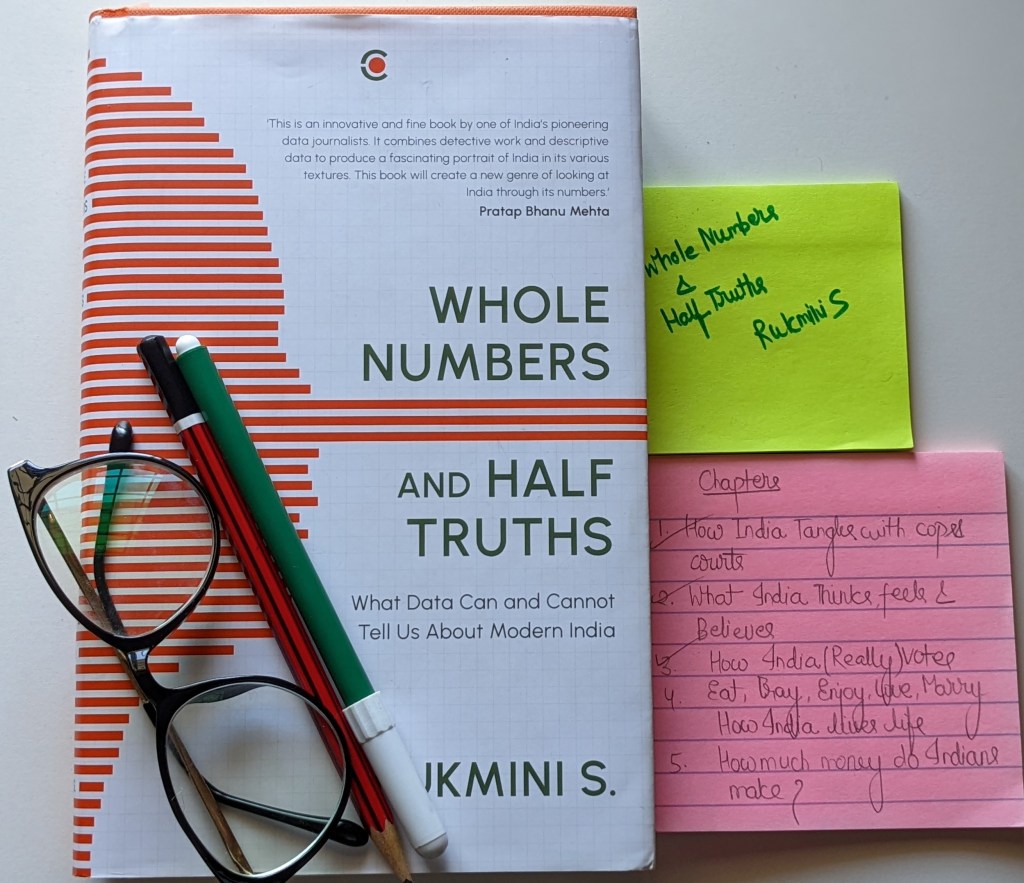
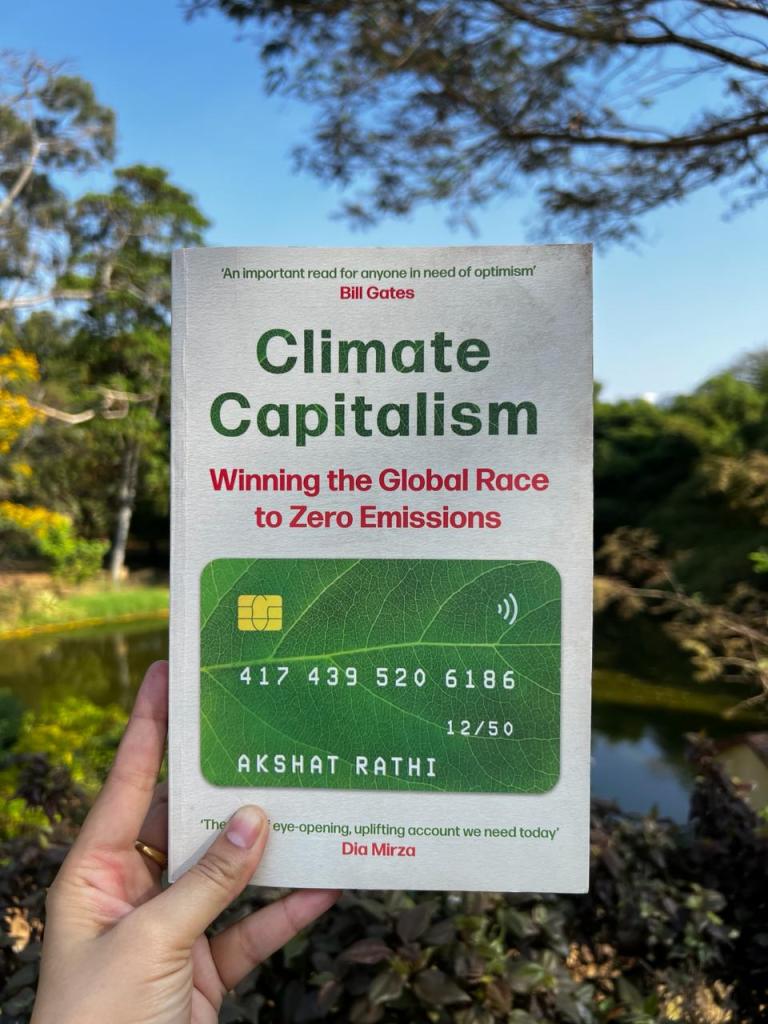

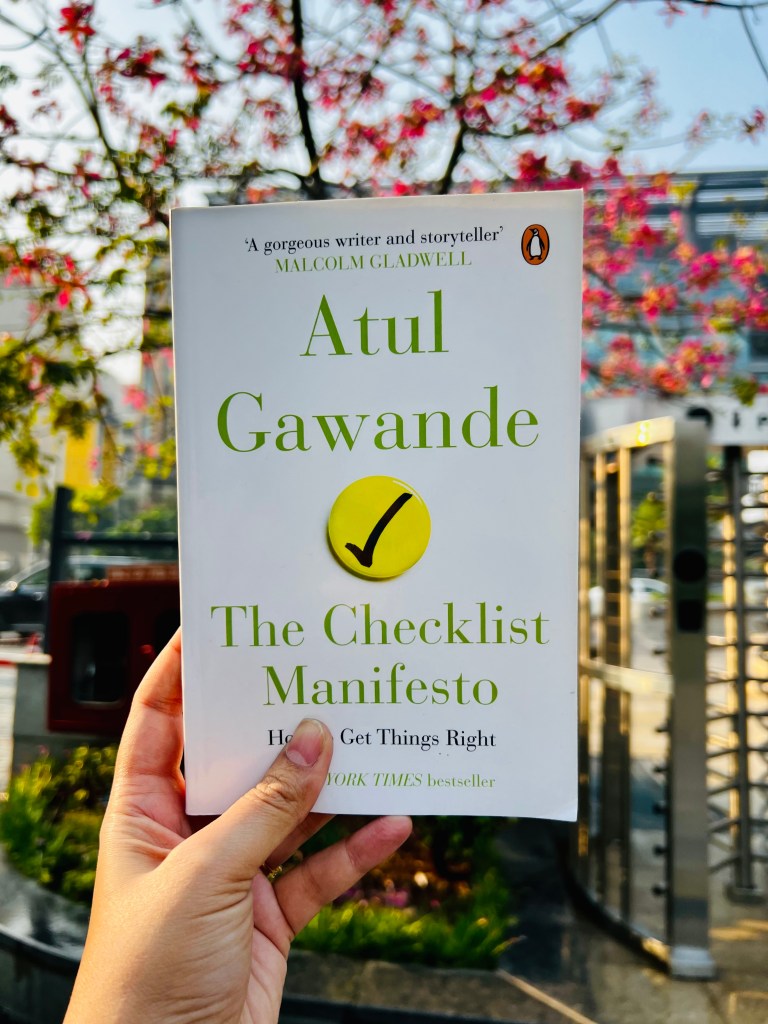

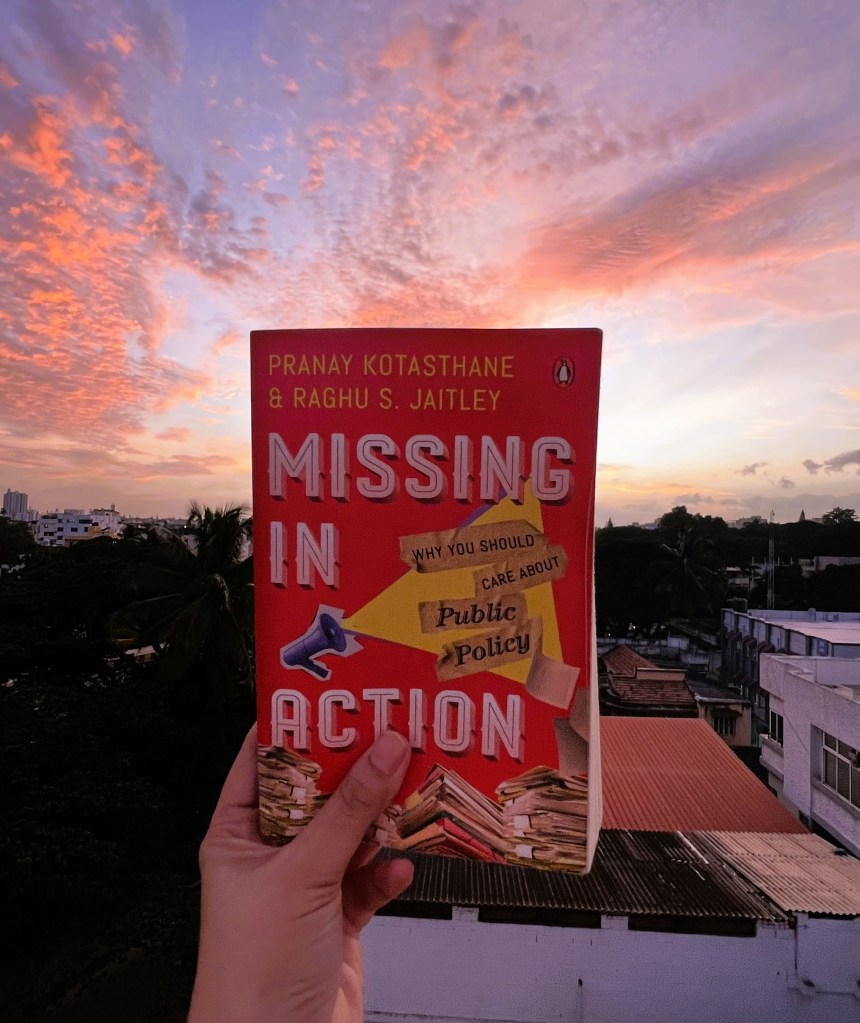


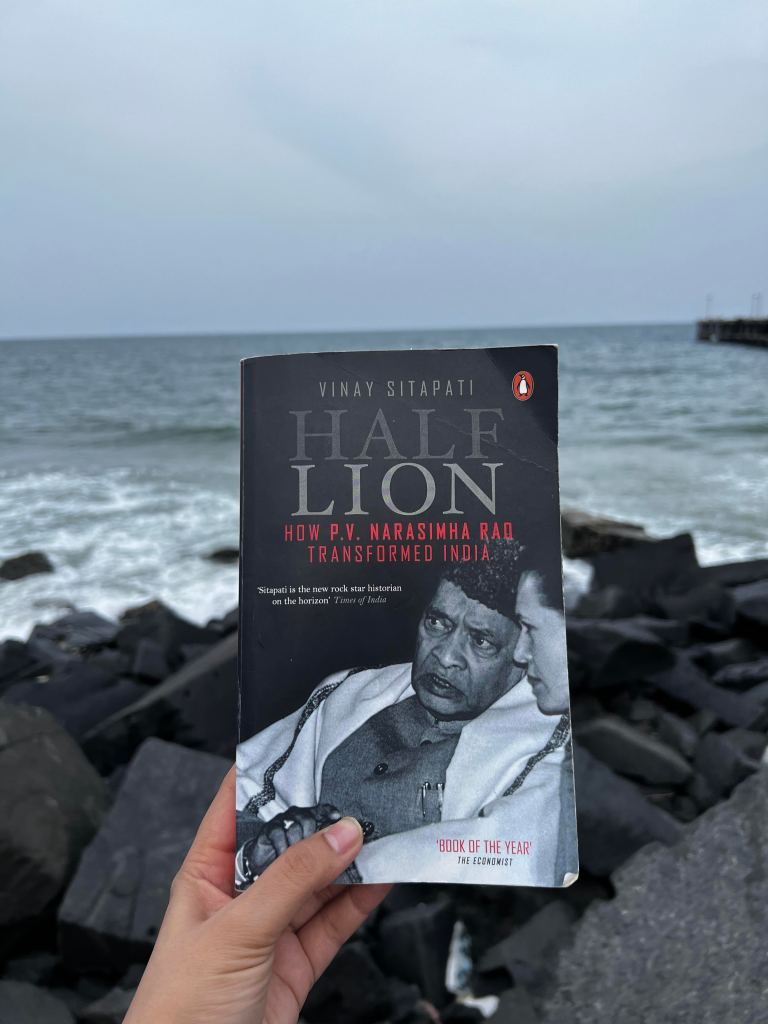

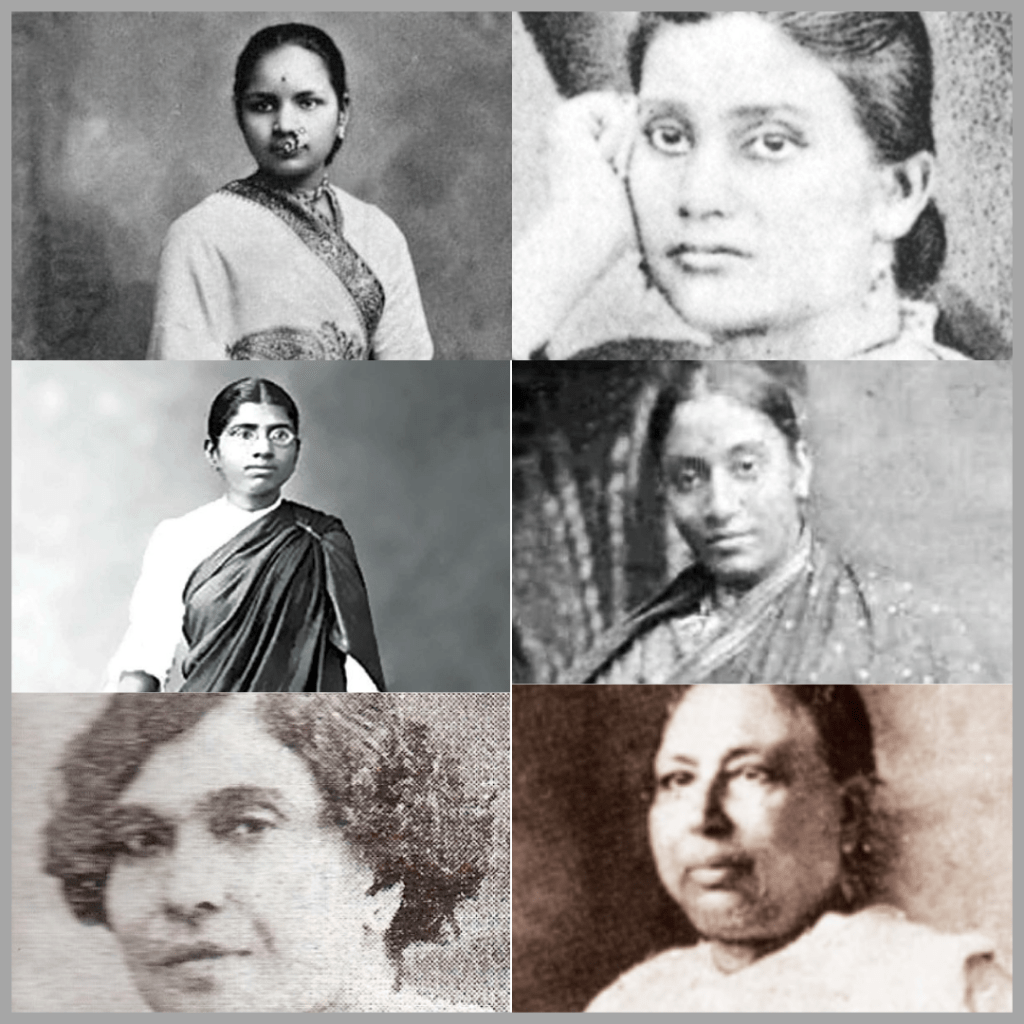
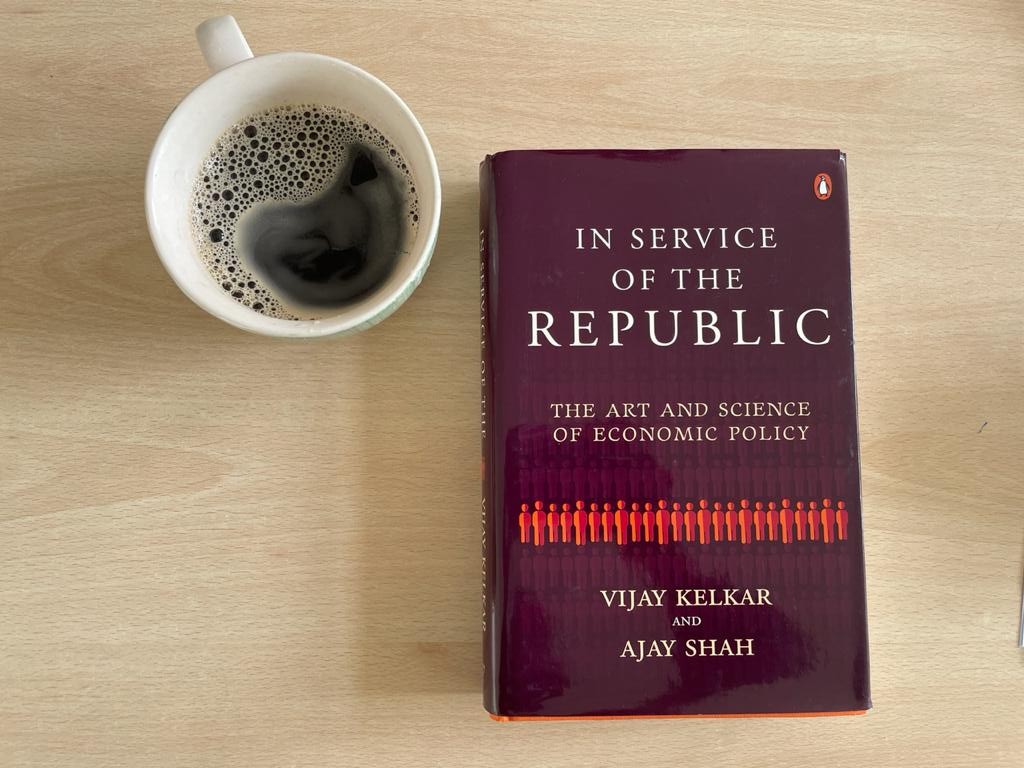
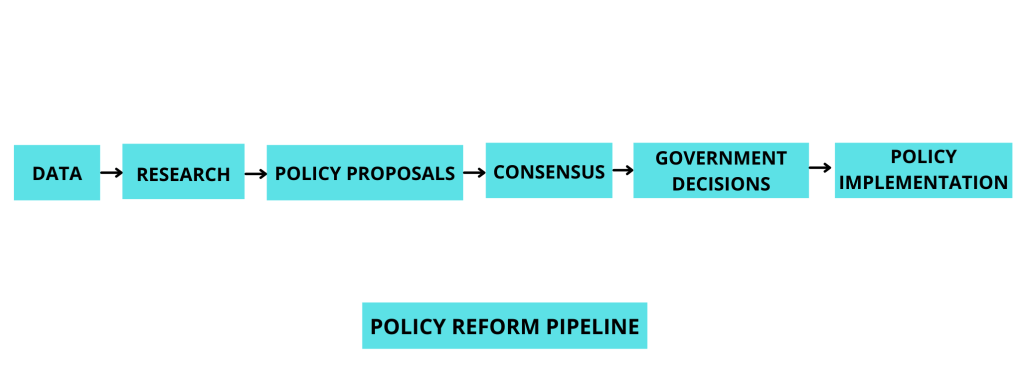

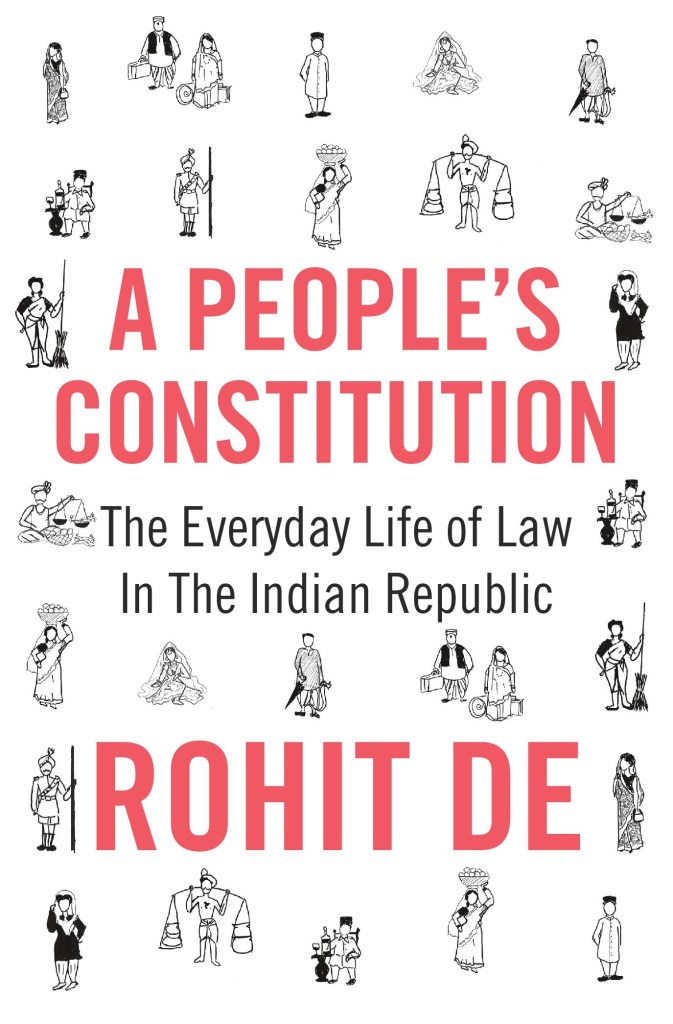
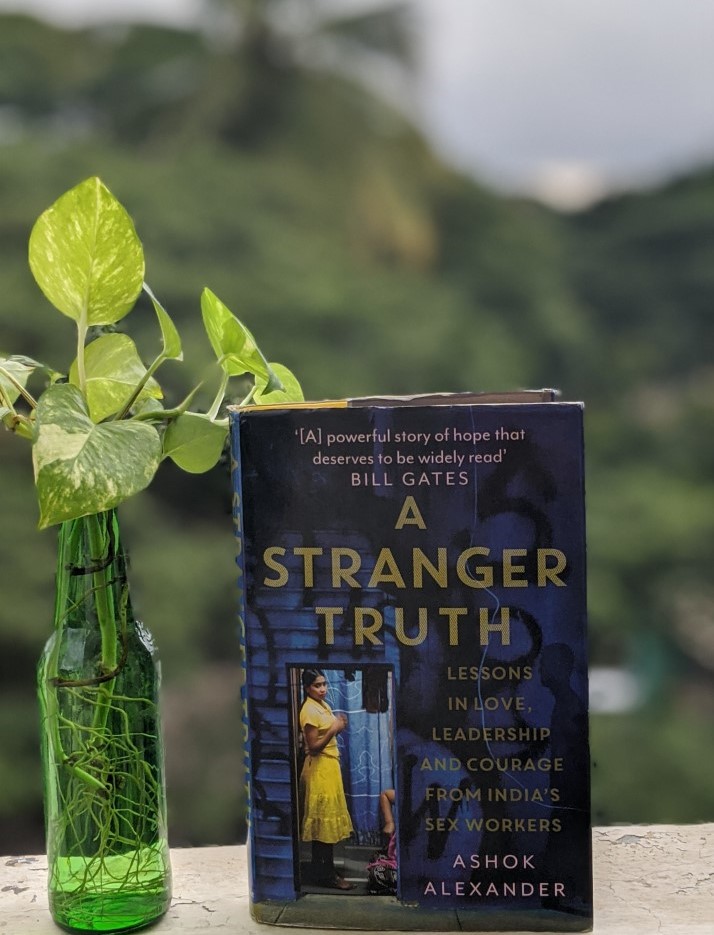
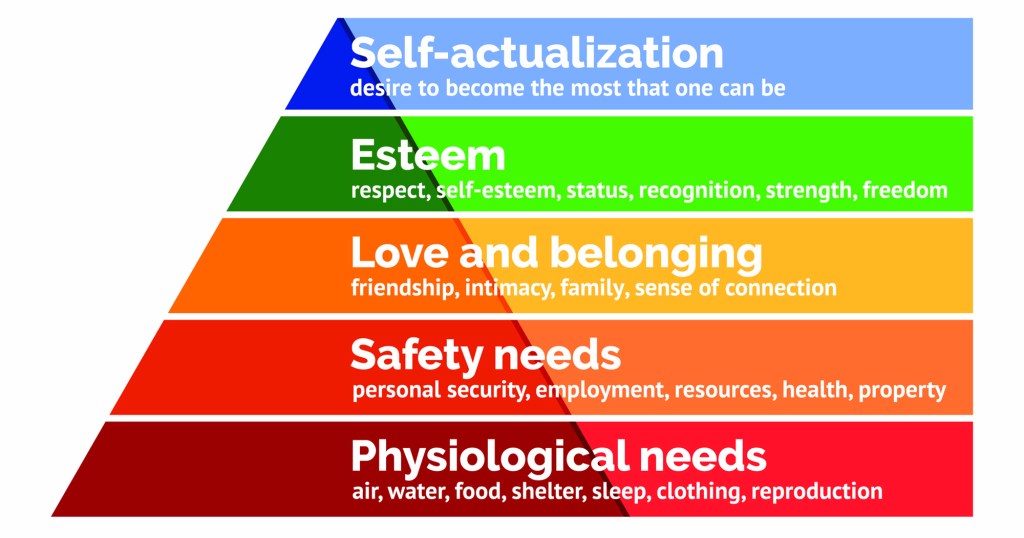
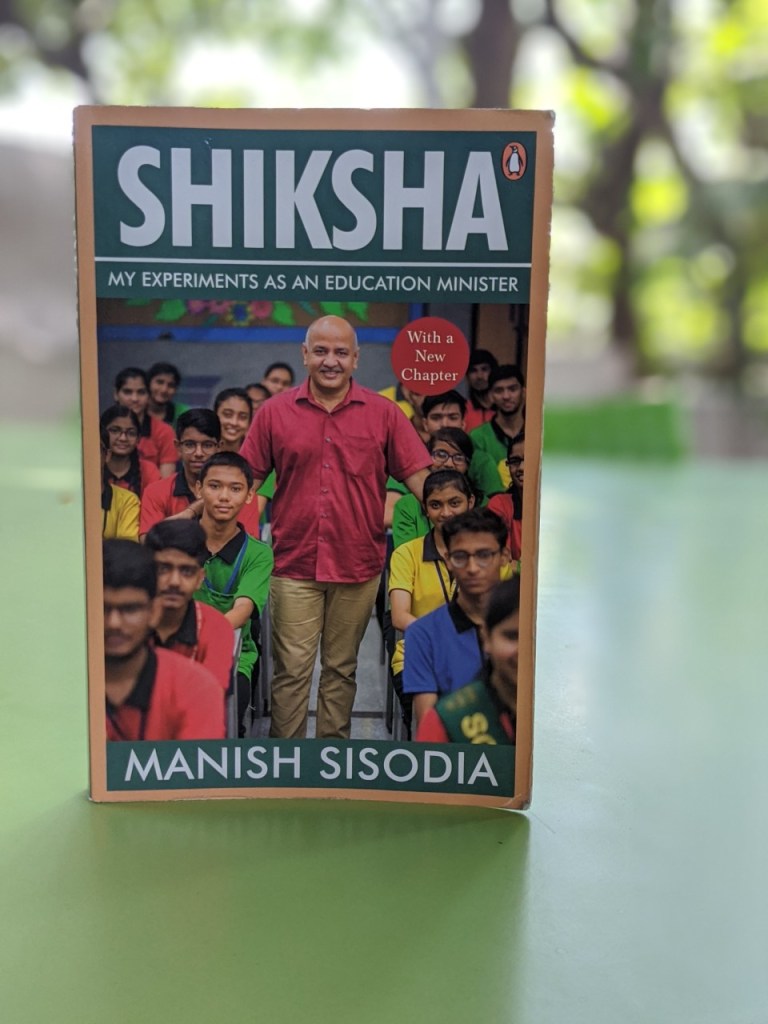
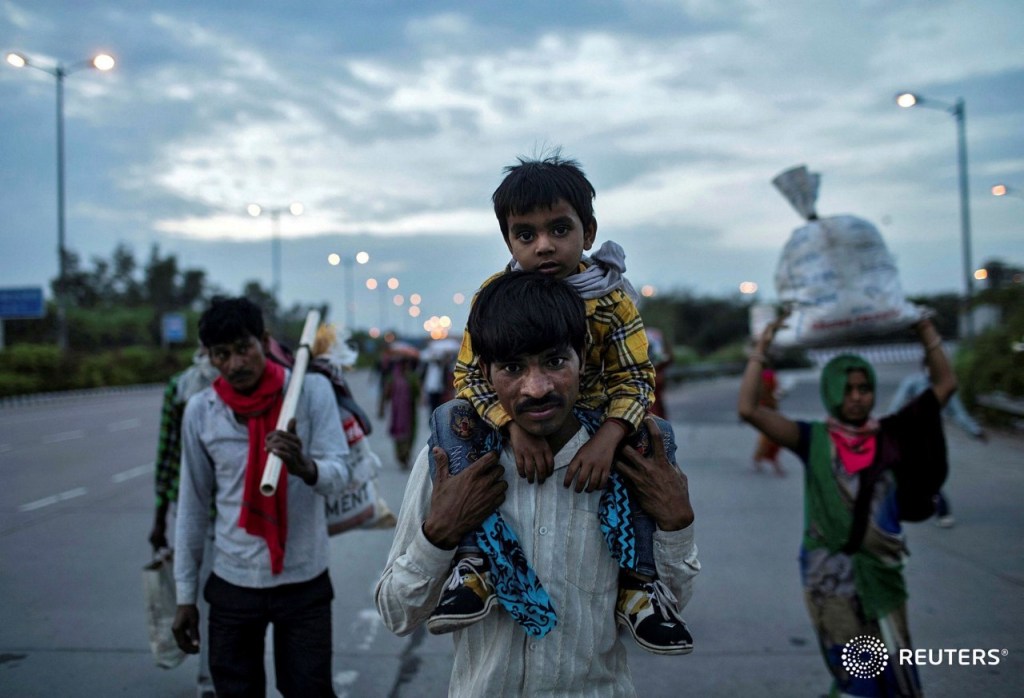

 Policy Wise