Demographic Dividend or Demographic Disaster?

dd

As per the Census 2011, India’s working age population (15-64 years) is 63.4% of the total population. It is projected that India will be the youngest nation in the world by 2020. India will have an enormous “youth bulge” in the form of “demographic dividend” which provides a golden opportunity for the Indian economy to harness this for increasing growth and productivity of the economy. The growth rate of the labour force will continue to be higher than that of the population until 2021. It was found that every fast-growing economy has accelerated as it underwent a “demographic transition”. Not only this, there are two kinds of demographic trends happening in India. One is that peninsular states have stabilized their populations and northern states are having very young population.

While this demographic dividend provides great opportunities, it also poses various challenges. If these challenges were not tackled at the appropriate time, demographic dividend will turn into “demographic disaster”.

Challenges in harnessing demographic dividend-

  • Education- The young people need to be provided with a holistic education where they get the quality education as well life skills. However, the situation on the ground is alarming. As per the ASER report, there is a sharp decline in the quality of education. Children are not able to read and do simple mathematics. The rote learning is prevalent. India spends less than 3% of its GDP on Education. As per one government report, only 79% teachers are professionally qualified to teach in schools.
  • Skill Development- Employability is one of the biggest issues in our country. Students do not have adequate skills to work. As per the Labour Bureau Report 2014, the current size of India’s formally skilled workforce is only 2%. In South Korea, 96% and in Japan, 80% workforce is skilled. There is a lack of infrastructure for skill development. Workforce needs skills to get decent employment.
  • Health- It is one of the most important requirements because a healthy person can only deliver results at workplace. But the irony of the situation is that India spends less than 2% of GDP on Health. Our primary health infrastructure is crumbling and a large section of rural India still defecates in the open. Children are malnourished and stunted.
  • Employment opportunities- India has notoriously gone through the process of “jobless growth”. Indian economy is not able to generate adequate employment for the people of the country. It is dominated by informal sectors. People are mostly self-employed. Indian economy is not creating jobs at a mass level for unskilled and semi-skilled people.
  • Discrimination against some sections of the society- Indian society still discriminates various sections of society. It is not only hampering the development process but also creates various hurdles in economic development. The Labour Force Participation Rate of Women(LFPR) of women is very low in both urban and rural areas. Various weaker sections of the society do not get enough opportunities for education and skill development. Child labour is prevalent in the country, which is not only hampering the future generations but also the present adult population.

What needs to be done?

Screen-Shot-2013-12-09-at-8.15.09-AM

India must create a sustainable ecosystem for education and skill development. Recently launched National Policy of Education is a step in the right direction. However, various anomalies related to the quality of education, teacher training etc. need to be resolved at war footing. Skill India Mission launched by the government to create a job ready and skilled workforce needs to streamline in the education curriculum. It should be made compulsory for every student to learn some skills during school time.

We need to realize the fact that only healthy young population of the country can prove to be a good worker. India has a ‘serious hunger problem’ as per the Global Hunger Index. Swachh Bharat Mission, Mission Indradhaush, Janani Suraksha Yojana, Maternity Benefit Bill 2017, National Health Policy 2017 have good intentions and provisions but they need hundred percent implementation to reap the benefits of the demographic dividend.

Indian Economy needs to focus on manufacturing sectors as well as those sectors which are labor intensive like textile, leather, tourism, agriculture and allied activities to create a large number of jobs. In this context, Make in India and various labour reforms should be given priority.

There is also need to change the mindset of the people to change their attitude towards other sections of the society. There is need to increase the labour force participation of women.

Demographic deadlines are looming towards the country and the economy. India must take adequate steps to reap the benefits of demographic dividend otherwise it will turn out into a demographic disaster.

Please find useful links here:

http://www.daijiworld.com/news/newsDisplay.aspx?newsID=454215

http://www.thehindu.com/news/national/demographic-dividend-at-its-peak/article5102093.ece

http://www.prb.org/Multimedia/Video/2013/demographic-dividend-engage.aspx

Universal Basic Income- An idea whose time has come?

UBI

         After seventy years of independence, one out of three Indians still live below the poverty line, 25% of the world’s hungry population lives in India, 77% of Indian households do not have regular wage/salaried person in their house and as per the recent Human Development Report 2016, India ranked 131 out of 188 countries in terms of human development. As Mahatma Gandhi wished to “wiping every tear from every eye”, there is a long way to go for India to fulfil the dreams of Gandhiji to not only alleviate but eliminate poverty to provide dignity, self-respect and freedom to the people of the country. In this context, there are various policy options proposed by policy makers and leaders to ensure better and timely delivery of benefits to the people. Cash transfers are direct payments given to the people based on certain criteria or otherwise. Cash Transfers schemes are present all over the world in different forms. The nature of the schemes can be understood on the basis of conditionality, targeting and the frequency of transfer.

Conditional Cash Transfer- Conditional Cash Transfer schemes provide cash benefits directly to the poor households on the basis of fulfilment of certain specified conditions. It creates incentives for the individuals to adjust/modify their behaviour in order to comply with conditionality. For instance- LPG subsidy is a kind of conditional cash transfer. Under this scheme, people need to use LPG gas for cooking then only they can get the subsidy. It serves dual purpose of providing hassle free cash transfers to the poor households for cooking fuel and also protect environment by promoting clean fuel.

However, there are some issues with the conditionality. It is very difficult to take punitive measures against those who do not fulfil all the conditions. For instance, government is focusing on toilet buildings under Swachh Bharat Abhiyan and provide subsidies for that. However, if people do not use toilets, it is very difficult to punish them or deny them the subsidy. Another issue with the Conditional Cash transfer schemes is that it does not address the product/infrastructure supply issues. For instance- If people have money but there is no medical facilities nearby, how they are going to utilise that money.

Unconditional Cash Transfer- Unconditional Cash Transfers provide cash transfers to intended beneficiaries without putting any conditions. It creates freedom of choice to the poor households/individuals to spend their money in whatever manner they want. It is transparent and emancipatory for the people who receive the cash transfers. It also provides some security to the people because of regularity. As per various studies in various countries, it was found that cash transfers automatically help in improving better nutrition, school attendance and women economic status.

However, as per the critics, unconditional cash transfers can make people lazy. It is also very difficult to withdraw cash transfers once provided because of political reasons. Another important issue is that whom should get this money-all the citizens of the country or who are below poverty line. But as we know, there are so many issues in the identification process of intended beneficiaries. “JAM-(Jandhan,Aadhar and Mobile) number trinity can be the solution. But, there is lack of financial inclusion in our country. People have cell phone, Aadhar number but they lack banking facilities in their vicinity. Mobile Banking in the era of Digital India can help bridging this gap but there are also constraints there because of lack of penetration internet facilities.

Universal Basic Income- Universal Basic Income(UBI) is a revolutionary and radical idea which is based on the premise that a just society needs to guarantee to each individual a minimum income which they can count on, and which provides access to basic goods and a life of dignity. It is universal and unconditional. Under this scheme, the public authority will provide a basic income to every citizen of the country. This idea got support from both the left and right leaning political leaders and policy makers. To reduce abject poverty and unemployment, this idea can provide a substantive solution. It can also act as an insurance in the case of job losses due to automation as predicted by international organisation.

F&A

Arguments in favor of UBI-

  • It will remove abject poverty and bring about ‘social justice’ in our country.
  • It will provide freedom of choice and dignity to the people to decide about their own fate.
  • It will also reduce the burden of bureaucracy in identification process and simplify the welfare mechanism thereby increasing administrative efficiency.

Arguments against UBI-

  • Individuals will misuse the money for bad habits and constant cash transfers will reduce labour productivity.
  • It is really difficult to create a proper implementation mechanism for such a vast income transfer.
  • And the most important difficulty is about financing this idea. Who will provide the cost?

In fact, there was two pilot projects launched in Madhya Pradesh for Universal Basic Income. It was found that there was no reduction in work and people started working more shifting from casual work to self-employment. As this Economic Survey discussed about this idea in detail in a single chapter providing various modalities of implementation. In fact, government provides lot of subsidies which can be rationalised to provide for universal basic income. Because as Thiruvallur said “Nothing is more dreadfully painful than poverty”, and gripping poverty robs a man of the lofty nobility of his descent”. It is high time that country debates about this idea and implement it to reduce the dreaded disease of poverty from our country.

Disclaimer- It is my personal view and analysis. Everyone has a right to differ.

If you want to know more about this idea, please see the links below:

http://indiabudget.nic.in/es2016-17/echap09.pdf

http://basicincome.org/basic-income/

http://fortune.com/2017/05/24/automation-job-loss-universal-income/

http://www.cnbc.com/2017/05/25/mark-zuckerberg-calls-for-universal-basic-income-at-harvard-speech.html

Kashmir is Burning: Who is to blame?

Kashmir problem is there since the birth of our country. It is just lingering on since then. In fact, there are three stakeholders in the Kashmir problem-One is INDIA, second is PAKISTAN and third is KASHMIRI PEOPLE. Recently, after the death of a terrorist Burhan Wani as per INDIA, freedom fighter as per PAKISTAN and sympathizer for KASHMIRIS died in July 2016. After that massive protests started in the valley. But as far as I think, it was a trigger point, the resentment was brewing for a long time.

510092-burhan-wani-news

In fact, I want to ask some questions: WHO IS TO BLAME?

  • Election of BJP at Centre or election of BJP-PDP alliance at State.
  • Army/Paramilitary/Militants.
  • Pellet Guns or Stones.
  • AFSPA or Proxy war led by Pakistan.
  • The lynching of people on the grounds of protecting cows or Beef eating. Who is the more important life of a person or cow?
  • Saudi Arabian/Pakistani Television or Social Media.
  • Surgical Strikes or Beheading and mutilation of soldiers.
  • Cross Border Terrorism or Inside unrest and resentment.
  • The election in UP or Bye-elections in Jammu and Kashmir.
  • Separatists or Maulavis.
  • Winter or Summer.
  • Cricket or Hockey.
  • SAARC Summit or 26/11 Mumbai Terrorist Attack.
  • Just go back in history, Partition or Independence.
  • Gandhi or Jinnah.
  • Communalism or Secularism.
  • Article 370 or The J & K Constitution.
  • Hindu or Muslim.
  • India or Pakistan or International community.
  • The list is too long. we have innumerable reasons for not solving the Kashmir issue. We are not able to find one reason to make Kashmir, which used to be known as “heaven on earth” peaceful.

It is pathetic and very sad to see the situation in Kashmir. Students are protesting. Girls have come on the road to pelt stones. Every single day our soldiers are dying. Many civilians are dying. Every single day someone is losing their loved ones. It is very painful to lose someone in your family. It is not the time to blame someone or other. Every stakeholder should come forward to create peace and stability in the region. It is not the time to do politics.

What needs to be done?

  • India is a responsible democracy. It cares about its people. India must come forward to create a situation of dialogue among all stakeholders.
  • Use the strategy of “winning hearts and minds”.
  • Talk with Pakistan. Because we have no other options. We can change our friends but not our neighbors.
  • People of Kashmir are important for us. How can we keep quiet when our own people are dying?

We must come forward and do something to bring peace in the region. Please have a look at below link of a newspaper article. I found it very sensitive and really true at the ground level. https://kashmirobserver.net/2017/features/kashmir-prison-three-walls-17567

Nandan Nilekani’s ideas about India’s development in 2009

Nandan Nilekani, former chairman of UIDAI (Unique Identification Authority of India) in a TED talk in 2009 in California spoke on four kinds of ideas with respect to India’s development:

  • Ideas that have arrived
  • Ideas in progress
  • Ideas in conflict
  • Ideas in anticipation

Ideas that have arrived: These are the ideas that made INDIA what it is today.

  1. People– From being a burden to becoming engines of growth. Now they are seen as a ” demographic dividend”. They are the “human capital”. India is one of the youngest countries in this aging world. But demographic dividend can also turn into a ‘demographic disaster’ if enough steps are not taken to utilize the potential.
  2. Entrepreneurs– From villains to role models.
  3. English language- From the language of the colonizers to the language of jobs. It has turned into a strategic asset and people are aspiring to learn this language. The English language has emerged as the language of aspiration.
  4. Technology- From Man vs Machine to Man and Machine. 90% of India’s mobile phones are prepaid phones. Now, mobile phones have become the instrument of empowerment.
  5. Globalization- From Bombay Plan to Bombay House. Indians are far more comfortable with the phenomenon of globalization.
  6. Deepening of democracy- From one-party rule to thirteen-party rule.

Ideas in Progress: These are the ideas that are accepted but not implemented yet.

  1. Education- Universal access to primary schools.
  2. Infrastructure- From the political slogan of “Rodi, Kapda, Makan” to the slogan of “Bijali, Sadak, Pani”. There is a change in the mindset.
  3. Cities- As engines of growth. For a long time, cities were neglected in India.
  4. Single Market- Smooth, seamless flow of goods across states.

Ideas in Conflict: These are the ideas where people have conflict and they are fighting with each other in an ideological battle.

  1. Conflicting political ideologies- Policy-making gridlock. A lot of India’s problems are related to various political ideologies which are creating hurdles in the development process.
  2. Labor Reforms- Job protection hampers job creation. 90% of India’s workers are working in the unorganized sector. They do not have any kind of protection.
  3. Higher Education- State control or private funding. Indian Higher Education is highly regulated in India. It is very difficult for any foreign university to come to India. Higher education is not keeping with India’s demand.

Ideas in Anticipation: India is a developing country that can anticipate various ideas to solve emerging challenges in the present world. India can look to Western countries for some ideas and create innovative solutions for emerging challenges.

  1. E-governance-Democracy, technology, efficiency, and transparency.
  2. Health- Avoiding diseases of prosperity. There is no point in replacing the diseases of poor countries with diseases of rich countries.
  3. Pensions and Entitlements- Taking care of the future.
  4. Environment- Can India’s growth be clean? We need carbon-neutral and sustainable economic growth.
  5. Energy- Driving growth around a new energy model. We must focus on renewable energy.

Have things changed since then?

Yes, things have changed for the better. In ‘Ideas that have arrived‘, he discussed six things. The Indian government is constantly working hard to harness the potential of a ‘demographic dividend’ through various flagship programs like Make in India, Skill India, Digital India, Start-Up India, etc. The move of demonetization has provided a much-needed fillip to the digital payment system in the country. As per the recent NITI Aayog report, digital payments in the country have grown by close to 23 times since the withdrawal of high currency notes in November last year. Not only this, India has become the third biggest tech start-up hub in the world after USA and UK. We are happily becoming part of globalization and our democracy is more and more deepening which can be seen through the rising voting percentage. Now, people feel proud in flashing their blue-inked fingers after giving a vote. The people of India have realized that they have a stake in the governance process.

In ‘Ideas in Progress’, he discussed four things. Certainly, in recent years, India has made a lot of progress in all four things. Now we have RTE( Right To Education) Act 2010 which provides compulsory education in primary schools. It was a kind of great achievement for a country like India. The infrastructure sector is booming like anything. In fact, as per the World Bank report, the construction sector of the Indian economy has pulled out so many people from poverty in India. Recently, India has enacted a Real Estate Regulatory Act to regulate the booming housing business in the cities of India. Not only this, the Indian government has launched various housing schemes like PMAY( Pradhan Mantri Awas Yojana) to fulfill the goal of ” Housing for All” by 2022. Indian cities have emerged as dynamos as per the latest Economic Survey of India. That is why the government is focusing on Smart City Mission to build 100 smart cities in the country. The recent passage of the constitutional amendment bills related to GST( Goods and Services Tax) has created hope and aspiration for One India, One Market.

Ideas in conflict are also fiercely debated in our country and the government as well as other stakeholders are trying to find out solutions. In fact, the advent of technology is acting as a boon for all the conflicting ideas present in our society.  There will always be conflicting ideologies present in our society because of diversity in our society. All these political ideologies must, however, agree on some basic concepts about development, growth, and other policy initiatives in International Relations. Labour Reforms are also happening in our country through various initiatives as well as due to some legislative changes in terms of the Apprentice Act, Factory Amendment Act, etc. There is also a renewed focus on reforming the Higher Education Sector through NIRF( National Institute Ranking framework), building World Class institutions, and providing MOOC( Massive Open Online Courses) in terms of “Swayam”, GIAN platform, etc. 

India is almost running to achieve and fulfill the ideas discussed in anticipation. India is well ahead in the renewable energy sector and emerging as a world leader in Solar Energy. India also launched an International Solar Mission in 2015 at Paris Summit. India has also adopted SDG(Sustainable Development Goals) and moving fast to create a Digital India as well as a Sustainable India. E-governance as well as M-governance has created a revolution in the governance process to create transparency and accountability. The recently released National Health Policy 2017 envisaged creating a mechanism to provide the “Right to Health” to every citizen of the country. Not only this, our parliament has passed various legislation related to health sectors like the Maternity Benefit Act, HIV Prevention and Control Act, and Mental Health Act, which decriminalized the act of suicide. Pensions and entitlements are also moving in the right direction but it will take a long time to achieve this potential.

In fact, we have come a long way since 2009 when Nandan Nilekani has given this talk. However, we need to do a lot more to create sustainable growth and development in India.

Ideas to be discussed and debated in 2017:

  • Universal Basic Income- To provide a certain basic income to every individual in the country.
  • Cashless or Less-cash Economy- Can India replace its cash economy with a digital economy?.
  • The culture of Startup: Is there any possibility for the next Google/Amazon in India?.
  • Smart City or Smart Villages.
  • Parliamentary System vs Presidential System.
  • Freedom of Speech and Expression vs Reasonable Restrictions.
  • Nationalism vs Patriotism.
  • Cow Protection vs Human Rights.
  • Religious Freedom vs Individual Freedom.
  • Rights and opportunities for women.

These are the ideas that are going to dominate the year of 2017. We will have to introspect and analyze what needs to be done.

Assembly Elections in UP,UK,PUJ,MAN & GOA.


This election was really historic and unprecedented and a kind of litmus test for India’s Prime Minister Narendra Modi just after the bold as well as adventurous decisions of ” demonetization” and “surgical strikes” taken by him. Both decisions were taken for political as well as strategic motives. In fact, he tried to play a gamble through which now he is reaping benefits in the form of Bhartiya Janta Party(BJP)’s win in various elections across the country. Here, I will try to analyze the trends and results of the recent assembly elections in five states, which ride on Modi wave to bring about the substantive electoral mandate and established BJP as a dominant party in the Indian Political System.

Highlights of the Assembly Elections: 

  • A clean sweep in states of UTTAR PRADESH and UTTARAKHAND. It was an unprecedented result in both states providing a three-fourths majority.
  • The first time, BJP got a good mandate another North eastern state MANIPUR after making government in Assam.
  • In GOA, it was a fractured mandate. However, BJP acted swiftly and made the government in Goa by sending Manohar Parikar from Center to the state of Goa.
  • The State of PUNJAB has emerged as a ray of hope for a grand old party the congress. It has given a favorable as well as majority mandate to Congress in the state in the leadership of Amarinder Singh.

The significance of these Assembly Elections:

  • These elections were really significant not only in the present context but also as an indicator for the upcoming General Elections in 2019.
  • The elections in the most populous state of India was really important because it is generally said that UP decides about the power politics at Center and acts as a kingmaker.
  • These elections were also significant in the light of economic policies as well as economic reform in the coming times.

How to read the outcome of these elections and especially the outcome in UP and UK?:

  • Is BJP going to establish the ” Second Dominant Party System”?
  • Is Modi now the most popular leader of the country?
  • Is BJP led by Modi and Amit Shah going to form the government again after the 2019 General Election?
  • Can BJP fulfill the high expectations of the people of these states?
  • Should Yogi Adaityanath the Chief Minister of UP be looked as a symbol of Hindutva or a new face to deliver the BJP’s agenda of ” Sabka Sath, Sabka Vikas”?
  • Is the ” muscular nationalism” going to stay in the lives of Indian people?
  • What is the future of Indian National Congress earlier dominant national party of the country?
  • What is the future of regional political parties as well as identity-based political parties?

My analysis of the recent Assembly Elections:

  • BJP has emerged as a strong force to reckon with and it is going to dominate the political scene of the country for at least a decade.
  • Mr. Modi is now a pan-India face of BJP and a popular leader.
  • Congress has to work hard to clear the mess in its house.
  • Rahul Gandhi needs more exposure and experience to understand the intricacies and dynamics of Indian politics.
  • Regional parties like SP and BSP need to think of broader perspective. They should come out with their single agenda of promoting their family and thriving on bad guys.
  • This result is celebrated by the winning parties like anything but they need to understand that people have a lot of expectations which must be fulfilled. Otherwise, Indian people are very smart politically in choosing their leaders.


Analysis of Maternity Benefit Bill

Recently, Parliament has cleared the Maternity Benefit Bill to extend the period of paid maternity leave for women working in the organized sector to 26 weeks from the current 12. It applies to all organizations that employ 10 or more people. This bill is a path breaking step by the government of India to address the maternity and post-maternity child care of the working women. It has several good features:

  • Facilitates work from home.
  • Mandatory provision for a creche for factories with at least 50 workers.
  • Maternity benefits will also be provided to the ‘commissioning mothers’ as well as those who adopt a child below three months.
  • It will also help in breastfeeding the newborn child and create enough conditions to address the problem of child malnutrition.

By enacting this act, India has become the third country in the world after Canada and Norway to provide for long maternity leave. It is a really great step which will also increase female labor force participation in the country.  However, I want to emphasize on other issues:

Is child-rearing the only responsibility of women? What about men/ paternity leave?

India is a patriarchal society where men hold the position of power and decision-makers. Child-rearing and child care are considered as the responsibility of women and their primary goal of life. And even if, women are working, she has to bear the double responsibility of ‘doing the job’ as well as ‘ taking care of the house and children’. As per one study of the Union Labour Ministry and Women & Child Development Ministry, longer maternity leave will increase the burden of childcare for women. Not only this, but it will also lead to some kind of bias by employers against hiring women and will make it difficult for mothers to re-enter the labor market. Childcare leave seems to legitimize the father’s absence from caregiving and institutionalize female care.

The solution can be providing parent leave meaning giving leave to both mother and father. Because rearing the child is the responsibility of both, not one parent. The 26 weeks of leave can be divided between the mother and father of the expected child. It not only reduces the burden on the mother but also provides flexibility to the employer.

How the women who work in the unorganized sector will get the benefit? 

Indian economy is dominated by the unorganized sector. A large number of women work in the unorganized sector. The maternity bill will only cover 1.8 million working women in the country. What will happen to those women who work in the unorganized sector? They are low paid and mostly work in tiring situations. They will not be able to avail of the benefit of the above maternity benefit. They can only avail conditional cash benefit of INR 6000 during pregnancy and lactation benefits offered under the Maternity Benefits Programme. But that is not enough for the holistic development of the child and mother.

Why not make some universal provision regarding health and insurance for women. There are some benefits provided to poor women. However, there is a need to make it universal so that every woman in the country can get enough benefits and health facilities to take care of their child. It will not only reduce the burden of Infant mortality (IMR) and maternal mortality (MMR) but also help in effectively developing our human resources. Universalizing health, insurance, and education will help in reaping the potential of most talked ” demographic dividend” of the country. Recently launched, National Health Policy 2017 is a step in the right direction. However, there is a long way to go change the ground level situations.

Change of Power Structure in Tamil Nadu

J Jayalalitha died last year December after prolonged illness. It was a tragic loss for a country and for the state of Tamil Nadu. She has done a lot for the masses of the state. Tamil Nadu is one of the best performing state in India with respect to social indicators.

Tamil Nadu did not see any major disturbances in her tenure despite her controversial disproportionate assets case. However, after her demise, it seems that there has been power struggle going on in the AIADMK party as well as in the state of Tamil Nadu.

V Shasikala has finally elected as the leader of the legislative party setting the stage to become third women Chief Minister of the state of Tamil Nadu. I think that she is also responsible for the recent massive protest in the state on marina beach for Jallikattu. She has created conditions which will lead to her anointment as the powerful leader of the state.

The twist of the matter has now come into the picture. V Shasikala is co-accused in the ” disproportionate assets case” and Supreme Court has decided to listen the case from onwards. There is also an appeal in the Supreme Court regarding stopping her swearing-in ceremony. What I can say that she will survive the struggles and will dominate the politics of Tamil Nadu.

Supreme Court judgement on use of religion in electoral mobilisation

The Supreme Court of India has given a progressive judgement yesterday.http://www.thehindu.com/news/national/Seeking-votes-on-religious-basis-a-corrupt-act-SC/article16977220.ece/amp

In this judgement Supreme Court through majority judgement declared that canvassing votes on the basis of religion, caste, race, community, language etc will amount to “corrupt practices” and the political candidates will be disqualified. In this judgement, Supreme Court says that religion is a personal thing between  man and God. It is related with individual choice. If political parties are using religion as a tool to mobilise people in electoral process, it turns out to be mixing state with religion.

Certainly this decision is of great significance for Indian politics where these particularistic tendencies are used for larger political goals. It will try to check the polarisation of the masses on the grounds of caste, religion etc which often led to violence and arson in the society.

The court also held that secularism required the complete exclusion from public life and it is the bedrock of Indian democracy. Religion is something very personal between man and God and it has no place in secular activities like election. In fact, the intention of the court is noble. The court expects that electoral process should be free and fair.

However, it is of no denying that sections of society in India suffer from historic injustices and deprivation based on religious or caste identity. That is why the dissenting judgment given by the minority indicates towards the reality of the society. Political discourses based on these issues can be eliminated out rightly if they are looked in that perspective. In India, these identies have given salience to the groups who mobikise people for empowerment and emancipation through democratic process.

Not only this, the Supreme Court did not revisit the 1995 judgment given by former CJI J S Verma about the Hindutva. In that judgement, the Court has held that Hinduism and Hindutva are same and Hindu tva is a way of life. Candidates can’t be barred from asking votes on the ground of Hindu tva. 

It is a difficult road ahead because it is certainly necessary to look for secular grounds for political mobilisation rather that narrow identities. However, it is also to go away from the social realities of the country. In India, people still identify themselves in multiple identities. These identities have given some people a way out for group formation and subsequent demand for respect and dignity. What I think is that our electoral process will be secularised when both the citizens of the country as well as the politicians vote and demand for votes on secular grounds respectively.

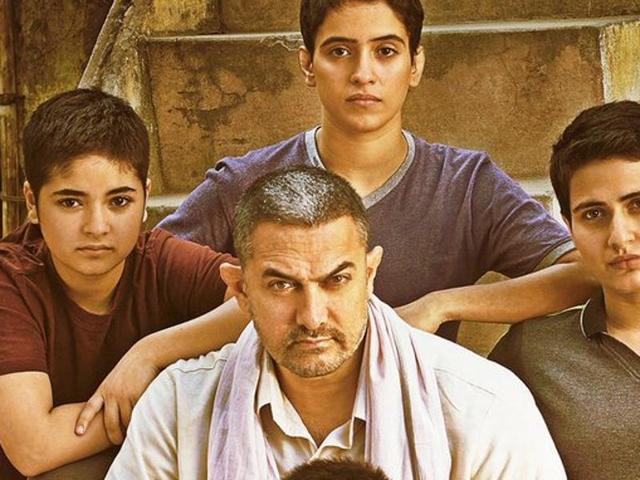
Dangal and women issues

Dangal-advance-booking

I didn’t watch the movie but I read the story in the newspaper. This movie has broken the box office record and made crores of rupees. It’s good that movies are now made on women issues. However, if we look deeply, we will find that even after highlighting women issues, a male is playing a prominent role. For instance, in Dangal, Amir Khan is playing an important role and in Pink, bachhan sahab is playing important role.

Another point, I want to highlight is that these movies based on true stories and basically on women are making more money than these real persons in their own professional life. For instance, Priyanka Chopra has made more money than Mary Kom and Haryana girls than their representation in the films.

Most importantly, I want to really highlight something more ironic that only making movies can not make much difference towards the women folk in our society. Our society has degenerated to the bottom with respect to women. In today’s Hindu newspaper( December 30), a small news was there which touched and filled me with anger and disgust. A two days old girl was found on the road rapped in some white clothes. I am really sad to see. The weather is harsh at this time of the year in Delhi.  Why do people do like this?  I don’t understand the situation of these people that they are committing such atrocious and remorseful thing to a small child. What is the mistake of that baby girl? I don’t understand when will things change?

Women are disrespected, exploited and disowned and what not from cradle to grave in India. Despite taking several legislative as well as administrative measures, there is no improvement on the ground in a substantial manner. Everywhere the tag line “Beti Bachao, Beti Padhai” is written due to the government’ s intensive efforts towards preventing female foeticide and gender discrimination. But there is need to re-examine where we are going when child sex ratio has again declined even after launching this programme.

I think that we are entering in era when we watch, celebrate and praise movies like Dangal, Pink etc sitting comfortably on our couch but in our real life  we simply don’t care about the issues related with women and when time comes about action, we simply behave like hypocrite as most of the Indians known to be.

Having said this, in my deep heart, I also feel that there has always been silver lining. Some people including male and female are changing their attitude and behaviour towards gender issues. In fact, what I think and believe is that until and unless women themselves will not fight and ask for their share, this patriarchal society will not be ready to give anything. So there is need to stand up and demand for what we are entitled to.

Please see this link to know more.

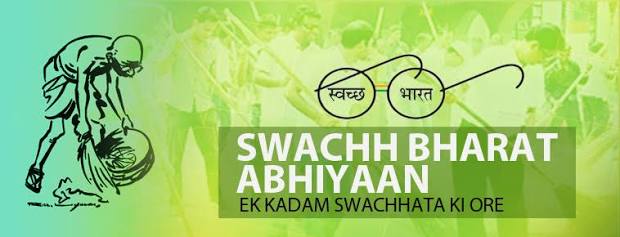
 Swachh Bharat Abhiyaan( SBA)- ek kadam swachhata ki or…

This programme was started by the government of India in 2014 to make India open defecation free(ODF) and create cleanliness and hygiene in the surroundings. This is not the first time that government has pushed for sauchalya but there were various initiatives taken by the government since independence. The recent one was Nirmal Bharat Abhiyan. It is sad to know that a large section of our country does not have the facilities for sanitation and safe drinking water. More horrible to know is that many people do not use toilets despite having it because of some behavioral and traditional belief system. Not using toilets or lack of toilets taking our country back despite higher economic growth and development. Some implications of not having toilets:

  1.  Lack of sanitation creates conditions for spreading various diseases. Most numbers newborns die due to diorrhea in India.
  2. Due to infection, children are not able to absorb the food. It leads to malnutrition.
  3.  Lack of sanitation pollutes the sources of water. It leads to various diseases. For instance- Malaria, Polio, Dengue etc
  4.  It creates a huge financial burden on the people due to excessive health expenditure.
  5. Dirty places create a bad image of India.

In fact, this is one of the most serious issues which need to be tackled at war footing. The government is trying it’s best to build individual toilets, community toilets etc but there is need of a behavioral change of the people so that they can understand the importance of cleanliness, sanitation and hygiene.

The campaign of “Yahi Asli Tariki” is a nice initiative. However, there is long way to go to change the rigid thoughts of the people of India. It should be made a people’s movement. The aware citizen should themselves come forward and take the first step to make our country clean and beautiful. Until and unless, we will not think our whole country as our own home, we will not be able to contribute.

It is proud to know that Indian civilisation is 5000 years old. Some historians say that it is older than 5000 years. And the most ironic as well as great to know that people of harrapan civilisation had fully functional toilets with a well connected drainage system. Our ancestors were using toilets so long ago but now  we forgot using it. Now the time has come to go for extra mile for everyone to make our country clean.

Demonetisation….

It was an unprecedented and surprising move by our Prime Minister on November 8th, when he declared that at the stroke of midnight Rs. 500 and Rs 1000 will not be legal tender. From that day, the impact of demonetization is still unfolding and impacting the every single life of the 125 billion population of the country. It was unprecedented because the whole demonetized currency amounted to 85-86 % currency in circulation in cash dependent economy.

let us first discuss the suddenness of the move taken by the government of India.

Was it a planned and well thought out move? The way it is unfolding and the consequences and subsequent measures taken by the government creates doubt about the well thought out planning.

Was it a measure in continuation of INCOME DECLARATION SCHEME 2016 to catch black money and corruption in the country?

Was it a political move considering so many elections coming in few months? Most importantly, the election is coming in the largest state of India in Uttar Pradesh.

What I can understand through all the events unfolding is that it was guided by all the above-discussed motives. Having said this, we can say that It was certainly pushed towards a proactive change as was witnessed in the Modi government’s various initiatives. Modi was elected by unprecedented support by the people of the country to do something concrete and bring about productive change in the society. I think that by doing this he just want to stand up to the expectation of the people.

However, now we should discuss the positive and negative as well as long and short term advantages of this move.


Positive Impacts/ Longterm impacts:

  • It will create problems for the generation of fake and counterfeit currency.
  • It will be a major blow to the criminal activities which are funded by counterfeit currency.
  • It will block the generation of black money and corruption money.
  • The inflation rate will come down because earlier too much money was chasing too few goods.
  • The prices in real estate sector will come down drastically and as per the news reports, things are settling down in a right direction.People will be able to afford houses which were earlier unaffordable due to sky rocketed prices and the dominance of unaccounted money in real estate.
  • It has created a big push to move towards cashless or less cash economy which will reduce the logistics expenses dealing with large amount of cash.
  • It will bring a large chunk of people in the banking net and thereby in the taxing net of the country, which will increase our taxGDP ratio as well as will certainly increase the financial inclusion. In this context, people can also avail other banking and financial services like loans, insurances, mutual funds etc.

Negative Impacts/ Shortterm impacts:

  • It has created lot of confusion and disturbances in the normal life of the people and specially the poor and illiterate.
  • People have got frenzied about making a queue and going to the banks for depositing the old currency notes.
  • Misuse of JAN DHAN accounts to deposit the unaccounted cash.
  • Use of Hawala traders for converting the black money into white money.
  • Lot of irregularities in the banking sector has come out at the surface.
  •  The economic activity in the country has got a hit and it is expected by the expert economists that our current GDP growth will decline. Manufacturing has contracted in December as per the PMI index.
  • It has created lot of issues in the rural areas and specially for farmers.For instance, they were not able to buy seeds, fertilisers etc for sowing rabi crops.
  • Shifting towards digital banking can also be problematic if there are not enough measures taken to check cyber crime and cyber security.

Political Impacts: Positives and Negatives:

  •  It can turn out be a disaster for the government of India if it is not managed properly and basically for the party in power when number of crucial elections are coming in the few months.
  • The whole winter session has been washed out due to the pandemonium in the parliament because of the opposition against the move of “note bandi”.
  • One of the most important taxation reforms GST which was supposed to be implemented from April 1,2017 is becoming doubtful.
  • The credibility of the government will be in doubt if the government will not take opposition in confidence for the betterment of the people of the country.
  • If government manages this transformation properly and successfully, the country as a whole will be benefitted.

I am being hopeful and positive about everything what the government is doing. But it is said that ” policy 1% and implementation accounts for 99%”. And we know for sure that how inefficient, slothful and corrupt bureaucracy we have in our country. A lot will depend on how things are implemented. India being a change-resisting society as was said by Gunnar Myrdal  in his book ASIAN DRAMA, we have a long way to go to adopt the cashless transactions and bringing the lot more people in the tax net.

Important insights from the chapter of Demonetisation from the recent Economic Survey :

Demonetisation has been a radical, unprecedented step with short term costs and long term benefits. The aim of the action was fourfold:  To curb corruption; countrtfeiting; the use of high notes for terrorist activities; and especially the accumulation of “black money“, generated by income that has not been declared to the tax authorities.It followed a series of earlier efforts to curb such illicit activities:

* Formation of Special Investigation Team (SIT)

* Black Money and Imposition of Tax Act 2015

* Benami Transactions Act 2016

* Information exchange agreement with Switzerland

* Changes in the tax treaties with Mauritius, Cyprus and Singapore

* Income Disclosure Scheme 2016

Demonetisation was aimed at signalling a regime change, emphasising the government’s determination to penalise illicit activities and the associated wealth.

India’s demonetisation is unprecedented in international economic history, in that it combined secrecy and suddenness amidst normal economic political conditions.

Force feeding patriotism and nationalism……

The debate between the importance of ” state” and ” individual” is too long and controversial in the history of mankind. Some thinkers have given so much importance to the STATE that the people or the individuals have become only tools or of no significance. Some authors have given so much importance to the individuals that values, principles, and institutions became weak and subordinated to an authoritarian ruler.

In fact, I don’t want to stretch much and come to the point on the issue of patriotism and nationalism. I want to analyze and discuss how much ” nationalism” and ” patriotism” is too much and how much it should be there to create a balance between’ individual freedom’ and pursuing the goals of nationalism.

In the recent years, it was seen in the country that people were forced to say something like Bharat Mata Ki Jai or the Supreme Court ‘s recent judgment to play “national anthem” in cinema halls before the screening of every film and everybody should compulsorily stand up when the national anthem is playing. These issue exhibit something unusual and disturbing. Can we be forced to love something?  Someone has said once that love is absent where fear is. And why people should be forced to stand up when national anthem playing?  I want to discuss the futility of the arguments:

  1. Even if people stand up for the national anthem, it may be possible that they are not nationalist at all. And who defines what is nationalism? People who are not following traffic rules or having the feeling of hatred towards the marginalized community, they might stand up but are they nationalist?
  2. And how the court and the criminal justice system will enforce this order? It is something impossible to enforce when courts and police system are overburdened and they are not able to punish the hardcore criminals.
  3. Why only cinema halls and not the parliament or courts or colleges and so many others places where national anthem should be played?

In fact, the point is not that people should not respect our national flag or national anthem rather they must respect and imbibe the feeling of nationalism. But force can lead to resistance and it will be totally futile exercise. There is need to create credibility in the institutions of the state and its representatives of the people so that they can give inspiration and people automatically love the country and its principles and institutions.

I will conclude from where I have stated that it is very difficult to choose between ” people” and ” state”. However, the most important thing in the today’s world is that they exist for each other. Without the state, people feel vulnerable and without the people, the state is of no value. So, there is need to create a balance between the rights of the people and respect for the state/country/nation. Rights and duties for “STATE” towards its people are more and more but ” PEOPLE” also have duties towards the state.

UPSC final results declared

Again, I failed in my redemption. Feeling really sad and depressed. I have given my hundred percent but I don’t know where I missed it. Why this happened  with me always. I always hoped for better and always positive about things.  It was everything for me. Despite facing so many difficulties in life, I never give up. But now I am just totally  feeling hopeless and dejected. There is no way to go for me.