How Capitalism can help in tackling Climate Change?

There is ‘no conceivable possibility’ of overthrowing capitalism & managing the kind of social change that they are talking about within the time scale that’s necessary to solve the problem of climate change”- Noam Chomsky

While I was writing this blog while sitting in my room, a short drizzle on my window delighted me and my family. Bengaluru, where I live currently, received this little rain after 150 days of a dry spell and a severe water crisis. The situation was no less than an apocalypse. There is no doubt that we are moving towards a crisis of epic proportion. The sooner we realize and act, the better it is. Even a conversation about climate change has become too complex these days because everyone wants to find someone to blame; oh, it’s capitalism. It’s consumerism and the massive exploitation of natural resources. Not only this. Developing countries allege developed countries for their historical emissions, asking for climate justice and ‘right to development’. In the midst of all this, we are losing time to take action.

Reforming capitalism is the way forward

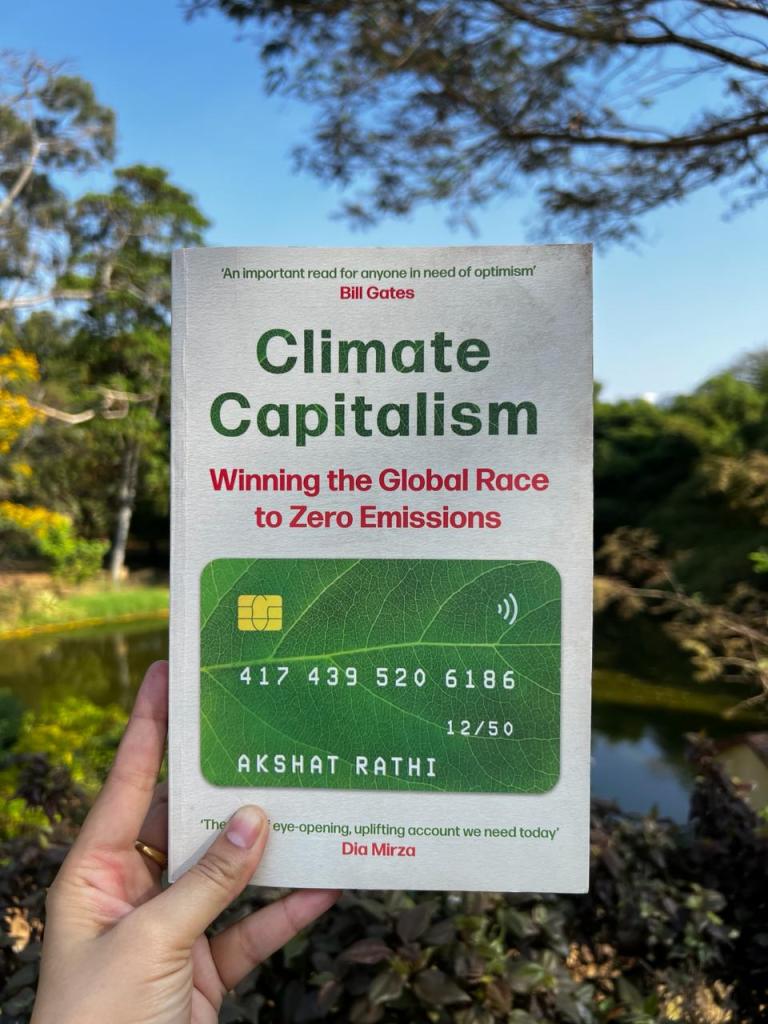
On that note, the book I am going to talk about today is quite interesting. The book ‘Climate Capitalism: Winning the Global Race to Zero Emissions’ by Akshat Rathi makes a lot of sense. Since we all know, it’s impossible to get out of the capitalism race as of now, so why don’t we act within the frame of capitalism? Or use capitalism to tackle the crisis of climate change. “Climate capitalism is about how we tackle climate change within the world’s dominant economic system and ensure that the wheels of progress don’t come to a halt or, worse, go in reverse,” adds Akshat in the book. The author substantiates the definition by showcasing various examples, case studies, and the global movement towards achieving net zero emissions.

The book is neatly divided into twelve chapters describing the idea and how people, technology, and politics can play an important role in addressing the problem of climate change. Through this framework and successful examples, the author showcases how climate solutions can be built while progressing the global priorities of economy, security, and welfare.

Though the ‘theory of climate change’ and realization about the increasing greenhouse effects happened in the 1960s, bringing everyone on board and taking concrete actions have still not been on the main agenda for many countries and important international institutions. Finally, in the year 2015, countries came together and signed the first-ever global treaty, i.e., the Paris Climate Agreement, to check the catastrophic impact of climate change.

Also, there is a stark realization among people as well as capitalists about the cost of inaction and the upcoming opportunity of a clean energy transition. As per the author, more and more people are working on solutions, more government policies are focused on putting policies in place to achieve emission targets, and more money is being mobilized to scale up these solutions.

People and Countries: A Crucial Role in Tackling Climate Change

China and India, the two countries, have leapfrogged the fossil fuel era and transitioned to a greener future by adopting technological innovation, creating policy frameworks, and capitalizing on international collaboration. Communist China has used capitalism to become a maker and buyer of electric cars and batteries. Their initial innovation and breakthroughs have given them a commanding lead on almost every green technology. India, being a developing country, has to strike a balance between economic growth and sustainability. Despite that, the kind of progress India has made in solar energy is not only remarkable but also an example for other developing countries.

People are always important, not only as consumers and adopters of new technologies but also as catalysts for new ideas, technologies, and funding. The author dedicates one whole chapter to talk about the role of Bill Gates and how his Breakthrough Energy Ventures (BEV), the world’s largest philanthropic organisation, has emerged as a ray of hope for climate tech companies, researchers, and innovators working in the field of clean energy. He also played a crucial role in lobbying for the biggest US climate bill, which is also called the Inflation Reduction Act. Wan Gang, the former Minister of Science and Technology, is another person who played a crucial role in transforming China into an EV manufacturing hub, even ahead of its western competitors. His effort led to the establishment of the world’s largest battery manufacturer, CATL, which has global A-list car makers as clients.

Technology and Finance: Creating and Scaling New Ideas

Human ingenuity has no bounds. Human beings have come out of many crises and devised many innovative solutions in the past. Certainly, we can come up with new ideas, technologies, and solutions to tackle the climate crisis. They have come up with various new innovative technologies, from renewable power to green cement, electric cars to carbon capture, and many other emission reduction tools.

Mobilization of private capital has created opportunities for scaling up new ideas to tackle the problem of climate change. However, mobilization of climate finance has become a complex and controversial issue in current times due to developed countries’ reluctance to provide concessional finance to developing countries. Though there has been a lot of debate about the mobilization of climate finance, it has been estimated that only 2% of global GDP would be enough to make the carbon dioxide problem go away. Indeed, projections suggest that approximately USD 9 trillion will be required by 2030 to attain the 1.5-degree Celsius target.

Policy and Institutions: Establishing an Ecosystem

The International Energy Agency (IEA), the International Renewable Energy Agency (IRENA), and the various government institutions transformed themselves to become relevant for the third energy transition the world is currently undergoing. The IEA has emerged as the chief negotiator among countries to come on board to take action to facilitate the clean energy transition and help each country achieve net-zero goals. The author showcases how private capital and government regulations can act in tandem through China’s success in electric cars, India’s solar revolution, the USA’s success in reversing climate damage in the oil industry, and Denmark’s experiments with wind energy.

Conclusion

Through this book, the author creates an optimistic narrative, arguing that it’s cheaper to save the world than destroy it. The good thing is that there is already a realization among people, from bureaucrats to billionaires, from capitalists to consumers, about the cost of inaction against climate change.

However, the author falls short of discussing the criticism of capitalism in aggravating the process of climate change and global warming, the narrative of greenwashing, and the idea of climate justice with a focus on developing countries and island countries, which are the most vulnerable to the impact of climate change. Adaptation strategies and behavioral changes have emerged as one of the most effective ways to deal with climate change. However, the focus is generally on the effect and not on the root cause. Climate capitalism can be one way of dealing with the problem of climate change. Humanity needs to find other ways, including adaptation strategies, behavioral and lifestyle changes, and adopting community practices, to tackle the problem of climate change.

What do you think about climate change, and what actions are you are taking to address the problem of climate change? Are you making any behavioral change to address the problem of global warming. If yes, please do share it in the comment box.

If you liked reading this post and gained something from it, please buy me a coffee by clicking the link below:

Buy Me A Coffee

List of boxes I wish to tick in the near future!

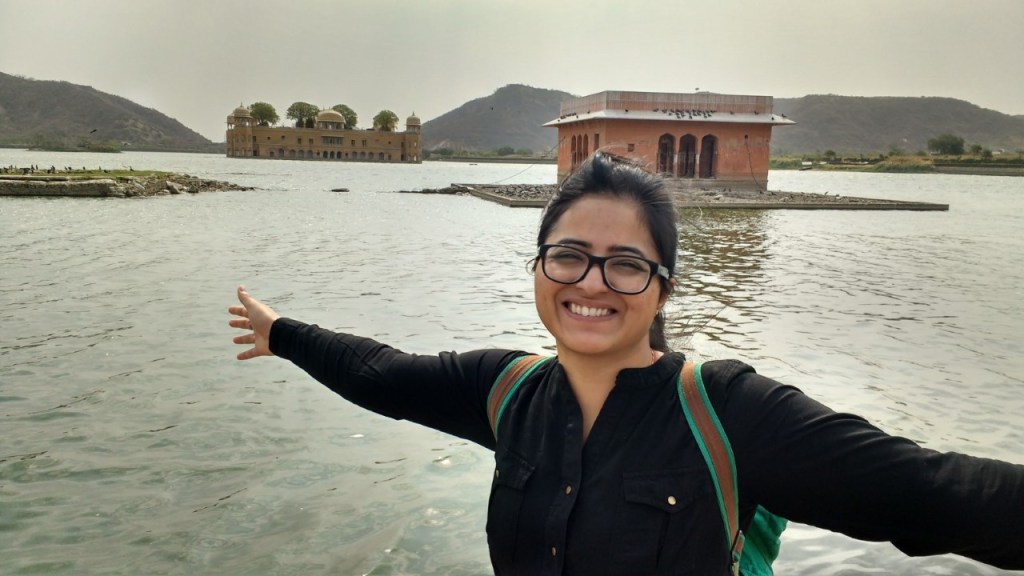
Picture Location: Jal Mahal (Jaipur) : Circa 2016

In the end, it’s not the years in your life that count, It’s the life in your years.

Abraham Lincoln

Recently, I had this feeling of what next I should do. And then I decided to create a list of 50 things that I want to do before I die. When I was thinking about it, I had so many things in my mind and for a moment it felt like, life is like a -to-do list.

Out of curiosity I also asked others. I got different answers from everyone but the interesting thing was that no one told me that they want to study or appear for some exams rather most of the people added that they want to travel or do some adventure sports, create a small library, build their own home and do something for underprivileged. I don’t know what to feel about this. Here are my 50 things I want to do before I die:

  1. Want to work for the Government of India
  2. Help and guide 100 underprivileged students to appear for Civil Services Examination
  3. Want to write two books: one non-fiction and another fiction
  4. Want to work for GOOGLE and TWITTER(X)
  5. Want to start my venture through which I can contribute to the society
  6. Start a small café where people can come and hang out or just read some books. The café should be green, full of art and beauty
  7. Do a degree from abroad
  8. Give a speech to an audience of a hundred people
  9. Visit all cities of India
  10. Travel whole India by Train
  11. Travel in a truck
  12. Want to go on a road trip from Kashmir to Kanya kumari and from Gujarat to Arunachal Pradesh
  13. Travel solo without any planning; just start from anywhere and go anywhere
  14. Do something in the name of my Amma and Bade Papa
  15. Sleep under the stars on a road or a mountain without any fear
  16. Build a small cottage home in Dharmashala (Himachal Pradesh) and also make it a homestay for tourists
  17. Climb Mount Everest
  18. Volunteer at Golden Temple, Amritsar
  19. Adopt an animal
  20. Adopt a girl and provide 100 % funding for her education
  21. Travel at least 100 countries of the world
  22. Ride a bike and go on a trip
  23. Learn a foreign language
  24. Go on an island and stay there for a month without any outward communication and internet connection
  25. Sleep on the Beach
  26. Spend a night in a Tree House
  27. Participate in Floating lantern activity in Thailand
  28. Want to go horseback riding
  29. Want to do zip-lining, sky-diving, scuba-diving, and paragliding
  30. Go on a hot-air balloon ride
  31. Want to participate in cycling
  32. Want to have a nice romantic dinner with my spouse on the Eiffel Tower
  33. Jump-off a cliff
  34. Visit a chocolate factory
  35. Make chocolate from scratch
  36. Buy a Mercedes
  37. Travel to Pakistan, Afghanistan, Nepal, Sri Lanka, Myanmar and Bhutan
  38. Talk to a lot of strangers and write their stories
  39. Volunteer for ‘clean river campaign’
  40. Participate in road painting/road cleaning exercise
  41. Plant 1000 trees
  42. Do farming
  43. Do something for my village located in Azamgarh district
  44. Ride a bullet
  45. Learn guitar
  46. Go on a girls’ trip with some of my close friends
  47. Create/Direct a documentary
  48. Write at least 10,000 blogs before I die (This is my 93rd blog)
  49. Read 10,000 books before I die
  50. Stay in Varanasi and Sikkim for sometime

Only those who risk going too far can possibly find out how far they can go- T S Eliot

If you don’t mind, please also share in the comment what is the one thing you want to do before you die.

Please buy me a coffee if you liked reading this post.

Buy Me A Coffee

Criticism of Sustainable Development Goals

images
Image Credit: UNDP Website

The idea of ‘sustainable development’ came into the limelight in the 1980s after some extreme events like ‘acid rains’ and the human disasters of the Bhopal Gas Tragedy[i] (1984), Chernobyl Nuclear Disaster [ii](1986), etc. Brundtland Commission Report titled “Our Common Futurehas given the idea of sustainable development. As per the report, “Sustainable Development is the development that meets the needs of the present without compromising the ability of future generations to meet their own needs”.

The UN Sustainable Development Goals (SDGs) adopted by the international community in September 2015 under the UN Sustainable Development Summit, comprehensively cover social, economic, and environmental dimensions and build on the Millennium Development Goals (MDGs). There are 17 SDGs which have 169 targets to be achieved by 2030.

17 Sustainable Development Goals (SDGs) are given below :

  1. No Poverty-End poverty in all its forms everywhere.
  2. Zero Hunger-End hunger, achieve food security and improved nutrition, and promote sustainable agriculture.
  3. Good Health and Well-Being for People– Ensure healthy lives and promote well-being for all ages.
  4. Quality Education– Ensure inclusive and equitable quality education and promote lifelong learning opportunities for all.
  5. Gender Equality– Achieve gender equality and empower all women and girls.
  6. Clean Water and Sanitation– Ensure availability and sustainable management of water and sanitation for all.
  7. Affordable and Clean Energy: Ensure access to affordable, reliable, sustainable, and modern energy for all.
  8. Decent Work and Economic Growth: Promote sustained, inclusive, and sustainable economic growth, full and productive employment, and decent work for all.
  9. Industry, Innovation, and Infrastructure: Build a resilient infrastructure, promote inclusive and sustainable industrialization, and foster innovation.
  10. Reducing Inequalities: Reduce income inequality within and among countries.
  11. Sustainable Cities and Communities: Make cities and human settlements inclusive, safe, resilient, and sustainable.
  12. Responsible Consumption and Production: Ensure sustainable consumption and production patterns.
  13. Climate Action: Take urgent action to combat climate change and its impacts by regulating emissions and promoting developments in renewable energy.
  14. Life Below Water: Conserve and sustainably use the oceans, seas, and marine resources for sustainable development.
  15. Life on Land: Protect, restore, and promote sustainable use of terrestrial ecosystems, sustainably manage forests, combat desertification, and halt and reverse land degradation and halt biodiversity loss.
  16. Peace, Justice, and Strong Institutions: Promote peaceful and inclusive societies for sustainable development, provide access to justice for all, and build effective, accountable, and inclusive institutions at all levels.
  17. Partnerships for the Goals: Strengthen the means of implementation and revitalize global partnerships for sustainable development.

These goals are very comprehensive and universal in nature. They are a big improvement over the MDGs because SDGs were developed after a long multi-stakeholder consultation process. However, the SDGs are also criticized due to various challenges in achieving them as well as their lack of focus on social issues:

  • The goals are wishful and unattainable. For instance- the eradication of poverty by 2030 will be almost impossible in the wake of low economic growth and various other issues in the conflict-ridden world. The biggest criticism came from The Economist calling SDGs ‘worse than useless’.
  • There is also criticism regarding the definition of “sustainable” itself. There is no precise definition of sustainable development. Even UNDP has not taken any effort to define the idea of sustainable development.
  • Achieving the goal of sustainability, not only in developing countries but also in the developed world will need a lot of funding. The absence of planning regarding the financing of SDGs is the biggest drawback of these goals.
  • There is also a lack of support for developing and poorer countries on the part of developed countries for financing and technology transfer to achieve the goal of sustainable development. For instance-
  • There is also a lack of political will to deal with the issue of environmental degradation and climate change in various countries of the world. For instance- Under the leadership of Mr. Trump, the USA has withdrawn from the Paris Climate Agreement.
  • Natural occurrences and disasters such as earthquakes, tsunamis, etc can pose a threat to sustainability.
  • The government’s conflict between immediate profit and investment in sustainable technologies can also derail the implementation process of SDGs.
  • There is no proper monitoring and ownership mechanism to measure the implementation of SDGs in various countries of the world.
  • Many experts also criticized the SDGs for not putting enough emphasis on social issues whilst the goals regarding the environment and economic security are extensively secured.

Challenges for India to achieve Sustainable Development Goals (SDGs):

  • India[iii] accounts for the largest number of people living below the international poverty line with 30% (800 million) of its population living under $1.90 a day. Pulling this massive population out of poverty will be a nearly impossible task for India without international support.
  • A new study[iv] estimates that implementing SDGs in India by 2030 will cost around US $14 .4 billion.
  • It will be a big challenge for NITI Aayog to monitor and provide innovative solutions to achieve the massive targets of SDGs.
  • India’s huge geographical as well as cultural diversity can also be a challenge to achieve the goals of sustainability because the needs and requirements of various regions are varied and they will need context-specific
  • India’s federal structure and differences among the States regarding the development indicators can also create challenges but if channelize properly in terms of “competitive federalism” can also turn into an important tool to achieve the goals of sustainable development.

In the context of India with a huge population and social challenges like massive poverty, hunger, malnutrition, acute gender discrimination, and low per capita income, these goals are nearly impossible to achieve. However, India[v] can play an important role in achieving sustainable development goals. In fact, these goals can be treated as ‘ideal goals’ which can act as a guideline for the national and international governments to measure their success in achieving inclusive and sustainable development.

REFERENCES:

[i] https://www.youtube.com/watch?v=FdyBy2s9I5c

[ii]http://www.world-nuclear.org/information-library/safety-and-security/safety-of-plants/chernobyl-accident.aspxhttp://www.iisd.org/topic/sustainable-development

[iii]https://www.hindustantimes.com/india-news/can-india-meet-sustainable-development-goals-on-poverty-hunger-despite-sluggish-economy/story-8NlIxkeBp

[iv] https://www.devalt.org/images/L3_ProjectPdfs/AchievingSDGsinIndia_DA_21Sept.pdf?mid=6&sid=28

[v]https://timesofindia.indiatimes.com/india/sustainable-development-goals-will-succeed-if-india-succeeds-hardeep-puri/articleshow/65035265.cms