Indian Government and Politics

If I were asked under what sky the human mind has most fully developed some of its choicest gifts, has most deeply pondered on the greatest problems of life, and has found solutions, I should Point to India.

Max Mueller (German Scholar)

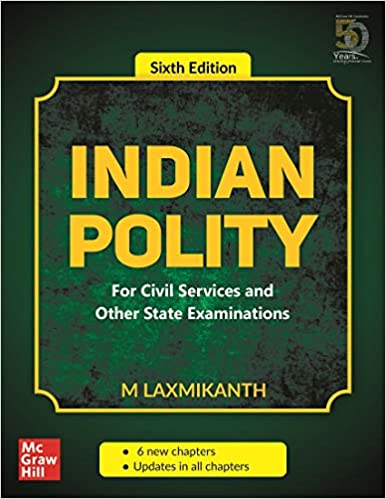
Indian Polity: M Laxmikant: Indian Polity by Laxmikant is the bible for UPSC aspirants. It is not only helpful for prelims but also helpful for mains examination. Indian Government and Politics section of the Political Science & International Relations (PSIR) requires you to be aware of all constitutional provisions. Most importantly, you have to be aware of the current happenings of Indian politics and constantly try to see the bigger picture and what happened in the history of Indian politics with respect to that particular issue. For instance: If President’s rule is declared in some states, you should know under what article of the Constitution of India, it is declared and what is the Supreme Court judgment on President’s rule and what is something about this particular president’s rule.

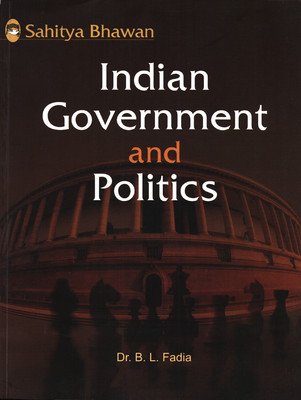
Indian Government and Politics: B L Fadia: This book by B L Fadia is a kind of guide book for the section on Indian Government and Politics. It almost covers the whole syllabus. It is a quite methodical and full of text, so it can help you to summarize or to have many view points on a particular issue. However, the book is quite boring.

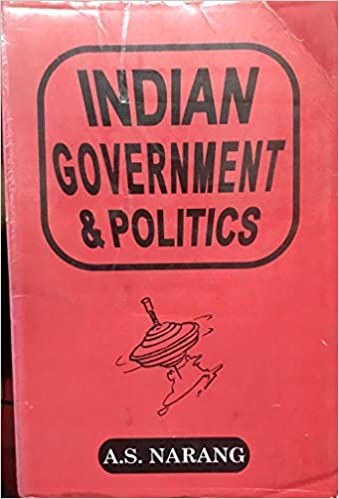
Indian Government and Politics: A S Narang: This book is very similar to B L Fadia’s book. However, two things are different: one is that the book is quite old, so it is not updated as per current happenings and the second thing is that the writing style is totally different as compared to the B L Fadia’s book. Just have this book to understand how the author has written on a particular issue. It’s not compulsory to buy.

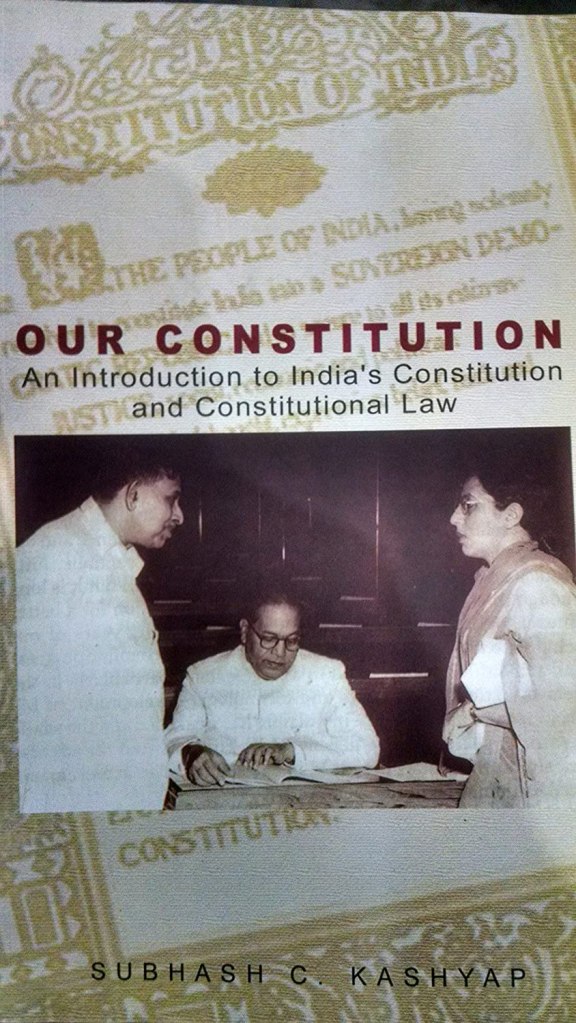
Series of Books by Subhash Kashyap: Subhash Kashyap is a well-known political scientist, Indian Constitution expert, distinguished scholar, and writer. He has written extensively on parliament, the constitution of India, and the Indian political system. His books on Indian Constitution and Parliament give you a lucid perspective on legal and political issues which helps in writing answers for the main examination. I would highly recommend reading these books if anyone has taken PSIR as an optional for the Civil Services Examination.

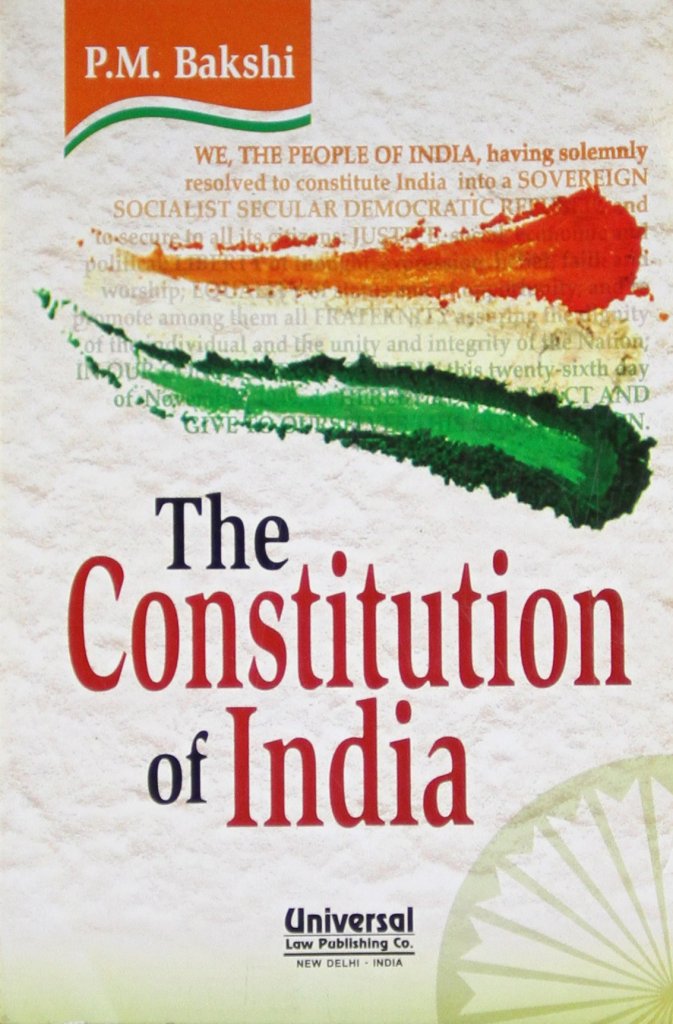
The Constitution of India: P M Bakshi: This book has all the acts of the Constitution along with the important cases. Keep this book with you whenever you want to refer to some important case related to any specific article of the Constitution of India.

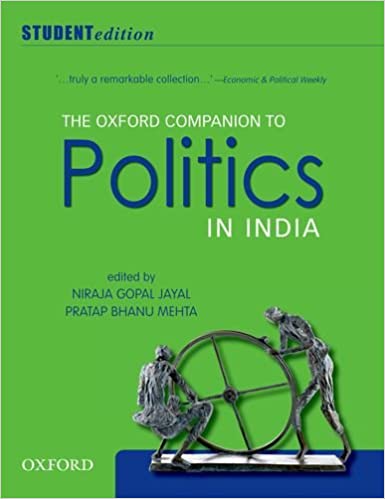
The Oxford Companion to Politics in India: Niraja Gopal Jayal & Pratap Bhanu Mehta This book is very important and highly recommended. It can help you to analyze the critical issues of Indian politics. This book is divided into eight parts comprehensively covering all essential issues starting from the institutions, the society, political processes, ideological contestations, social movements, political economy, and different ways of looking at Indian Politics. I would recommend this book reading as many times as you can and if possible also make notes from this book that will be useful for revision just before the main examination.

Miscellaneous: (Highly Recommended): The Indian Government and Politics section of the PSIR optional is quite dynamic and also needs a lot of analysis and interlinking of many concepts for better understanding. So, I will also recommend reading unconventional books on Indian politics, history, and memoirs or autobiographies of politicians to understand the political dynamics and nuances of Indian politics.

  • NCERT Books on Indian Politics, Democracy, and Constitution of India
  • IGNOU Notes on Indian Government and Politics
  • Read 2-3 newspapers daily. The Hindu, The Indian Express, Times of India
  • Watch Rajya Sabha Debates. Big Picture and also the Samvidhhan series
  • Watch out for important Supreme Court judgments
  • Check out the PRS website for all new bills, Standing committee reports, and their summaries

Please find my other blogs on Political Science and International Relations below if you want to know more:

If you enjoyed reading this post, click the link below to buy me a coffee.

Buy Me A Coffee

My Journey through Modern India

Review of India’s Struggle for Independence This was my first history book which I read during civil services preparation. It’s an interesting read with nice anecdotes, stories and, quotes weaved into small chapters. This book is an easy read. It can be easily finished if someone targets to read one or two chapters in a day. Since Bipin Chandra, the main author of this book, is a historian with a left-leaning perspective, he gives a one-sided picture of the modern India. This book is special as it made me aware of the freedom struggle for India’s Independence.

Review of Modern India: This is a book on India’s freedom struggle written from a subaltern perspective. This perspective challenges the elite perspective of Indian nationalism and has been critical of Congress driven nationalism. Sumit Sarkar has narrated the story of Indian nationalism from the perspective of masses. Though a different perspective, I found this book a little tedious. However, it is a must-read if someone wants to understand the history from the perspective of masses.

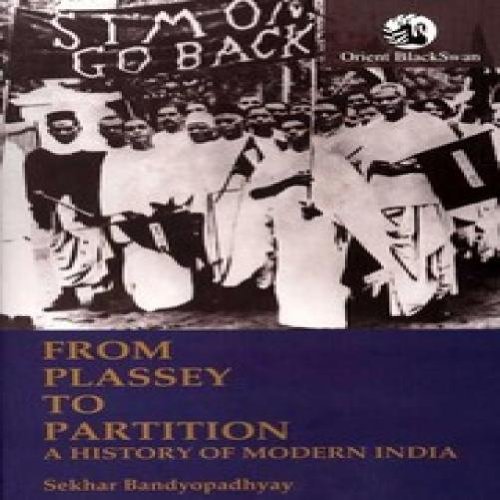
Review of From Plassey to Partition: A History of Modern India: This book changed my perspective of reading history books. It made me realize that history is written by the writers and not the victors. The whole concept of historiography is so important if someone is reading history or trying to make any conclusions from the history book. Writers write history based on the information available and also interpret the historical event from their own lenses. However, this book is a piece of art. I found it very unbiased, quite nuanced with a lot of details, and thousands of citations as if you are reading a research paper. This book makes you understand with a lot of clarity the conflicting questions present in our politics. For instance- How Indian masses were hardly in sync with the leadership of Congress at the national level? The concept of popular consciousness was absent. Local grievances and the local leadership played an important role in any national movement started at that time. Indian national movement was very vague so that each group could interpret it in their own ways. This book is a must-read for all history lovers. The first few chapters are little dense but slowly you will not feel like putting the book down.

Review of Social Background of Indian Nationalism: This is also one of the best books ever written on Modern India. As the title depicts, this book is written from a social perspective. Someone should read this book to understand how did feudalism evolve in Indian society? How did new classes emerge? What was the role of means of transport and modern education in the development of Indian nationalism? What were the factors which played an important role in the crusade against the caste system and untouchability?

Review of India After Gandhi: This book is very special to me because it was a gift from Chaitanya. It was a superb read. I read this book in 2012 and finished it in 15-20 days. It has around 1000 pages but I wanted to finish it as early as possible. This book was unputdownable. It was one of the best books I ever read. Reading this book created a kind for urgency to me to read more books if you want to get selected for civil services. Since then I never stopped reading non-fiction books. Ram Chandra Guha, the author of the book has so vividly narrated the story of post-Independence India that it feels like you are watching a movie. It also helps you in understanding the current day politics because whatever is happening, it has its background in history. This book is a masterpiece and one of the best books to know about the post-independence history of India. It tries to answer some difficult questions like Why India has survived as well as succeeded as a nation despite having huge diversity and differences? However, the author has also been criticized as being pro-congress in depicting the post-independence history and politics.

Review of India since Independence: This book is similar to India After Gandhi by different authors. Some chapters of the book explaining the consolidation of India as a Nation and Land Reforms are very insightful. However, this book is written in academic form rather than like a story. It might not be an easy read but if someone wants to understand the left perspective of Indian politics since Independence, this is one of the best books.

Review of Modern Indian History: This book is like a guide book to help you remember all the historical events and helps you write better and structured answers for modern India history questions. The best thing about this book I liked is that it has created separate chapters for different Governor Generals of India, and the events happened during their tenure that makes you clearly remember different acts and treaties signed between British India and different rulers of that time.

Till today, I only remember reading these books on Modern and Post-Independence India. When I read more books or remember my old books, will update this blog. Till then, keep reading guys!!

Book Review of Capital

“An imbalance between rich and poor is the oldest and most fatal ailment of all republics”.

Plutarch
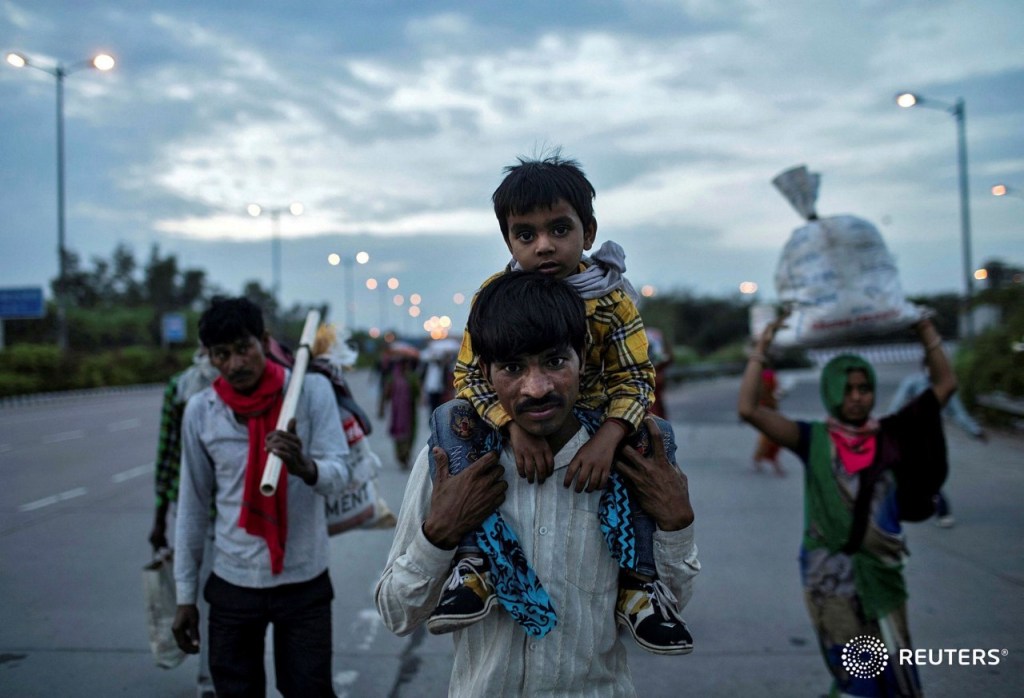
Migrants returning to their home walking hundreds of km due to lock down declared by the government due to corona virus crisis.

The present migrant crisis in India is a stark reminder of the economic inequities existing in our society. When rich and middle-class people are spending their time in the comfort of their homes doing various activities, poor and marginalized migrants are walking for a hundred thousand kilometres to reach their homes. Some also died on the way because of hunger and exhaustion. In this context, I thought to write a short review of the book, “The Capital” by Thomas Piketty. How income inequalities are going to hurt us in the longer-term unless some concrete steps are not taken by the State and its people.

I never read the whole book but managed to give a paper presentation on it in my final year of public policy course. Whatever critics say, this book has brought the issue of income inequality at the forefront. Income inequality is not only an issue based on some statistics but also it’s a moral issue that will always pinch the conscience of the people. This book became popular since it got published. Piketty also hailed as “the Modern Marx” by “The Economist” magazine. He is a French economist who also taught at MIT for two years. His major work is a compilation of historical data about economic inequality. He is critical of economics discipline.

“To put it bluntly, the discipline of economics has yet to get over its childish passion for mathematics and for purely theoretical and often highly ideological speculation at the expense of historical research and collaboration with the other social sciences.”

Thomas Piketty-The Capital in 21st Century

The core concern of the book is to put the issue of inequality in its broader historical context. The author’s main argument is that in an economy where the rate of return on capital outstrips the rate of growth, inherited wealth will always grow faster than earned wealth. He also adds that the concentration of wealth at one level is incompatible to democracy and social justice.

The history of the distribution of wealth has always been deeply political, and it cannot be reduced to purely economic mechanisms.

Thomas Piketty-The Capital in 21st Century

He rejects the Simon Kuznets hypothesis which says that though societies become more unequal in the first stages of industrialization, inequality reduces as they achieve maturity. However, Piketty does not think like that. According to him, demography, low taxation and weak labor organizations will fundamentally lead to greater inequality.

The author feels that unless we do something, ‘free-market economy’ will become a ‘patrimonial system’ with an entrenched hereditary upper class and the rest of the population. He is highly critical of higher compensation paid to senior executives of MNCs that is responsible for extreme inequality in the wake of 2008 financial crisis. To save the world from this ‘doomsday scenario’, the author proposes various measures namely a global tax on inherited wealth, changes in income taxes, use of inflation to redistribute wealth downwards and also enforced transparency of banks.

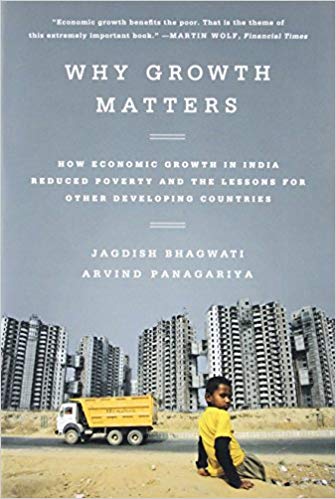
His paper -,“Indian income inequality, 1922-2014: From British Raj to Billionaire Raj”? co-authored with Lucas Chancel argues that income inequality was highest in India in 2014 since the creation of Indian Income -tax in 1922. They concluded that the top 1 percent earners in 2014 earned 22% of India’s national income. Though there are various counter- arguments to it. Jagdish Bhagwati & Arvind Pangariya refuted this argument in their book, ‘Why growth matters’. Swaminath Aiyar also disapproved of his idea of stark inequality in India in one of his articles on the grounds of statistics and his failure to distinguish between different kinds of inequality.

Thomas Piketty’s hypothesis criticized by many economists. According to them, his approach to economics is anti-mathematical. As per the paper, “Income Inequality, Catastrophe Predictions, Thomas Piketty, How income and economic unit are defined can create significant differences in the data produced and in the interpretation of the data? For instance, Stephen Rose and Thomas Piketty reached different conclusions about the status of the middle class based on the definition of income and economic unit. Generally, there is no correlation between increasing income inequality and general welfare. His use of tax records to approximate income is convenient and allows easy comparison across different countries and at different times and he also not considered the social security payments as part of his data.

Though income inequality is a complicated issue, Piketty’s biggest contribution is to elevate the income inequality issue to the forefront of both public and scholarly attention. Whatever is the reason behind stark inequality existing in society, the issue of inequality will always be debated as a moral issue.


This quarantine period, find your Ikigai

Image Credit: Clicked by me

Only staying active will make you want to live a hundred years.

Japanese Proverb

I read this book a few months back but thought to write this review now because this quarantine period is the best time to find your ‘Ikigai’. Today is the 18th day of the lockdown and it is expected that lockdown will get extended for two more weeks until April 30. Though a lot of good things are happening due to this unprecedented lockdown, people are also feeling bored and frustrated. This lockdown can be used as a ‘reflection time’ to find out what is that one thing which anyone can do with full happiness, love, and satisfaction.

Ikigai is a Japanese concept which means ‘reason for being’. What is the purpose of your life or what gives you the utmost satisfaction? As per the centenarians from Okinawa, Ikigai is the reason we get up in the morning. When you are so engrossed in your work that nothing around you matters, it means you have found your Ikigai. But it does not apply to any Netflix series 😉 It means that you have immersed yourself into the work that you are doing. You forget about your surroundings. For instance- it can be writing, painting, gardening, photography, dancing, singing, decorating, coding, etc.

Image Source: Forbes article

This diagram sums the whole concept of Ikigai. What you love doing is your Ikigai. If your job is your Ikigai, you will not think of it as work. You will love doing it. That’s the most important thing. Some just don’t enjoy their jobs because they have no interest in it or they are just not good at it. That is why the whole problem of stress which consumes our body and mind from inside. As per the American Institute of Stress, most health problems are caused by stress.

I liked the way the authors of this book explained how stress functions. Modern humans are alert most of the time, stuck in the epidemic of multi-tasking, sitting in front of their laptop, having junk food, and waiting for notifications from their mobile phones 24 hours a day. The human brain equates the ping of a cell phone or an email notification with threat of a predator which has huge health implications on the body leading to adrenal fatigue, cardiovascular diseases, insomnia, anxiety, and high blood pressure.

Though a little stress is good for you, you need to be mindful of reducing stress by having a stoic attitude. A high degree of emotional awareness and ultimately finding meaning of your life and going with the flow is required to reduce the stress level. When we achieve flow in our work, we have full concentration without any distractions.

The flow is a state in which people are so involved in an activity that nothing else seems to matter; the experience itself is so enjoyable that people will do it even at great cost, for the sheer sake of doing it.

Csikszentmihalyi (Flow: The Psychology of Optimal Experience)

The book also provides some useful suggestions to achieve the state of flow:

  • No screen time for the first hour after waking up and the last hour before going to bed
  • Switch off the phone before you achieve flow
  • Do technological fasting for one day of the week
  • Check and respond to your email once or twice per day
  • Start your work with something you enjoy
  • Find a less distracting place to work
  • Divide your work into small activities

These days, we all are doing mundane tasks of cleaning, washing utensils, doing the laundry, etc, and the question is how to make these mundane tasks enjoyable. Turning routine tasks into moments of flow is key to our happiness. This is called the micro-flow. Even Bill Gates enjoys washing his dishes every night as it helps him relax and clear his mind. I don’t how others do it but I generally play some nice songs while cleaning my house.

This book is for those who want to find their Ikigai and also want to know the secret of a long and happy life. Just to provide an easy list for everyone, it provides the ten rules of Ikigai:

  1. Whatever you do, don’t retire
  2. Take it slow and you will go far
  3. Don’t fill your stomach. Fill your belly to 80%
  4. Surround yourself with good friends and stay away from toxic people
  5. Connect with communities
  6. Walk a lot and do Yoga
  7. Reconnect with nature
  8. Do mental work out
  9. Be grateful for things you have
  10. Live in the moment (Carpe Diem)
  11. Have a purpose(Ikigai) in life

“Simple Living and High Thinking” has always been the motto of our country’s ancient traditions and also reiterated by inspiring personalities like Swami Vivekanand, Gautam Budhha, Mahatma Gandhi, Abraham Lincoln and Mother Teresa. So now when the whole world is slowing down during this quarantine period, find your Ikigai and make your life more meaningful and happy.

Be fluid and follow your passion

Pic Credit:
http://www.ashishjaiswal.com/

Be formless, shapeless like water. When you put water into a cup, it becomes the cup. You put water into a bottle it becomes the bottle. You put it in a teapot it becomes the teapot. Now the water can flow or it can crash. Be water, my friend-

BRUCE LEE, The Lost Interview, 1971

This is the season of results. I am not talking about election results but the results of high school and intermediate students in the country. On one side marks of the students are skyrocketing touching 90 to 99 percent and on the other side, around 22 students of Telangana Board of Intermediate Education (TBIE) has committed suicide because they were failed or did not get expected marks due to some goof-ups in giving marks by the board. Recently, one Delhi woman’s Facebook post became viral as she was feeling proud when her son scored 60% marks in high school examination of CBSE board. Not only this, as per the recent ASER report 2018, 75% of the Std III students of the government schools across the country can not read and perform basic calculations. It shows the grim picture of the Indian education system. In fact, this is the key idea of this book written by Ashish Jaiswal, a scholar from the University of Oxford. He is a humble and down to earth human being.

The title of the book is so intriguing that I had not thought in my wildest dream that the author is going to discuss the education system of India. How the Indian education system is creating rote learners, unemployable and unskilled graduates? There is one more peculiarity how the so-called best education system provided by IIT-IIM and foreign degrees creating money minting machines. These people have no concern and responsibility for the “Lok Kalyan” means public welfare the term used by the author to answer the question- ‘what should be the ultimate purpose of our life’? The sad example of this rat race is suicide of Sarveshresthra Gupta, graduate from one of the Ivy League colleges. He ended his life due to stress and work pressure.

Why India despite being the oldest civilization in the world is still behind its counterparts at various fronts? Why no Indian university has achieved the feat of the best rankings in the world ? Why there is a massive “brain drain” from India to western countries? Why we are still talking about poverty elimination in our country even after seven decades of Independence? Why our education system are not able to produce more number of people like Amartya Sen, Rabindranath Tagore & E Sreedharan and producing mediocre engineers, doctors and social scientists. Why do we Indians still feel inferior to western people in culture, language and heritage of our country?  There might be a number of reasons behind these questions. But I am confident that the way Indian education system evolved over the years is one of the most important reasons which drags India behind. Why this is so?

This book tries to answers these questions. Being fluid means be more than what you are taught to be. As per the author, you become fluid specialist when you explore the universe in integrative form, learn from your surroundings and take the inter-disciplinary approach to create knowledge and wisdom. Anti-fluidity in terms of compartmentalization of the streams in different subjects taught in the school has made us unimaginative. We are told to choose our specialization after our high school exam when we are hardly aware of the world around us. Everyone hear this conversation. Choose science and mathematics and your life will be set. Go for engineering or medical or commerce, you will earn good money. Go abroad and earn in US dollars. Nobody tells us, “follow your passion and do something for the greater good”. Not only this, when you want to explore the world or you want to take a gap in your studies, this decision is looked down upon by the society in general and family in particular. The author mentioned about Rene Descartes, father of modern Western philosophy who once left his education for the sake of travel. He is the one who wrote- ‘I think, therefore I am’.

In fact, the author has shown how the whole theory of right-brain and left-brain is complete non-sense. The author quoted Neil deGrasse Tyson, american astrophysicist who completely rejected this theory saying that these fake divisions between science and art is taking our civilization away from true learning. Charles Percy Snow, British scientist and novelist in his book, ” The Two Cultures and the Scientific Revolution” highlighted the huge gap between those studying sciences and arts and concluded that lack of exposure to other academic circles led to hostile and distorted image of each other.The sheer categorization of subjects into STEM and non-STEM shows the stereotype mindset towards social sciences subjects.

This book tells us to be fluid in our approach towards the process of learning. Spontaneous learning is the most beautiful thing. It not only makes you a better person but also gives you various perspectives to understand the world. The author of the book mentioned many learned people like Charles Darwin, Aristotle, Leonardo Da Vinci, Goethe, Amartya Sen, C V Raman, Peter Geddes, Frank Lloyd Wright, Edwin Land, Steve Jobs, etc who did not follow a set path and explored the universe.They exposed themselves to diverse fields of education. The fluid approach which was depicted in the form of charkha(wheel) by the author appreciates the ‘integrative nature of the universe’. In the era of digital technology and artificial intelligence, when there will be more monotony and job losses, the people who are fluid in their approach will have more chances to survive because of their exploratory nature and never-ending desire to challenge the defined boundaries.

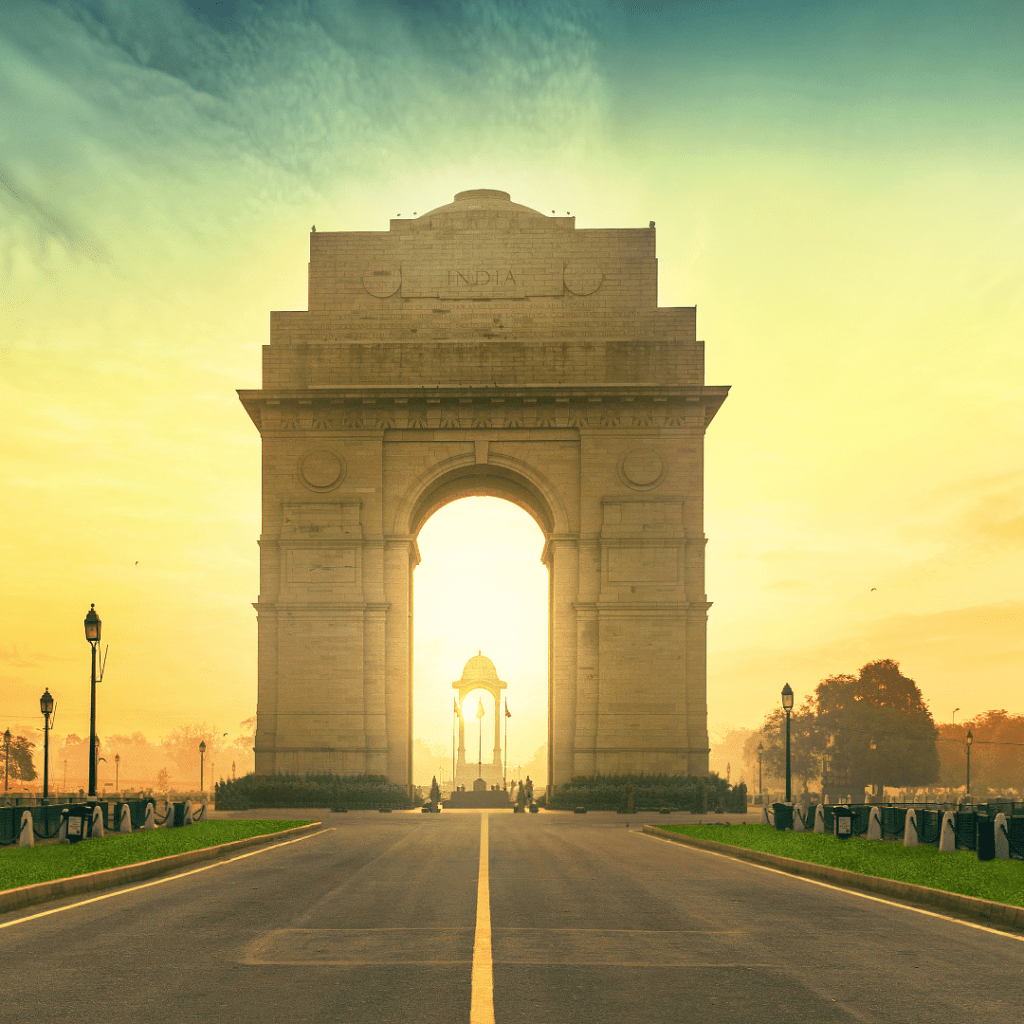
One of the most important findings of Jaiswal is that India should get credit for Da Vinci’s Vitruvian man. The undiscovered Hans Purush from Vishnudharmottaram Puranam mentioned by Rishi Markendeya was one of the perfect men discussed in the Purana. In fact, the author wants to stress the point that human knowledge is circulatory. The world has been benefited not by one single country or race but by the combined intelligence of all spread over the thousands of years. For instance- architectures around the world are the best example of combined intelligence and cultures of humanity. The best example mentioned by the author is our India Gate which not only incorporated western architectural influences but also the elements of Indian architecture in terms of the dome on the top and canopy structure in front. Indians should not feel inferior of their history, culture, language, etc because we have a lot more to offer to the world not only with respect to new knowledge but also we gave the idea of spiritualism and simplicity to the world.

This book is a culmination of out-of-the-box thinking. The author tried to challenge the stereotypes and boundaries built by society. He wants readers to be a learner who explores the universe, gets inspired by the surroundings and creates a melting pot of intelligence to work for the public welfare. Most importantly, as a public policy student, I always look for solutions keeping in mind that world is full of complex problems. I agree with the author that there are many issues plaguing the Indian education system but what are the solutions. How can we inspire everyone to be fluid in their approach?

Please find the author’s Comment on this review:

Dear Ritambhara, The review reads absolutely fantastic. It does summarises ‘fluid’ brilliantly. I also do understand the importance of your last line – the question. Our mind is an amazing construct. My learning journey has taught me that every dimension of knowledge for mind is locked inside a web just held together by a loose knot. A idea/thought/reflection/event/experience , if powerful enough, causes that knot to open. This is the beginning but most crucial step in acquiring any wisdom. Fluid is that first step in acquiring wisdom over multi-dimensionality. Once, you realise there is something like fluidity in specialisation , you will never go back to walking on a uni-dimensional path 🙂

Why Growth Matters?

The book starts with “Tryst with Destiny speech” given by the first Prime Minister of India J. L. Nehru from the ramparts of the red fort in August 1947. This was the time when India started a new journey towards nation-building and fulfilling the aspirations of million Indians. The authors mentioned this to reinforce the idea that the ‘goal of poverty’ elimination had always been the part of India’s national strategy.  The whole book gives a feel of strategy document which is divided into three parts: first is about debunking various myths related to economic growth and development of India, second talks about the Track I reforms that produce growth which has a direct impact on poverty and finally, third discusses the most important reforms in the areas of health care, education and guaranteed employment under the Track II reforms.

The authors of the book: Jagdish Bhagwati and Arvind Panagariya are the professor of economics at Columbia University. In fact, Panagariya is a protégé of Jagdish Bhagwati and he was recently appointed as the first Vice Chairman of NITI Aayog by the present BJP government. The authors of the book believe in the ideas of globalization, free trade, and especially full-fledged reforms.

In the first part of the book, the author has tried to debunk various myths- about early development strategy, inclusion of health and education, focus on redistribution to reduce poverty as compared to growth emphasising the point that the early development strategy also focussed on these goals. The authors challenged the myths about the reforms launched in 1991 and its impact on poverty reduction, farmer suicides, development of socially disadvantaged groups, the controversies surrounding poverty lines and vociferously the impact of trade and globalization on poor.

They have debunked the myth of increasing inequalities due to reforms launched in the country in 1991. The authors disapproved the “Kerala Model of Development” saying that it had a historical advantage in terms of literacy, health infrastructure, trade linkages and the dominance of the private sector. In fact, the author mentions the account of Robin Jeffrey (1992) who highlighted the key factors- matrilineal tradition, the role of various rulers, caste and religion-based groups and trade linkages with various countries which played an important role in growth and development of Kerala. The author lauded the “Gujarat Model of Development” and quashed the myth that despite high growth, Gujarat has performed poorly in health and education.

The Part II of the book talks about the Track I reform in the areas of Labor laws, Land acquisition, Infrastructure, Higher Education & Agricultural Market reforms which are aimed accelerating and sustaining growth. In fact, the recent Economic Surveys released by the Government of India discussed these critical issues which act as an impediment in the growth process. The current NDA government has launched various labor reforms like allowing fixed-term employment in all sectors, removing the arbitrary inspection system, providing EPF number portability, six-months maternity leaves to increase the female labor force participation rate, amending the apprentice law and child labor law etc. They focused on infrastructure development launching ‘Bharatmala Project’, ‘Sagarmala Project’, UDAN scheme, rural electrification, and road development. e-NAM(National Agriculture Market) and various other agricultural reforms launched to focus on doubling the farmers’ income. It has proposed the Higher Education Commission of India bill 2018 to abolish the UGC to provide more freedom and autonomy to various universities of India to reform the higher education system in India. However, according to me,  there is still a long way to go in the areas of labor reforms and land acquisition act which are still archaic and create hurdles in the ease of doing business in India.

Track II reforms discussed in Part III of the book are focussed on effective and inclusive redistribution process through providing guaranteeing employment, adult nutrition, and food security, reforming health care and universalizing elementary education. However, the authors’ main idea is that “growth will act as an instrument for poverty alleviation”. It will help in creating substantial economic resources to fund the redistribution goals. As per the author’s reasoning, “Track II reforms can stand only on the shoulders of Track I reforms; without the latter, the former cannot be financed. The whole viewpoint of authors of the book can be seen in terms of “trickle-down theory” which is labeled as “pull-up growth” strategy in the book. 

The authors completely disagree with the model of redistribution proposed by Amartya Sen and Jean Dreze because they think that it cannot be the answer to removing poverty in countries of India, Brazil, and China which has a huge population to cater. Under the Track II reforms, the author discussed the design of the redistribution programmes in terms of cash or kind transfers targeted or universal, public versus private provision, conditional versus unconditional transfers and recommends the strategy of policy mix consisting of targeted unconditional cash transfers for most needs, vouchers for elementary education and insurance for major illnesses with government covering the premiums.  In fact, the present government implemented the idea of Direct Cash Transfers (DBT) through the help of “JAM (Jan-Dhan Aadhar Mobile) trinity” for cooking gas subsidy transfers, scholarship reimbursement etc. However, targeting any cash transfers or kind transfers is a complex task in India because of lack of identification mechanism where Aadhar can play a major role.

This book came into limelight after the whole Sen-Bhagwati debate started around 2013-2014. At the same time, Amartya Sen, the Nobel Prize winner in Economics and recipient of Bharat Ratna and Jean Dreze book, “An Uncertain Glory: India and its Contradictions” published. Amartya Sen has given the ‘idea of capability-based approach’ to human development and he argues that ‘redistribution as a strategy’ will help in the elimination of poverty. In fact, he proposes the participatory growth and broad-based development model where rights are given to the people and there is freedom and agency for the people to bring about development for them. That is why Amartya Sen praises the “Kerala Experience of development” where all the social indicators are equal to the developed countries of the world. They also emphasize and compare India’s growth story to Bangladesh which has improved the social indicators in less time duration than India. Women have played an important role in improving the social indicators of Bangladesh because of the increasing employment of women in labor-intensive manufacturing sectors like apparel, textiles etc. It also indicates that providing agency to women creates a conducive climate for improving all the social indicators not only for the present generations but also future generations.

In fact, Bhagwati and Panagariya have not even discussed the gender issues in their book which is the biggest criticism of their whole strategy of growth. India being a patriarchal society has a very low labor force participation rate which needs to be improved to make the growth more inclusive and broad-based. Another criticism of the whole strategy proposed in the book is that there should not be any dependence of Track II reforms on Track I reforms as the author consistently pitched that Track II reforms will be implemented with the help of resources generated from Track I reforms. What will happen when the Indian economy is not growing at all in a doomsday scenario? In that case, the Government of India should work on both the fronts stimulating the growth process as well as creating a sustainable and humane mechanism to support and redistribute the resources to the poorest sections of the society. However, the model proposed by Sen in terms of State-led development has not resulted in substantial achievements before India has turned towards the strategy of liberalization, privatization, and globalization.

On the face of it, choosing one strategy among the two is not the option but choosing the better strategy for the overall and inclusive development of the country will be the right option. There is no option to go back and adopt the state-led development and there is a danger in leaving everything for market forces to do. The pitfalls from both the approaches are very much visible all over the world where state-led development is almost abandoned by countries around the world and pure market fundamentalism has led to the severe crisis and unrest even in the developed world.

Therefore, India should find a “middle-path” propounded by the Gautam Buddha whereby India takes the help of globalization to unleash the animal spirit of market forces to create growth and development. Along with creating a mechanism of participatory development where every individual of the country develop its capabilities to achieve the goal of sustainable development because development is not a singular concept of infrastructure, economic growth, poverty reduction, education, and health but it is a multi-dimensional concept where there is a substantial change not only in material and physical aspects but also change in social structures, popular attitudes, and national institutions.

Government’s work is God’s work?

milan
milan

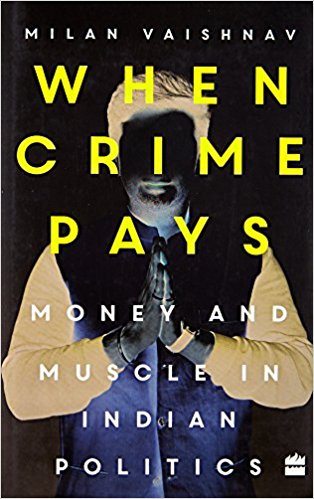
It is ironic to see that “Government’s work is God’s work” is written on the Vidhan Soudha, the seat of the State Government of Karnataka but the 24% of newly elected MLAs of the Karnataka Legislative Assembly face serious criminal charges. Even  India’s temple of democracy i.e. parliament is filled with lawmakers who have criminal backgrounds and more disturbing thing is that the percent of legislators facing criminal charges have increased in the subsequent General Elections. For instance, 34% of MPs elected in 2014 faced criminal cases as compared to 24% of MPs elected in 2004. 

On the face of increasing criminalization of politics, Milan Vaishnav, senior associate at the Carnegie Endowment for International Peace in Washington, DC, book “When Crime Pays: Money and Muscle in Indian Politics” is an eye-opener in terms of understanding the puzzling co-existence of criminality in politics along with the democratic accountability. The author has tried to address the questions of their co-existence since the beginning when they acted as “anti-social elements” to mobilize the voters for their masters(politicians) to becoming the lawmakers themselves.The author has beautifully applied the concept of a market in terms of ‘supply’ and ‘demand’ to understand the “electoral marketplace” where voters play a ‘role of buyers’ and political parties play a ‘role of sellers’. And the most interesting thing is that all these players are guided by their self-interest. Voters want the governance vacuum to be filled, political parties want self-financed candidates and criminal candidates want self-preservation and self-protection.  

The origin of this whole criminality in Indian politics which has deep historical linkages in the post-independence era when these anti-social elements acted as a facilitator to the politicians. However, these elements entered into the political fray due to the breakdown of the Congress party’s patronage networks, vacuum created in the governance process due to the emergency declared by Indira Gandhi in 1975, increasing social demands in terms of ‘identity politics’, the huge ‘crisis of governability’ when Indian state fails to deliver basic services to the citizens. However, the author has provided an important insight into the book,

“Electoral support for the politicians with criminal records is not necessarily symptomatic of a breakdown in democratic accountability. Instead, malfeasant politicians and popular accountability can in fact be compatible to each other”. 

-Excerpt from the book

In fact, this whole idea refuted the concept of “ignorant voter scenario hypothesis”. In fact, the voters are not ignorant or uninformed, they are simply looking for candidates who can best fill a perceived vacuum of representation and protect the status of the community. The author through his various field surveys, as well as interviews of the candidates, provided interesting details of the criminalization of politics in India and what are the causes as well as how it is sustained in the strong society like India. 

The supply of criminal politicians and money power is intertwined to each other as money plays an important role in the election expenditure. This also has historical underpinnings when the corporate donation was banned by the then Prime Minister Indira Gandhi to appear harsh on ‘crony capitalism’ which in turn created the pathway for black money and hard cash to enter into the election financial regime. Not only this, India’s grand corruption in terms of ‘regulatory rents’, ‘extractive rents’ and ‘political rents’ created a linkage and interaction among them created more ground for criminal politicians to emerge. The author has quoted the example of ‘Reddy Brothers‘ in Karnataka, Madhu Koda of Jharkhand, YSR & Jagan Reddy from Andhra Pradesh showing that how they have extracted rents from natural resources taking advantage of severe gaps in India’s governance system. This whole corruption and hard cash create a lot of money power which helps in winning the elections. In fact, as per the analysis provided by the author, candidate’s wealth and electoral success are highly linked, richer is the candidate, more chances of winning. It answers the questions of why political parties select the candidates from the criminal backgrounds.

There is also calculated reasoning on the political parties to select ‘self-financing candidates’ who do not drain the party coffers but can provide rents to the party in the wake of costly elections, increasing competition etc. Criminal Politicians are like “Robinhood- one who robs the rich and gives to the poor” who act as a credible representative in a multi-ethnic society like India. The idea of Robinhood has been a recurring theme of Bollywood movies sometimes inspired by the real characters of Indian politics.  That is why the author has named one of his chapters- doing good by doing bad to address the demand side of criminality. In fact, this shows that these bad politicians use various tools like ‘redistribution’, ‘coercion’, ‘social insurance’ and ‘dispute resolution’ to signal their credibility to protect the interest of their community. This whole politics of dignity rhetoric creates an extensive ground for “defensive criminality” to flourish.

The failure of the state to maintain rule of law, deeper social cleavages and ethnic differences create demand for criminal politicians to protect the interests of their community. The author has also provided an interesting insight in terms of the role of ethnicity in creating push of criminality as it was found that less number of criminal candidates contest from reserved constituencies as compared to general constituencies. The less criminality in reserved constituencies is due to the need of appealing to all section of voters for winning the election.

Ultimately, the conclusion of the author in the book is that the real factor of the emergence of criminality in politics is ‘institutional erosion’ of the Indian state. In fact, the capacity of the Indian state was questioned many times by various authors. Gunnar Myrdal in his book “Asian Drama” called India as a “soft state” because of its failure to implement basic economic and social policies efficiently and effectively. There is also a paradox of “weak strong state” as called by Lloyd and Susanne Rudolph where the Indian State is able to send Mars Mission in its maiden attempt but it is not able to fulfill the basic necessities of its citizens. 

In fact, most of the book related to Indian politics reach this conclusion that we have achieved so much but our ‘institutions’ need radical reform to strengthen the capacity of the state. That is why the author also says, “Downsizing the state” or “enlarging the state” are imperfect catchphrases; what is needed, in a nutshell, is for the Indian state to be “right-sized”. It means that we need a radical restructuring of the institutions like the police, courts, political parties, the election system in terms of funding etc to make it more strongly to perform the role of a strong state who is not mocked when it can do more difficult things but not able to provide basic necessities of the people. 

The author in 311 pages has provided a comprehensive study of the nexus between crime and politics which also has implications for other countries of the world. As the author also wrote about the other countries like Brazil, Mexico and many African countries where similar scenario exists. This book was quoted by the recent Supreme Court Judgement on the criminalization of politics where the Supreme Court has ordered the Parliament to legislate to bar the criminals entering the mainstream politics. It is also the winner of Kamaladevi Chattopadhyaya NIF Book Prize for Best Non-Fiction Book of 2017. 

However, as per my understanding, the book has fallen short in providing concrete solutions to deal with the problem of criminalization of politics. It has provided broad solutions which are already there in the public domain regarding the strengthening the institutions, reforming the whole governance process which is, in fact, an ongoing process. The criminalization of politics is a deep malaise also agreed by author reflects the overall attitude of society in terms of voting behavior guided by narrow interests of self-preservation, development and quick success. We obviously need the restructuring of the institutions along with that there is a need to inculcate good values, ethics, and morality in the society since childhood to make India a better nation because of it’s the people who constitute nation and state. 


We are irrational beings?

new image
new image

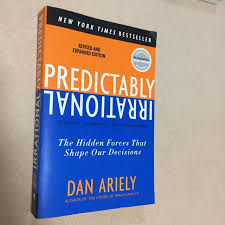
Nobel laureate Herbert Simon gave the concept of “bounded rationality” which tells us that the human mind can not cope with the complexity of the world due to the limitations in their mental capacity. To make sense of this complexity, we create a simplified mental model of reality and work with this model. Obviously, the model created by us is full of biases, stereotypes and irrational views. On similar lines, the author of this book-Dan Ariely tries to understand the rationale behind irrational decisions taken by human beings who are termed as the most intelligent species of their time. A personal tragedy motivated him to write this book.

The quote “Man is not truly one, but truly two” by Dr. Jekyll tells the crux of human behaviours. We always wonder after seeing various newspaper reports related to irrational crimes like teenage pregnancy, rape of children, extreme violence etc committed by sane individuals. Generally, it happens in a fit of arousal which can vary from hunger, anger, excitement, jealousy and importantly sexual arousal. This happens because human beings are not only irrational but systematically and predictably irrational. MIT Behavioral economist Dan Ariely proved in his book through various experiments which makes you understand irrationality in human behavior so that we can design our choices for the better decision-making process.

Dan Ariely in this book has tried to substantiate through various experiments that despite all achievements and wonders achieved by human beings, we behave irrationally in our daily life because of wiring in our brains. We behave irrationally because its easy for our brain to make things clear in a complex world. He talks about relativity and tells that we don’t have ‘internal value meter’ that can evaluate the worth of any product or other emotional things also. We always compare things to understand its worth. In fact, relativity helps in the decision-making process but it also makes life miserable because of never-ending quest of getting physical and other emotional things in life better than others.

These ideas are very much visible in our daily life. We all experience the phenomenon of comparing with our neighbors, friends, colleagues etc. In fact, we also get suggestions from others that don’t compare yourself with others. However, we can’t stop doing this because we don’t have any other way to measure things.  Not only this, we make very crucial decisions in our life like buying things, subscribing magazines, choosing the life-partner etc with the help of relativity.

The zero-price effect creates an emotional pull for all human beings to participate in the processes which offer things for free. We automatically accept the free beer or Pepsi or energy drink not because we liked it or we needed it but because it’s free. At times, the zero price can affect our decision-making process in a negative manner also as seen in terms of wastage of common resources owned by humanity.

One of the interesting findings in the book is that “we live simultaneously in two different worlds -one where social norms prevail and other where market norms make the rules”. In fact, social norms and market norms exist together in the society but whenever they collide, it creates a lot of problems. We can not measure the value of emotions and other social norms in monetary terms. When the social norms are converted into market norms, it is very difficult to go back. Here the author gave the example of a study conducted in a school in Israel where parents were penalized if they came late to pick up their children. The result was disastrous after this, as parents now didn’t feel guilty about coming late to pick up their kids, as social norms were converted into market norms.

The author also talks about the rampant consumerism, procrastination, problem of self-control, the high price of ownership not only in terms of physical products but also in terms of ideas, point of views. When we agree to one point of view, we just don’t want to change it because of the fallacy of high valuation of whatever we have. And he also proves that due to our stereotypes and expectations, we get in what we expect. The value of price is very important in our life. We lavishly enjoyed the food in a high-end restaurant even if the food is bland because we have paid more for it. That’s why the author mentions that our headache disappears when we take a 50 cent aspirin but it persists when we take an aspirin worth of a penny.

At the end of this book, the author spoke about the character of human beings and why we are dishonest? In fact, as per the author, we are honest till the moment it suits our requirements. When there is an opportunity, many honest people will cheat. It happens because small transgressions do not wake up our conscience and super-ego as propounded by Sigmund Freud. We cheat on small things because of the absence of internal honesty monitor.

In the era of digital banking, the author provides a radical perspective that people are more prone to cheat when they are not dealing with cash. He makes the argument that when we cheat under electronic transactions, we don’t feel it in our hands and therefore we don’t even realize that we are doing something wrong. In fact, it is so true that when we spend money through credit cards, we don’t feel the pinch but when we buy things through cash, we feel about spending money. In fact, this can be the reason behind various electronic frauds happening in various parts of the world. Daniel also revealed one interesting thing about honesty. That is when someone reminds us about moral values and principles, we follow it immediately.

The author also talks about our behavior to influence others and sacrifice ‘ personal utility’ to gain ‘reputational utility’. It happens because we want to show others that we are ‘unique’ and different.

However, the realization that we are predictably irrational also creates opportunities to frame our choices and influence the decision-making process of individuals to make better decisions in life. The zero-price effect can be used to frame good policies in terms of making it free to travel in public transport, using electric vehicles etc. Social norms are cheap and have a strong emotional backing which can be used to influence people to pay taxes, to take care of the elderly etc. In fact, we need to be reminded of moral codes every now and then so that our super-ego does not sleep and makes us aware whenever we try to commit any dishonesty.

In this book, the author provided stimulating and thought-provoking details of human behavior and how human beings are systematically irrational because we repeat our behaviors again and again. This book along with “Nudge: Improving Decisions About Health, Wealth and Happiness” authored by Richard H. Thaler & Cass R. Sunstein and “The Art of Thinking Clearly” written by Rolf Dobelli provides  a holistic understanding of human behaviour, its irrationality and how to capitalise on this irrationality by using incentives, nudges, social norms, default options, providing feedback etc to improve decision-making process.

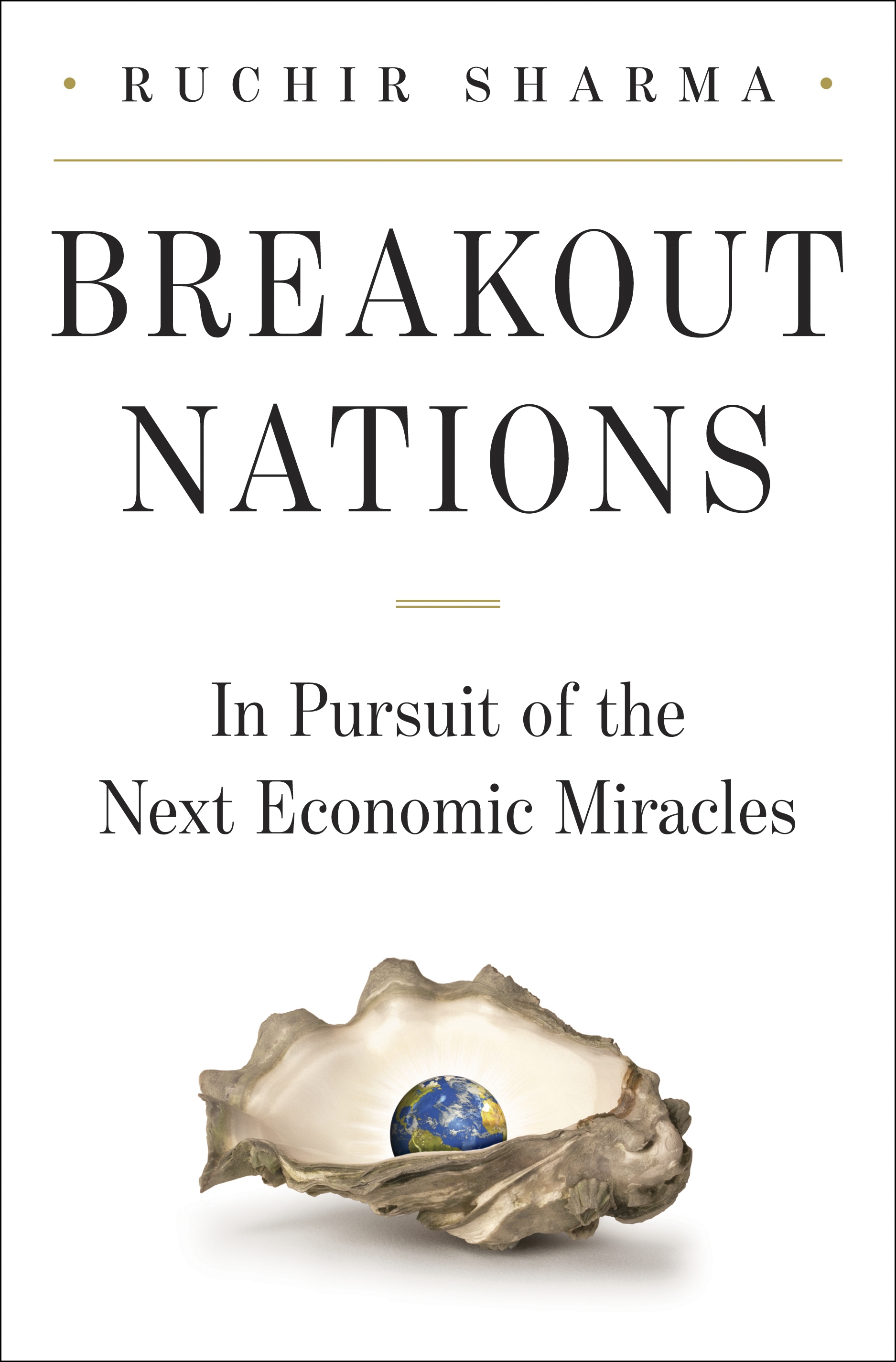
Review of the book Breakout Nations by Ruchir Sharma

BreakoutNations_sharma

The economics has become the vehicle of growth, prosperity, and development of countries in the world in the era of globalization. In fact, the question here is why we are more worried about economic growth, economic development, and prosperity? What is the need to talk about emerging nations? Why should we care about “Breakout Nations”? And why will some countries be emerging as breakout nations, some will be frontier countries[i] and some will remain insignificant with respect to economic growth and development.

Ruchir Sharma, an investment banker and keen watcher of economic happenings around the world in this book takes us on a journey where he picks the countries who will be the next economic miracles of the world. Finding reasons, causes and set formulas for economic growth and subsequent economic development of the nations was a never-ending quest by the authors of various milieus because everyone wants to step up the ladder of the success of economic growth.

The author discusses his experiences and nuances of more than twenty countries in 280 pages of this book with stimulating details incorporating the flavor of colloquial language and examples. The most important argument of the author is that we need to understand and analyze the emerging markets as ‘individual nations’ and he is wary of the ‘idea of emerging nations as a group’. In this context, he is skeptical of the sustainability of the BRICS[ii] group because the countries have competing political interests and there are stark differences between these countries in terms of commodity importers (India and China) and commodity exporters (Russia and Brazil).

The author is more interested in studying the individual countries by traveling to those places and trying to understand, “whether the political regime gets the connection between good economics and good politics” than commenting as academicians without getting the feel of the ground reality. In the whole book, the author has come out with various “Rules of the Road” to recognize the potentiality of the real breakout nations.

The author also gives his insights regarding the great debate of the impact of the political system and institutions on the economic growth and development. In fact, his latest book, The Rise, and Fall of Nations: Ten Rules of Change in the Post-crisis world is a further development of the same idea where he tries to give ten rules which need to be considered to evaluate the rise and fall of the nations. He rubbishes the idea that political system or the institutions are responsible for growth and development of the economy and their subsequent achievement of prosperity and remaining poor. “It’s’ not the type of the system that matters, it is the stability of the system and, even more important, whether the leaders running it understand the basics of economic reform”, says Ruchir.

He compares the country of China which has surpassed all the growth expectation and emerged as the successful example of command-and-control capitalism with the economy of Vietnam, which is not growing despite being a command economy. As per the author, any particular system has an only fifty-fifty chance on its economic growth and successes. In this context, he criticizes the grand theories on the ground of their emphasis on one factor in terms of institutions, geography, or culture to explain the rise and fall of the nations. He also finds faults in their building of narratives with historical facts as well as giving long-term predictions about these countries as a foolish approach. In fact, the book “Why Nations Fail: The Origins of Power, Prosperity, and Poverty” [iii]by the authors Acemoglu and Robinson provide a comprehensive analysis of various hypothesis for the rise and fall of nations. In this book, they argue that the “institutions”- political as well as economical act as deciding factor in the growth and development of any country. However, Sharma does not agree with this hypothesis and focuses more on the role of political leadership which is responsible for steering the economy towards growth and prosperity and also towards disaster if they don’t get the basics right.

In this book, Sharma starts with China, India, Brazil, Mexico, Russia, going to Eastern Europe, talking about Czech Republic, Poland, Hungary, coming to Turkey for which he is bullish, shifting towards South-East Asian countries, Indonesia, Malaysia, and turning towards the African continent with billion opportunities and finally talking about gold-medalist countries of South Korea and Taiwan. He also gives an interesting perspective that breakout nations can also emerge in the Western world in the USA, Germany, Spain, and Ireland.

The whole narrative of the author is based on his personal travel experiences to these countries and anecdotal evidence but if we compare in general the views given by the author are very much similar to the book “Why Nations Fail”. This book says that institutions matter but Sharma says, “No, Individual leaders who are at the helm matter”. There is a question: Who came first: Institutions or Individuals? Individuals are part of the institutions or they are the one who created, sustaining and influencing the system of institutions. Both the books talk about Mexico, Russia, North Korea countries in a negative perspective because of their institutions and leaders respectively. In all the countries discussed by the author, he names the different leaders of the respective countries to emphasize their role in the economic growth and development.

In fact, if we deeply introspect, institutions as well as the leaders who are the decision makers both responsible for the growth, development, prosperity as well as bringing doom and poverty for any nations of the world. It is very complex and humanly impossible to factor all the causes and reasons behind the rise and fall of nations. In fact, many things are at play at the same time. It is a full bucket of things which will turn the nations towards prosperity as well as poverty.

Regarding his criticism of the BRICS grouping, now there is enough evidence to refute his proposition. For instance, these countries have announced “New Development Bank”[iv] in 2012 and other institutions which are going to challenge the erstwhile Bretton Woods System[v]. BRICS grouping led by China and India will emerge as a formidable force[vi] in the world in recent years. Though the countries of the group have different potentials, they can also find common grounds to collaborate with each other in the coming future.

This book was written in 2011 when there was lot of chaos in the Middle East due to ‘Arab Spring’[vii], In India, the India Against Corruption[vii] movement led by Anna Hazare was going on in the wake of spate of scams in the UPA II government, emergence of Turkey as a successful Muslim model for growth etc. Similarly, there were various other developments in other parts of the world. These things have influenced the writer in creating his perspective.

The author paints a bleak picture of China because of its heavy debt, increasing labor costs, and overcapacity in the infrastructure sector. He is also not bullish about India. In the last seven years, many things have changed in India. The new government came into power at Centre and they brought various radical and forward-looking changes to create a conducive climate for growth and development. So, we can’t judge the country just by looking the few days experiences and few years performances.

It is very complex and unimaginable to predict various economic parameters for any country and especially for a diverse country like India with a subcontinental dimension and federal structure where the states are also acting dynamically to attract investment in the spirit of cooperative and competitive federalism. However, he looks Turkey under the leadership of Recep Tayyip Erdogan[ix] as a breakout nation and a role model for the Muslim countries in the Middle East. However, in just seven years, things have changed much in Turkey after the emergence of ISIS[x] and the last year coup[xi] in Turkey. In fact, author himself agrees that it is very difficult to forecast for the future growth in these complex societies and these days things are changing very fast, which cannot be ignored in the context of providing an explanation for the future economic growth in various countries of the world.

However, the author conveys the economic concepts, nuances, and intricacies of the investment and forecasting in a very easy-going story-line to make his points that the nations need to be studied and analyzed on an individual basis and there should not be any grand narratives and club different states into same groups. The book was interesting in terms of knowing smallest details of various countries in terms of high charges of hotel rooms in Brazil as compared to the USA etc. and how they can be related to their economic fundamentals and future growth story.

[i] https://en.wikipedia.org/wiki/Frontier_markets

[ii] https://en.wikipedia.org/wiki/BRICS

[iii] https://ritambharachaitanya.wordpress.com/2017/05/02/review-of-the-book-why-nations-fail/

[iv] http://www.ndb.int/

[v] https://www.thebalance.com/bretton-woods-system-and-1944-agreement-3306133

[vi] http://www.indrastra.com/2017/06/PAPER-The-Emerging-Role-of-BRICS-in-the-Changing-World-Order-003-06-2017-0054.html

[vii] https://www.sourcewatch.org/index.php/Arab_Spring

[vii] http://www.indiaagainstcorruption.info/

[ix] https://www.theguardian.com/world/recep-tayyip-erdogan

[x] https://www.nytimes.com/topic/organization/islamic-state

[xi] http://www.aljazeera.com/news/2016/12/turkey-failed-coup-attempt-161217032345594.html

Book Review of Imperium by Robert Harris

820533

Imperium (2006) is the first novel in a trilogy centered on the life of the great Roman orator Cicero. Other two books are Lustrum and Dictator. In the book, Imperium, Robert Harris takes us on a historical journey of ambitious man from a commoner to achieve the position of the consulship. Harris is a master storyteller and famous novelist who grips the reader to the unfolding of events in his story. The book is in the form of a story told by the Tiro, secretary of Cicero who has keen observation not only of the surroundings and events happening around him but also on the psyches of the people around him including Cicero.

The book is a must guide for the people who have political ambitions or want to understand the intricacies of the politics in real terms. As Cicero tells, “Politics is a profession” not a fight for justice. In fact, the book starts with a journey through which Cicero slowly develops various skills and creates a narrative to attain supreme power in Rome. And the book proves that a common man can achieve ‘the power of life and death as vested by the state in an individual’ without having any resources if he develops the skills required for achieving success in the arena of politics.

Knowing philosophy and history is very important to build a career in politics. Cicero not only reads philosophy in Athens but also tries to find out various evidence and examples from National Archive to understand the present-day politics of Rome. It can be easily related to the politics of India. How politicians use various events of history like freedom struggle, Mughal rule, Colonial legacy and names of leaders to create narratives to build their case for winning the elections.

Cicero learns the skills of oratory from the famous Apollonius Molon in Rhodes and becomes a master orator in subsequent years. This was one of the most important skills which provided him new avenues to achieve victory in the Senate. Oratory is still vital to creating a narrative in politics. Cicero often talks about the various characteristics required to become a statesman, like remembering the face of every person, importance of appearances etc.

Cicero built his whole narrative around the issue of corruption and how aristocrats are neck deep in corrupt activities. He successfully prosecuted the Verres, the former governor of Sicily. In fact, the issue of corruption in public life is still very strong and every now and then political parties and the leaders build their narratives to remove corruption and black money from the country. For instance, the emergence of the AAP( Aam Aadmi Party) and the BJP(Bhartiya Janata Party) ‘s campaigning around removing black money through various measures including the controversial demonetization move are the examples of the corruption as the concurring issue in the politics of any country since ages.

The author convincingly shows the phenomenon of creating ‘hope and fear’ among the masses around the issue of war against pirates. How do politicians create fear among the masses to gain more power? It seems that Pompey is acting as the USA and pirates as terrorists because terrorists do not have any proper unified system and there are no rules and treaties to bind them. And the Pompey similarly as the USA accumulates more power legally and illegally to increase its influence to fight against terrorists.

The election campaigning and electoral process at that time provide a mirror of the present-day political and the electoral process. How does money play a deciding role in the electoral process? How do politicians bribe voters to get the support of voters? However, the win of the Cicero in the election of consulship also gives a hope to the commoners to achieve the political power if they have all skills and attributes to achieve it. The portrayal of women as the wife, mistress, love interest etc and Cicero’s desire to have a son from his wife Terentia shows the nature of patriarchal society prevalent at that time. It is still true in the present-day society of India.

In the end, Cicero campaigns for his consulship and successfully achieves the supreme power in Rome. Through the whole journey of the book, the author portrays the complex character of Cicero and how much is he in love with the process of politics? Slowly, he starts thinking about the end rather than means to achieve the political power. In fact, here, he is in sync with the Nicole Machiavelli’s thought that success should be the yardstick to measure and judge political activities rather moral or ethical criterion. And how does the writer portray the true and real picture of the politics through all events occurring in the life of Cicero? It shows that politics is not about right and wrong or achieving justice but it is very complex bargaining process in which different groups negotiate and cooperate to achieve their goals. This realistic picture of politics can make others realize to see things in various perspectives rather criticize the leaders for their political expediencies.

Homo Sapiens and their capacity for imagination

716E6dQ4BXL

When I am writing this review, 1.3 billion population of India is getting ready to celebrate its 71st Independence Day of the Indian nation. And on 9th of August, Indian Parliament debated about 75th anniversary of “Quit India Movement” and agreed on the strategy of “New India- Sankalp se Sidhi-Commitment to fulfilment”. Quit India Movement of 1942 is one of the path-breaking events of India’s modern history. However, as per the author Yuval Noah Harari, ‘Nation’ is an imagined order and a myth created by the people to cooperate at large scale in a particular boundary. And history is not good or bad or ancient or modern as ”history has still not decided where we will end up, and a string of coincidences might yet send us rolling in either direction”, says Harari. This book is exceptional and an outsider view of the evolution of Homo Sapiens on the earth. It seems that he is sitting in front of the revolving earth and trying to see how Homo Sapiens evolved.

pexels-photo-243115

Harari is questioning every single belief in the society. Political thinkers like Locke, Hobbes, Rousseau etc have tried to find out the basis of political authority and” why do we obey the authority? What were the reasons behind the formation of “Social Contract”. State/Nation/Country vs Individual debate is still going on. Who is more important State or Individual? State came first or Individual. As per Harari’s hypothesis, state/ nation is an ‘imagined order’ created by Homo Sapiens to establish a complex mechanism for cooperation.

primate-ape-thinking-mimic

In fact, in this book he traces the evolution of human beings through the various revolutions starting from Cognitive Revolution, Agriculture Revolution, Industrial Revolution and the current Scientific and Technological Revolution.  Cognitive Revolution helped us to create the communication and writing methods and processes. The Tree of Knowledge mutation led to the evolution of the brain. However, no one knows what was the reason behind this revolution. There are various theories behind it but Harari seems to believe in the ‘Gossip theory’ under which the language of Homo Sapiens evolved to share information.

pexels-photo-265278

Agriculture Revolution transformed the Homo Sapiens from ‘foragers’ to ‘farmers’. As per Harari, it was the biggest fraud of history. He persuasively says, “we did not domesticated wheat but wheat domesticated us”. He tries to find various flaws in Agricultural Revolution and the subsequent revolutions which made Homo Sapiens more like a machine which is alienated from himself, using the terminology of Marxism, as well as from its surroundings. And he also tries to find out why did we start Agriculture Revolution. Did agriculture start as some kind of ritual or religious practice to some local deity? He is trying to say this while discussing Gobekli Tepe.

How Homo Sapiens has increased its power and strength through scientific revolution after agreeing on the” doctrine of ignoramus “and consistently trying to find out the mystery of the universe. We agreed that we don’t know and the knowledge is never complete. We have to consistently find out something new and revolutionary.  Not only this, as Harari says, there was an existence of marriage between Science and Empire. Empires were one of the three myths, other two were money and religion acted as the most successful tool for unification. How Empires were established in the world with the help of scientific revolution?  The British Empire was based on the Scientific and the Industrial Revolution in the 17th century. In fact, this is still true. We also have the recent example of the USA, which is the most powerful country in the world, not only because of economic might but also because of its cutting-edge technological innovations.

euro-coins-currency-money-106152

Money is another creation of human mind. It is the most powerful tool which has unified and interlinked the whole world in the form of World Empire. Trust is the basis of the whole economic system. He also talks about the whole phenomenon of Capitalism and how we are so much embedded into consumerism and romanticism. This has become a kind of race where Human beings are running towards the unbelievable goals. I was fascinated by his thread bare description of capitalism where he tries to show it as some kind of Ponzi scheme. However, that’s how it is. To change this system, we need to create another imagined order or at least, we need to realize the faults and fallacies of the capitalism so that we should not become its slave.

pexels-photo-355188

Religion is the next big myth he talks about in his book. He talks about monotheism, polytheism and most specifically “syncretism”. How Harari’s analysis of polytheism provides a basis for “Sarv Dharma Sambhav”. And why polytheist religion is more tolerant and accepts other religious practices. How religion has unified as well as divided the Human beings into “us” vs “them”. In fact, his analysis of religion can be related to the concept of ‘spiritualism ‘and ‘detachment philosophy’ of Gita of India. He also talks about Buddhism to explain the concept of inner self. And we Indian can be proud of it that we had all kinds of philosophies in our religious discourse.

How can I forget his discussion about the concept of Caste System which is based on the Concept of purity and impurity? It is also an imagined order created by our forefathers to make things moving on the basis of division of labor. However, we are struggling with these caste divisions despite knowing that we only created this.

In the end, he questions the scientific revolutions of the present day. Genetic engineering, Cyborg, etc will give tremendous power to the Homo Sapiens and it is also possible that it will make us subservient to our own creations. According to him, Homo Sapiens has become a GOD who does not know what exactly they want? This has created a kind of confusion and dissatisfaction which will finally lead to the end of Humankind.

He also discusses patriarchy, the basis of natural and unnatural sex, conception of marriage etc. In fact, he is playing various roles as a writer. He is a liberal when he says, “Biology enables, Culture forbids”He is a feminist when he talks about “patriarchal gene” and questions the basis of discrimination against women. He is a Marxist when he talks about alienation and exploitation of Human beings who have become a machine working as per the time table and earning a lot of money but does not experience happiness and contentment despite having everything. He belongs to Critical Studies approach when he criticizes various scientific revolutions and ideologies existing in the world. He is philosophical when he talks about happiness as subjective well-being and “happiness begins within”. He is a psychologist when he says, “Happiness only comes from serotonin, dopamine, and oxytocin”. He is an animal rights activist when he talks about the domestication, exploitation & cruelty against animals and extinction of various other species and animals. He is being ethical and moral when he says that unethical application of technology will create a monster and will lead to the end of Homo Sapiens. Most importantly, he is a Post-Modernist when he rejects various ideologies and grand narratives.

This book is very radical and provokes the reader to think about the beliefs of the human kind in a different perspective. However, he also agrees,” there is no way out of an imagined order”. If we want to change the present imagined orders, we have to bring another imagined order around which we, Homo Sapiens will live out the new life. For instance, as he says, the new imagined order can be green in color based on the idea of sustainability. This book will help in increasing our horizon of thinking to take various issues in very objective manner.

Having said that, I also want to highlight here that Harari’s whole idea and narrative in this book “Sapiens”  is little pessimistic and cynical in its approach. After reading this book, the reader will feel like running away from the world. It highlights a kind of escapism. In fact, we can’t run away from the problems which are there in the world. Despite all myths and ideologies, there are people who are trying to bring about change in the world. One more thing I want to highlight, if the “cognitive revolution” has brought us here, we will certainly find out the way through this revolution to understand what do we want to become and what kind of earth we want to live. Harari is one of the Homo Sapiens and the readers of this book are other Homo Sapiens who will make other Homo Sapiens understand the reality of life and the evolution of Homo Sapiens to make earth livable in the coming future.

Please see these links to know more:

A Reductionist History of Humankind

https://www.washingtonpost.com/opinions/our-kind-of-people/2015/03/13/78404422-b84c-11e4-aa05-1ce812b3fdd2_story.html?utm_term=.b72654add6d9

http://www.thehindu.com/sci-tech/science/gene-study-rewrites-neanderthal-history/article19452381.ece

http://gobeklitepe.info/

https://en.wikipedia.org/wiki/Industrial_Revolution

Introduction to Public Policy!

“Public Policy is whatever government choose to do or not do”

Thomas R. Dye (Political Scientist)

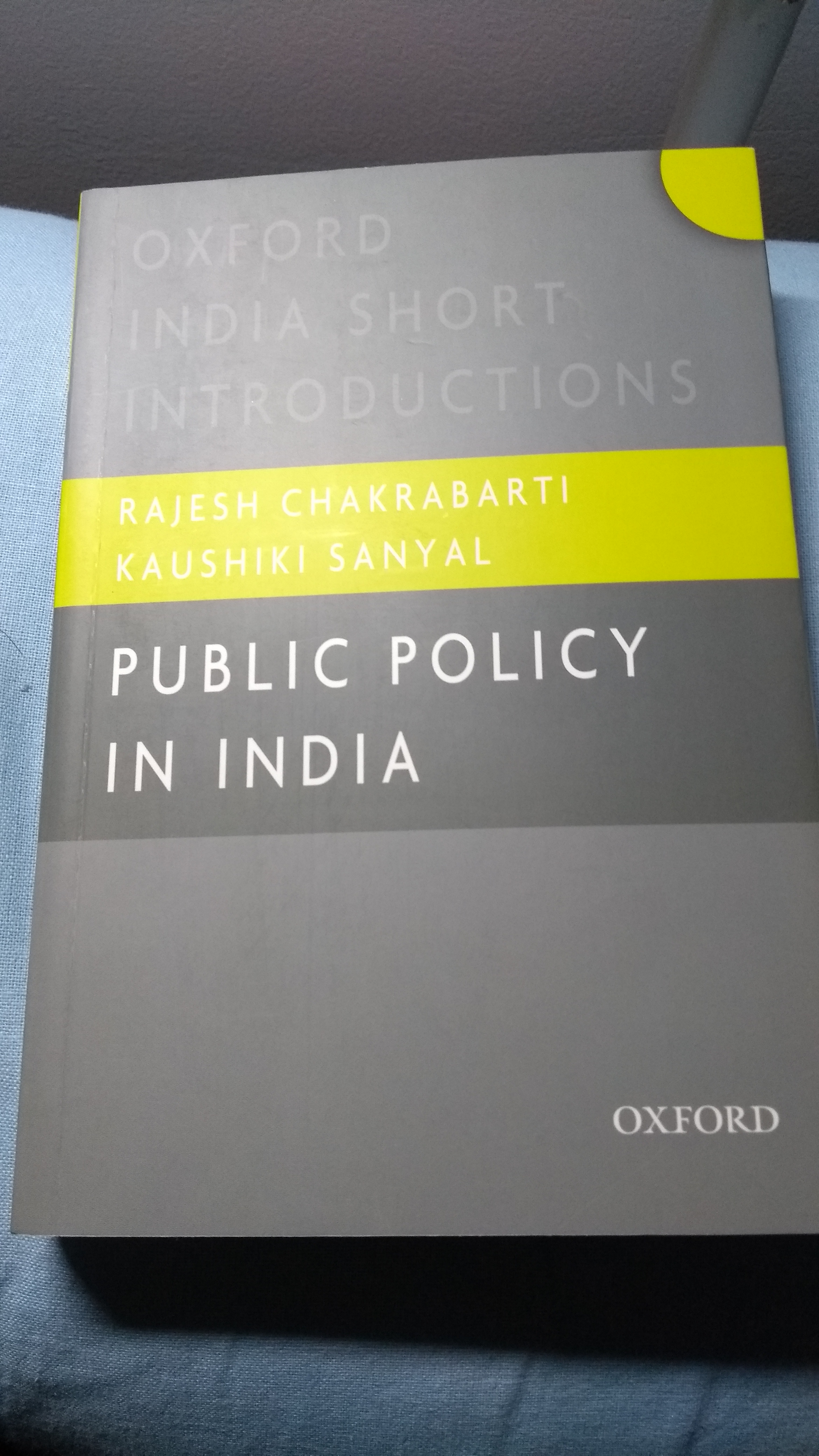
I got this interesting opportunity to listen to the lectures of Dr. Rakesh Chakravarti and Kaushiki Sanyal (Authors of this book) during the Policy Boot Camp 2017 where this book was part of our reading materials. This book is quite short and interesting as it talks about the origin and processes of policy making in a few pages. Every public policy enthusiast read this book before venturing into the complex field of public policy.

In these few pages, this book answered all intrigued questions related to public policy. For instance: What is public policy? What is the origin of public policy? How can we contribute to policy making? What are the institutions which provide degrees in this area? What are the stages of policymaking exercises? When did public policy as a discipline become popular in India? It touches almost most of the aspects of the policy making and encourages us to read more about the issues in the domain of public policy. And this book is quite significant for Indian policy students as it has been written in the context of current issues dominating in the social space of the country. It talks about the nirbhya rape case as well as public transport revolution created by Delhi metro.

The authors have tried to trace the history of public policymaking starting from Harold Lasswell‘s basic definition of public policy as ‘who gets what,when and how as the starting point for this existence. They also discussed in detail the transformation of Bihar in the leadership of Nitish Kumar emphasizing that a great leadership can bring about substantial changes in a short span of time.

They talked about the challenges of policy implementation and evaluation. The ideas of Randomised Control Trial(RCT) and the difference in difference principle as methods for effective implementation of public policies were explored in the book.

They tried to tell the policymakers of the country not to be dogmatic so that they can adopt various perspectives from around the world in the policymaking process. In the last pages of the book, the authors provided various innovative solutions to overcome various challenges to policy making, implementation, and evaluation. They tell you, how to broad-base policy-making, how to increase legislative capability, and how to evaluate policies in a better manner so that we can develop better policies.

I would recommend this book to all current and future policy makers so that they can understand the nitty-gritty of policy making in just a few pages.

Negotiation workshop on Mouse Case Study:

During this lecture, we were given Mouse Case Study (http://www.depa.univ-paris8.fr/IMG/pdf/Disney_Case_Study.pdf)

In this case study, there was a group where we have to play different roles like someone was playing a representative of the private sector, another three people were playing the role of local government and another was a representative of the government. So, it was a great learning experience and realization towards the complexity of public policy making, implementation, and its challenges:

  1.  The first time in my life, I realized how difficult it is to bring about consensus on any one particular issue. It is very difficult to satisfy the aspirations of each person in the group.
  2. I was acting as a representative of the government and I had to mediate between private sector representatives and local government representatives.
  3. When the discussions were going on, suddenly one of the local representatives went outside the room saying that he didn’t agree with the proposals. This showed the kind of emotions someone goes through when it comes to your self-interest.
  4. At last, we somehow reached a deal but I think that I, as a government representative, gave more concessions than it was required.

I don’t know if I acted in a good sense or not? Even so, it was quite insightful and an eye-opening exercise that provided an interesting experience of nuances of policymaking. Convincing and negotiating with others when their self-interest is involved is a very difficult issue. We keep on criticizing our leaders, bureaucrats, policymakers, teachers, etc., but we never put ourselves into their shoes to understand their constraints and challenges.

Why Nations Fail?

This book was an interesting read for everyone who is curious to know why some nations are rich and why some are poor? This book is a must-read for all those who work for the welfare of the people of the country. It gives a compelling perspective about the origins of power, prosperity, and poverty. In fact, everyone who is interested in public policy, they must read this book to get ideas how to change or modify policies/institutions at a critical juncture to create a path towards prosperity for a nation. We can look for a better example in our own South Asian Sub-continent in terms of the evolution of India and our neighboring countries. Why Indian democracy despite its various flaws is still flourishing? Why other countries in the Sub-continent are still not able to achieve a substantial form of liberal democracy? That is also interlinked with our economic growth and progress as well as reduction of poverty.

It is a hot topic of discussion and debate to find out the reasons behind poverty. Not only this, in the process, policymakers and leaders are eagerly waiting to know the real formula to bring about prosperity for their people. We live in an unequal world. There is a massive amount of inequality prevalent among nations of the world. Why it is so? Why one person in “developed north” lives healthier and prosperous life and another one in “developing south” lives a miserable life with no health and security? This inequality is not only prevalent between countries but also there within a country also. The stark inequality is not only impacting the lives of poor but also creating grievances and resentment among the people of Western countries of the USA and the European Union. The election of Trump as US president, Britain’s exit from the European Union, Islamophobia, Migration crisis, and anti-migration rhetoric are some of the symptoms of the real problem. 

The authors of the book have also discussed and refuted various theories regarding origins of poverty and prosperity before giving their own theory of “INSTITUTIONS”:

  1. The Geography Hypothesis claims that geographical differences create poverty and prosperity. Montesquieu, the French philosopher propounded this theory. He argued that people in tropical climates tend to be lazy and lack inquisitiveness. The modern version of this theory says that tropical diseases have adverse consequences on health and labor productivity.However, we have a lot of examples from past as well as present to refute this theory. We had a lot of great civilizations(INDUS valley, INCA civilization) in tropical areas and developed countries like Singapore and Malaysia in tropical areas. Nogales , Arizona(US) and Nogales, Sonoro (Mexico) are very close to each other but they are different not because of their geography but because of the border existing between the two countries which separate them to live in different institutions.thin_line_between_rich_and_poor-520x346.jpeg
  2. The Cultural Hypothesis relates prosperity to culture. Max Weber argued that the Protestant Reformation and Protestant Ethic played a key role in the growth of Western Civilization. It can also be refuted by seeing the countries of Japan, Singapore, South Korea and China. They have different cultures as compared to western countries. North Korea and South Korea had same cultures till 1950. However, today both the nations are far apart not because of their culture but they have different kinds of institutions after their division.korea-5ac0a6353ba0201b5cb2fcf37552aee89ee4a258-s900-c85.jpg
  3. The Ignorance Hypothesis asserts that world inequality exists because we or our rulers do not know how to make poor countries rich. However, it is also not true because it is not that some leaders do not know things but it is something else. As per the author, poor countries are poor because those who have power make choices that create poverty. They get it wrong not by mistake or ignorance but on purpose.
  4. Here comes the theory, given in this book- Theory of Institutions. As per the authors, institutions matter a lot. They shape not only the destiny of the particular country but also influences the world. Institutions can be of two types: political and economic institutions.  In fact, both are interlinked. The poverty and prosperity is the interplay of political and economic institutions. What kind of political and economic institutions are created/formed in the country decide about the future of the nations? There are two kinds of Economic Institutions- Inclusive as well as Extractive Inclusive Economic Institutions foster economic activity, productivity, and prosperity. They also pave the way for two other engines of prosperity-Technology and Education. Similarly, Inclusive Political  Institutions are pluralistic  and centralized enough to create a peaceful climate for people to pursue their ideas.

On the other hand, Extractive Political Institutions concentrate power in the hands of a narrow elite and place few constraints on the exercise of this power. Extractive Economic Institutions naturally depend and sustain the Extractive Political Institutions. They both are interlinked. The real thing is that we and our leaders get the opportunity to decide about these institutions at the critical juncture of history. For instance, Black Death(Bubonic Plague) has created the ground for new and progressive economic and political institutions to emerge in England. On similar grounds, we can see our Independence and formation of our constitution in 1947-1950 was a critical juncture for our country. It can also be related to the present situation in India. The NDA government led by Mr. Modi, our Prime Minister got a massive majority in 2014 election. It was a critical juncture and opportunity provided to leaders of the country to usher into a radical transformation of our politics and economics to create prosperity for Indian people.

It means that history also plays an important role. In fact, Institutions are formed at the critical juncture to decide about the future of the country. But the real question is that why not always choose prosperity? Because some leaders want to become rich themselves rather than making their country rich. The colonial legacy also played a role here. Colonies were exploited by the colonial masters for their own benefits. Not only this, they established various institutions to perpetuate disparity and poverty in the colonized countries. We can see the examples of this legacy in Sub-Saharan African and the Middle East countries.

So what needs to be done?

Extractive Political and Economic institutions must be replaced by Inclusive Political and Economic Institutions. At every critical juncture, the people, as well as leaders of the country, must embark on a journey to create inclusive institutions to create prosperity in the country. For instance, our country is at a critical juncture when our “demographic dividend” is so high and our country is a fastest growing economy in the world, we must seize the moment to create bountiful opportunities for the youth of the country.

Changing Policies Through Nudging

This book was difficult for me because I never read this kind of book before. The title of the book conveys the main idea of the book. Nudge can create a sustained push for not only changing the human behavior towards everything but also help in various policy matters.

Richard Thaler, the writer has provided various examples to prove his theory. In fact, after reading these ideas, we can also realize those things after a keen observation in our personal life.

The most recent and important example can be remembered in the context of India is the issue of prohibition. Supreme Court of India has banned the shops from serving liquor if they are located within a 500m distance of national highway. Various state governments have also banned liquor in their state. Bihar is the recent example. Here, the question is: Will banning any substance solve the real issue? Will it really solve the issue of drunken driving?  It was always found that banning/ restrictions have failed miserably to solve any problem. Here we need an innovative form of pushes in the form of nudges as described in the book. Why not the government should start an innovative campaign of information dissemination regarding prohibition. For instance, popularize the information that spending on alcohol can be used for other productive purposes like buying a house or a vehicle. There is need to create a feedback mechanism to make the people realize about their choices.   For example, banning junk food will not solve the problem of obesity but providing the fresh fruits, vegetables at a reasonable rate to the public will create a powerful nudge. Make eating fresh fruits as a fashion statement. It is really happening nowadays for organic foods.

This book has provided various concepts:  Libertarian Paternalism, Choice Architect, Default options etc. These concepts decide the choices we make in our life. Our parents, governments act as a choice architecture which provides us various options to choose in our life. Why not provide good choices to the people so that there is no need to ban anything.

In fact, I found something very interesting in this book regarding how we think and why we choose bad options despite knowing that they are not good for our well being:

  • Because we use our automatic system to think which is effortless and uncontrolled.
  • We generally do not use our reflective system which is rational and controlled.
  • The most prominent example is of Voters who seem to rely primarily on the automatic system. They just go by the pictures or possibilities that who is going to win.
  • We follow guesses, rules of thumb, behave in overconfidence, work in the spirit of unrealistic optimism and more worried about losses than gains. Not only this, the status quo bias also hurts our choices.
  • We are not able to resist temptation and sometimes act mindlessly. For example, eating is one of the most mindless activities we do in our life despite knowing that it affects our health, well being and overall life. But we don’t care whatever garbage comes in front of our eyes, we just grab on that because of lack of self-control.
  • Sometimes, we also behave in that manner due to social influences.

So, the issue is how to solve these issues: There is need to NUDGE people towards good choices. And the writer has provided six principles:

  1. Incentives
  2. Understand Mappings
  3. Defaults
  4. Give Feedback
  5. Expect Error
  6. Structure Complex Choices

The policymakers, as well as people at the helm, should provide incentives to the people to follow rules. The recent example, I can remember about providing various prizes under DIGI DHAN MELA programme of Government of India to make India digital.

The default options are very powerful and ubiquitous. People generally do not change the default options. So why not make good choices as default so that number of people can follow it. The writer discusses this option so many times. For instance, if we want to save money, why not deduct the amount from the salary automatically. In fact, the saving and insurance ideas of today are mostly based on this concept. In fact, he has highlighted the concept of SAVE MORE TOMORROW.

Providing feedback is also a good option. If we provide feedback to the people in comparison to others, they tend to improve their situation. This also works in cases of comparison.

The writer has written this book analyzing the policies prevailing in the USA. However, the basic idea of nudge can be used in India’s various public policies. In fact, the campaign of Texas-DON’T MESS WITH TEXAS was very successful in reducing littering in the city. It can be adopted in India in various manners. For instance- DON’T MESS WITH DELHI.

The writer also discusses various objections to the idea of LIBERTARIAN PATERNALISM.

In fact, the book is a good read for future as well as present policymakers who really want to provide good choices to the people to make their life better.

Just now, I found a very interesting implementation of this idea by the UK government. The UK government has a “NUDGE UNIT” in the name of BEHAVIORAL INSIGHTS TEAM.  This organization was set up to popularize “nudge theory”, which is a combination of behavioral economics and psychology. It is helping the government to improve policy options and bring about change in the behavior of the people.